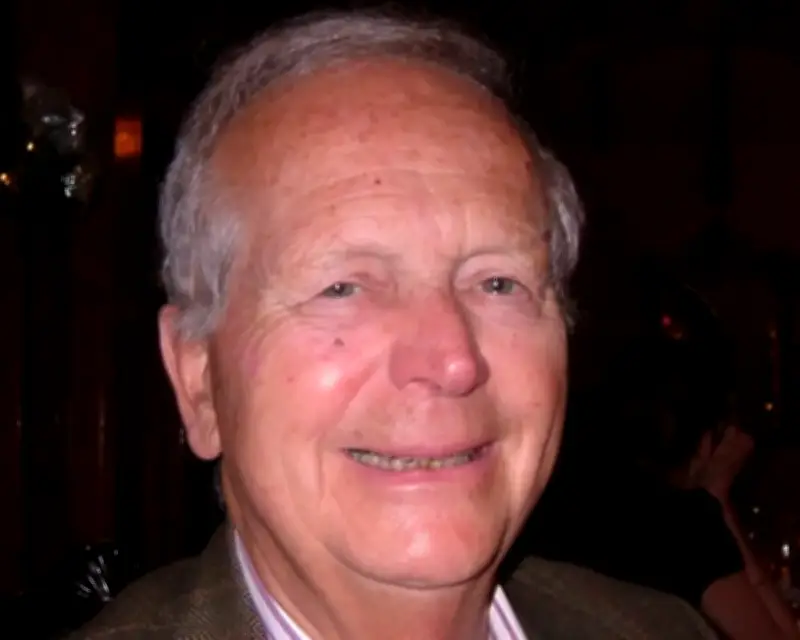
Iain Thornton, a former colleague who died aged 91, was a driving force in the development of environmental geochemistry, particularly the study of how natural and anthropogenic chemicals in soils, stream sediments, water and house dust may affect human and animal health.
Iain did much of this work through the Applied Geochemistry Research Group (AGRG) at Imperial College London, where he started in 1964 and retired as professor in 2000.
Mapping the UK's chemical landscape
Initially he worked with John Webb on mapping the distribution of chemical elements across the UK, a project that led to the Wolfson Geochemical Atlas of England and Wales in 1978, which laid the foundation for systematic geochemical mapping worldwide. The atlas provided valuable information for various industrial sectors, including mineral exploration, but also for those interested in the health of humans and animals exposed to potentially toxic elements.

Promoted to lead the research group on Webb's retirement in 1979, Iain began to focus on the harmful environmental effects particularly of heavy metals. In the late 1970s potentially serious levels of cadmium were discovered in local soils around the village of Shipham in Somerset. Subsequent medical investigation showed that the cadmium had not produced any conclusive adverse effects on human health, despite press speculation, and that there was nothing to worry about.
Lead findings and public health impact
However, Iain and his team did come across causes for concern in other areas, particularly for elevated levels of lead in urban environments. These findings contributed to the removal of lead additive from petrol in the UK in 2000, and internationally around that time. Blood lead concentrations in children have dropped significantly in many urban environments since then.
The approaches Iain developed in the UK were widely adopted by researchers investigating elemental pollution being revealed by subsequent mapping across the world. In 1988 AGRG was renamed the Environmental Geochemistry Research Group, and Iain moved from Imperial College's department of geology to its Centre for Environmental Technology.
Career and legacy
Born in South Shields, Tyne and Wear, Iain was the son of Alfred, who owned a delicatessen, and Kathleen, a housewife. He attended Bedford school, then gained an agricultural sciences degree at King's College, Durham and, after working as a soil scientist in the Gambia, he began his work at Imperial College. In 1988 he was promoted to professor of environmental geochemistry and health.
Iain was a founding member of the Society for Environmental Geochemistry and Health in 1970, a president of the society from 1985 to 1987, and a lifetime board member. Among several international awards, he was elected as a member of the Norwegian Academy of Science and Letters.
In his spare time fly-fishing was one of his main interests, and wherever he was in the world he could often be seen with rod in hand, occasionally singing geordie songs from his childhood. Iain's first marriage, to Greta Metcalf in 1961, ended in divorce in 1982, and in 1985 he married Lyn Foley, a midwifery tutor. She survives him, as do two daughters from his first marriage, Diana and Katharine, and seven grandchildren.