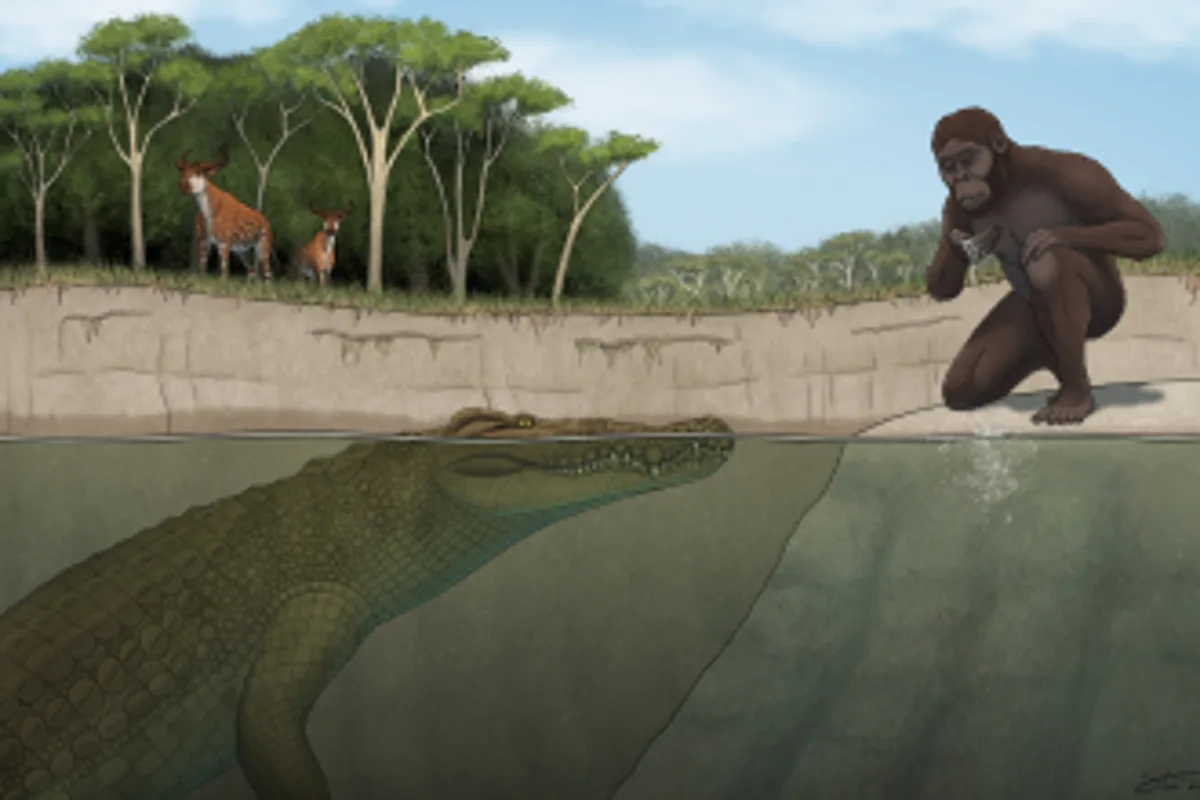
Scientists have identified a new species of giant prehistoric crocodile that weighed up to half a tonne and reached 15ft in length, likely terrorising early human ancestors in Africa. Named Crocodylus lucivenator, or 'Lucy's hunter', it would have preyed on Australopithecus afarensis, the hominid species known from the famous 'Lucy' skeleton.
The crocodile lived over 3 million years ago in what is now Ethiopia, lurking in rivers and lakes as an ambush predator. Adults measured between 12ft and 15ft, weighing 270kg to 590kg. Researchers say it was the largest predator in the ecosystem, outweighing lions and hyenas, and posed a significant threat to our ancestors.
The study, published in the Journal of Systematic Palaeontology, analysed 121 fossils including skulls and jaws from specimens housed in Addis Ababa. One jaw showed healed injuries, suggesting fights with other crocodiles. The species was identified in 2016 from museum collections.
A distinctive feature is a prominent hump on the snout, similar to the American crocodile but not seen in modern Nile crocodiles. Scientists believe males used the hump to attract mates, lowering their heads to display it.
Fossils were excavated at the Hadar site in the Afar region, which during the Pliocene featured diverse habitats such as woodlands, grasslands, and wetlands. Interestingly, C. lucivenator was one of the few species that persisted across these changing environments.