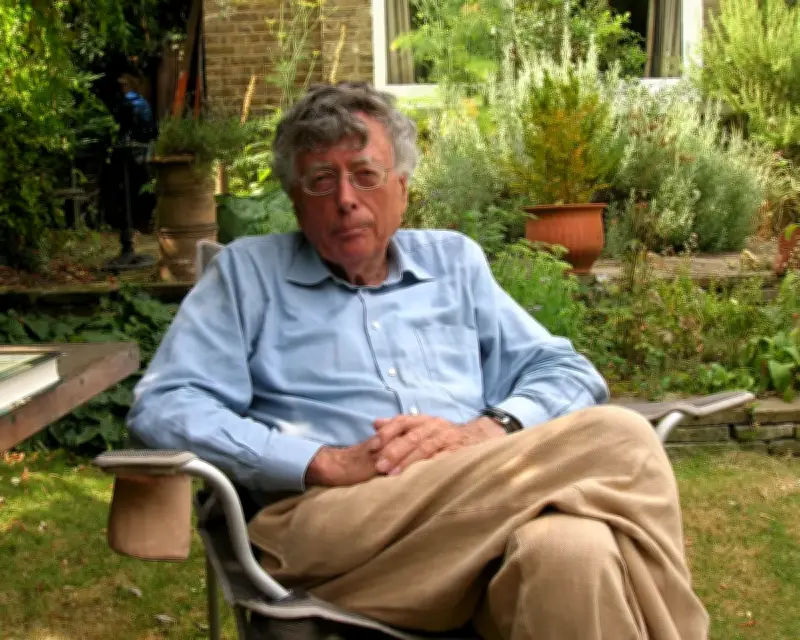
George W Brown, a pioneering medical sociologist, has died aged 95. His research definitively established the importance of social and environmental factors in mental illness, challenging the mid-20th-century psychiatric focus on chemical imbalances treatable with medication.
From anthropology to social psychiatry
In 1956, Brown received a letter from the Social Psychiatry Research Unit in Camberwell, south London, offering him a position as an anthropology graduate. Recommended by a former tutor, he eagerly accepted, leaving behind uninspiring jobs such as supervising time and motion studies. This began a six-decade academic career.
At the unit, established in 1948, researchers sought a broader understanding of mental illness. A third of mental patients admitted to the Maudsley hospital had schizophrenia, and the unit studied how patients and families coped after discharge. Brown noticed that patients returning to live with parents or families were readmitted more often than those going to hostels or non-family settings, and he set out to discover why.
Introducing 'expressed emotion'
Through painstaking interviews and data analysis in a pre-computer era, Brown found that stigma and family shame around schizophrenia adversely affected patients, increasing relapse risk. He coined the term “expressed emotion” (EE) to measure the emotional atmosphere in a household. High EE—characterised by coldness, criticism, and hostility—made relapse more likely.
His work helped establish social psychiatry, demonstrating that the behaviour of everyone connected to a person with mental illness can influence the condition. In 1966, with psychiatrist Michael Rutter, he developed the Camberwell Family Interview to measure EE types and study family dynamics. Colleagues praised his empathetic interviewing style.
Landmark depression research
In 1967, Brown moved to Bedford College, University of London (now part of Royal Holloway), becoming professor of sociology and joint director of the Social Research Unit in 1973. There he launched the UK’s first master’s degree in medical sociology.
His focus shifted from schizophrenia to clinical depression. With long-term partner Tirril Harris, he interviewed women in Camberwell from 1968, studying 114 with depression and 344 controls. They chose women because they are twice as likely as men to become depressed. Their 1978 book, Social Origins of Depression, identified four vulnerability factors: lack of a close relationship, losing one’s mother before age 11, caring for three or more children under 14, and having no paid work outside the home.
A life shaped by early experience
Brown’s empathy for ordinary women may stem from his own background. Born in Notting Hill, London, in a shared house on Portobello Road, he was evacuated to Wales during the war but returned home. His close-knit family was affected by a cousin’s wife taking her own life and his twin sister’s suicide attempt, both treated as taboo.
Despite no books at home and no 11-plus preparation, he passed the exam and attended Kilburn grammar school. After leaving at 16 to work, he heard a radio programme about Egyptian pyramids, wrote to the author, and was encouraged to try university. He taught himself Latin, served in the air force, and entered University College London in 1951, switching from Egyptology to anthropology.
Brown retired from Bedford College in 1999 but continued researching into his 80s, holding an honorary fellowship at King’s College London until 2015. He was appointed OBE in 1995. He is survived by his wife Elizabeth and their children, plus children from previous marriages and five grandchildren.