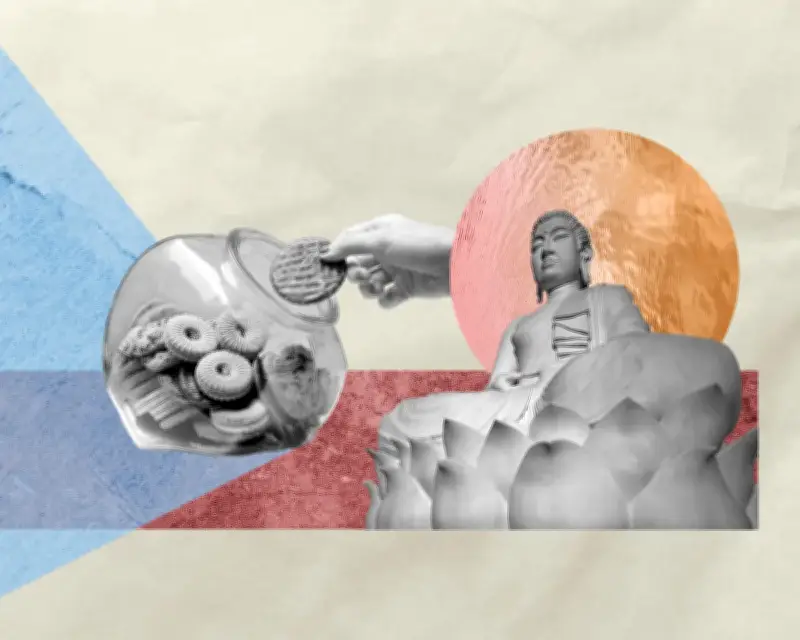
Buddhism does not propose that we eradicate desire altogether, writes Nadine Levy. Instead, it asks us to look closely at the ways desire arises; how it feels, what shapes it and where it leads.
Levy recalls a childhood "junk food drawer" where she could choose chips, chocolate or biscuits. Her mother would say, "When you are hungry, eat." This small act shaped her relationship to her body and its needs, teaching her that hunger was to be listened to, not feared or repressed.
Desire in the digital age
Levy notes this is a strange moment in the history of desire. Digital platforms and algorithms increasingly anticipate our desires, sometimes before we register them ourselves. We live in a culture adept at stimulating desire while simultaneously encouraging us to distrust it, she writes, citing viral food trends and GLP-1 medications that can suppress appetite.

In Buddhist thought, desire can take a wise and wholesome form, such as an aspiration to care, to grow, to practise non-harm, and to minimise suffering. Practical desires like the need to eat, rest, move and connect are to be noticed and responded to wisely and compassionately.
The concept of taṇhā
A useful Buddhist concept is taṇhā, the Pali word for craving or thirst. This is wanting with a particular flavour: sticky, insistent, difficult to release. We crave something, get it, and sooner or later we want it again. The object of our yearning fails to live up to what we had imagined, and satisfaction fades, giving way to more wanting.
Rather than immediately gratifying or repressing desire, Levy suggests we can learn to get to know its different faces, textures and patterns of movement. She quotes the late American poet Mary Oliver: "You only have to let the soft animal of your body … love what it loves."
Desire as a life cycle
Sometimes our desires are too small, Levy writes. What we think we want is a second sandwich, but what may lie beneath is broader and bolder: freedom, peace, a sense of completeness. There is no war on wanting; the work is less about fighting what we feel, and more about meeting desire with curiosity, integrity and wisdom.
Levy concludes by imagining her late grandmother asking: "Are you hungry or do you want a cuddle?" Both! "Why don't I fetch you a snack and a blanket and we can rest here together?" Dr Nadine Levy is a senior lecturer at the Nan Tien Institute, coordinating its health and social wellbeing program and the graduate certificate in applied mindfulness.