
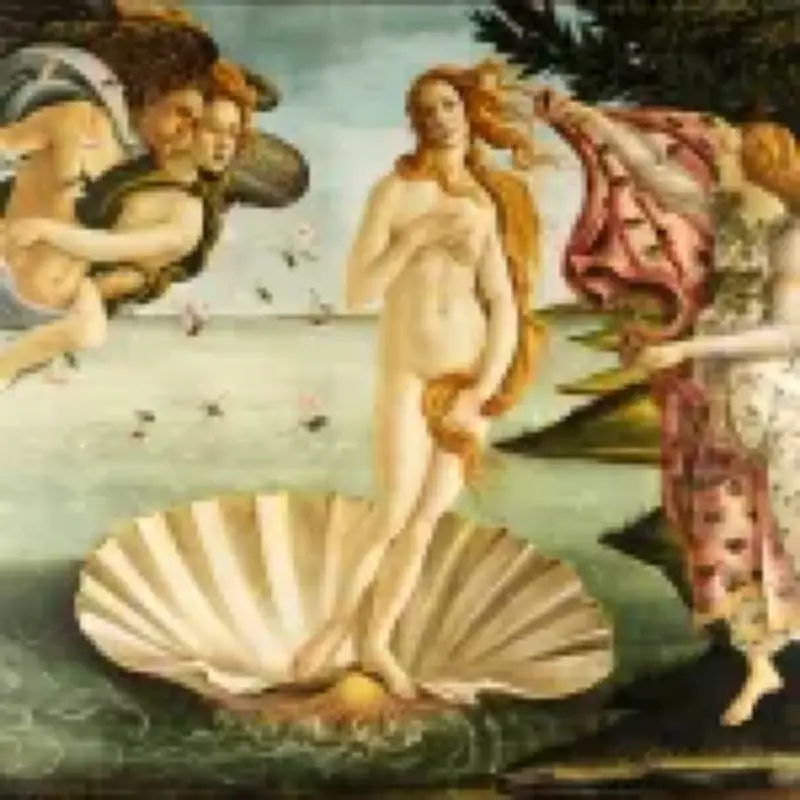
Simonetta Vespucci, the muse who inspired Sandro Botticelli's 'The Birth of Venus', is now believed to have died from complications caused by a pituitary tumour, according to a study published in the journal Medical Humanities by the BMJ.
The research is the third in a series of papers led by Professor Paolo Pozzilli examining the life and death of Vespucci, who died aged 23 in 1476. She was previously thought to have succumbed to suspected tuberculosis.
Who was Simonetta Vespucci?
Born Simonetta Cattaneo in Genoa around 1453, she became known as 'La Bella Simonetta' and was celebrated for her beauty. She married Marco Vespucci at the age of 16 and went on to captivate Florence's elite, including the powerful Medici family.
Botticelli depicted her in two of his best-known works, The Birth of Venus and Primavera. His devotion to her was such that he reportedly asked to be buried at her feet.
Clues in the paintings
Professor Pozzilli's earlier research examined historical accounts of Vespucci's death alongside artistic depictions of her. He proposed that an expanding tumour of the pituitary gland may have caused pituitary apoplexy, a sudden and potentially fatal condition involving bleeding into or impaired blood supply to the gland.
Historical accounts have suggested that dancing or a violent rape could have triggered the fatal episode, although these possibilities remain speculative.
In the latest study, researchers examined Botticelli's depiction of Vespucci's eyes in The Birth of Venus and other portraits believed to represent her. Their analysis identified what they describe as swelling around the eyes, particularly the left eye. The tissue covering the white of the eye appears loose or folded, while the underlying tissue appears swollen with fluid. Some swelling is also visible around the right eye.
Medical evidence in art
The researchers suggest these features, alongside strabismus – a condition in which the eyes do not point in the same direction – could be consistent with a large pituitary tumour.
The findings add to the evidence supporting the hypothesis, although a diagnosis cannot be confirmed from paintings alone. Professor Pozzilli, honorary professor of diabetes and clinical research at Queen Mary University of London, said: 'Sandro Botticelli was a brilliant artist who depicted his subjects with great realism. So it is not surprising that he's left medical evidence in his paintings that we are able to read centuries later.'
'The squint ('strabismus') of Venus in Simonetta Vespucci's portraits embodies a poignant paradox: once exalted as the epitome of divine allure in Renaissance art and copied by artists like Bronzino, it now reveals itself as a subtle harbinger of her doom.'
The paper is titled Pituitary neuroendocrine tumour and strabismus in a young woman who died in 1476.




