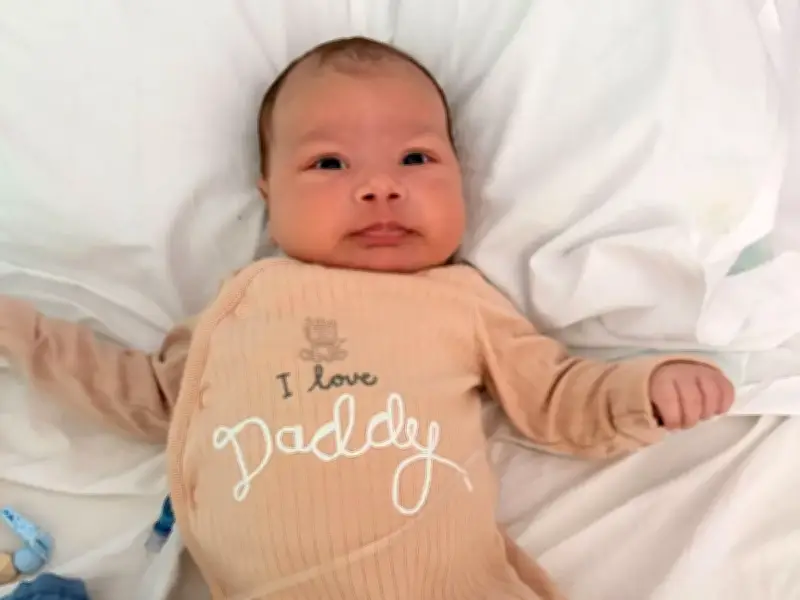
A one-month-old baby has undergone chemotherapy after being diagnosed with a rare eye cancer, thanks to early detection through a groundbreaking national study.
Jahsiah Taylor-Johnson was born on July 19, and as part of the national Generation Study, a sample was taken from his umbilical cord and tested for more than 200 rare, treatable genetic conditions. A few weeks later, his mother, Kelcie Smith, 20, was told Jahsiah carries genes for retinoblastoma, a rare form of eye cancer.
Tumour Found and Treated Early
Doctors found a tumour on his left eye on August 19 and shrunk it with laser surgery immediately. Jahsiah began chemotherapy on August 24 to further shrink the tumour. After two rounds, Kelcie and father Lewis Taylor-Johnson, 25, were told the tumour size is under control and Jahsiah won't need more chemotherapy.
Jahsiah will have the tumour lasered each month to keep it small enough to avoid problems with his eyesight. Without the study, Kelcie said tumours might not have been noticed until Jahsiah started having problems with his sight or the tumours were visible, and he might have lost his eye due to treatment.
Family's Relief and Shock
The nursery practitioner, from Birmingham, said: "I'm just so glad we did the study. It's amazing that they've caught and treated it so quickly. It's such a relief."
"They said the tumour was growing so fast he would definitely have had to lose his left eye if we hadn't been part of the genetic study and found it early. As soon as she said where she was from on the phone I was in shock."
Kelcie and HGV-driver Lewis found they were expecting a baby in November 2025. She first heard about the study when she went for a gestational diabetes test at about 20 weeks pregnant but forgot to sign up until his birth.
Spontaneous Mutation and Treatment
The Generation Study is a national study run by Genomics England and NHS England. Jahsiah was born weighing nine pounds six ounces after an emergency c-section at Birmingham Women's Hospital a few days before his due date.
Kelcie didn't expect to hear that her baby had a genetic disorder as there are none apparent in either family. Retinoblastoma is caused as the eye forms, and doctors said Jahsiah must have had a spontaneous mutation, where genetic changes happen in his body and have not come down from his parents.
Screening tests for the condition would be carried out in families where it is known to exist, but Jahsiah wouldn't normally have been screened because it doesn't run in either family. Kelcie and Lewis were shown pictures of Jahsiah's eyes on August 19 and could see the tumour on the side of the retina.
Ongoing Monitoring and Recovery
Because Jahsiah is so little, he had chemotherapy over three days—eight hours on day one, four on day two, and one on day three—with a three-week break before the next round. The new parents had to change nappies every hour and apply special creams because the chemotherapy gave Jahsiah a badly upset tummy and sore skin.
Jahsiah has been left with a little scar on his left eye and medics are monitoring him with monthly laser treatment, which he is put under anaesthetic for. The couple put a sign on Jahsiah's pram asking people not to touch him because the chemo lowered his immunity.
Kelcie said: "But I'm still so glad we did the study. I want all parents to have the opportunity of early testing, it's made such a huge difference to Jahsiah's life."
Retinoblastoma can affect one or both eyes and is usually diagnosed in children under three. Symptoms typically include a white glow in the centre of the eye, a squint, change in colour of the iris, uncontrolled eye movement, or vision problems.