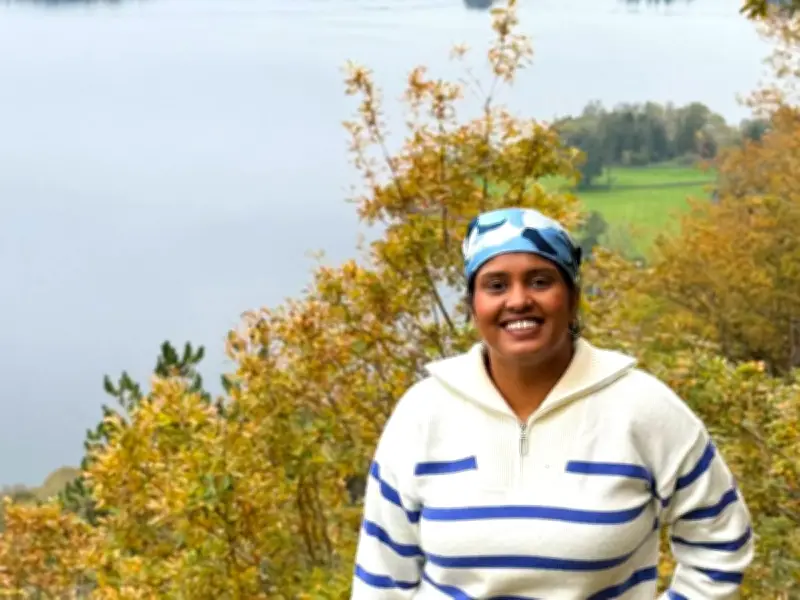
Rafiya Sherin, originally from India and now living in Preston, Lancashire, discovered she has severe aplastic anaemia, a rare and life-threatening blood disorder, after initially dismissing her symptoms as food poisoning.
A shocking diagnosis
Rafiya fell ill while visiting Serbia and Egypt with her husband Fawas and friends. On returning to the UK, her health did not improve. She requested a blood test, which her GP agreed to, though he thought the diarrhoea was causing tiredness and the dizziness was from a shoulder muscle spasm.
Rafiya said: "I asked for a blood test, which [her GP] agreed to, even though he thought the diarrhoea was making me tired and that the dizziness was from a muscle spasm in my shoulder. We agreed that I’d come in the next week for a blood test."
She became sick the next day and went to A&E, where she was told she needed electrolytes and was sent home. She said: "They even said I was pretending that I was dizzy, and I felt embarrassed. But when I eventually went for the blood test two days later, I got a phone call from the GP shortly afterwards telling me to get to hospital immediately."
Emergency treatment
Tests at Royal Preston Hospital revealed her blood levels were dangerously low and her bone marrow had completely failed. She required an emergency blood transfusion that day. Ten days later, she was diagnosed with severe aplastic anaemia, where the bone marrow does not produce enough new blood cells.
Rafiya was referred to Manchester Royal Infirmary and now depends on regular blood transfusions and multiple weekly monitoring visits to a clinic in Preston.
Impact on her life
Reflecting on the diagnosis, Rafiya said: "It's a scary prospect. I'm a very social person. I love my work, and being out and interacting with other people is an important part of who I am."
She added: "The idea that I'm too ill to work or be around my friends and family has been hard to deal with. I went travelling alone for my 30th birthday to prove to myself that I had the strength and confidence to go away by myself. I'm glad I did that now because I really need some self-belief at the moment."
Rafiya moved to the UK in 2019 to complete a Master's degree in Intercultural Business Communication and works as a Marketing Manager for Brilliant Hotels Collection.
Search for a stem cell donor
Her best hope is a stem cell transplant, but finding a match is challenging. Only seven per cent of the eligible UK population are on the stem cell donor register, and just 16 per cent of the register are from ethnic minority backgrounds, reducing the chances for non-white patients like Rafiya.
She is now working with blood cancer charity DKMS UK to encourage more people to sign up as potential stem cell donors. Rafiya said: "Finding out about the register was a relief for me. I'm glad that it exists and that people can join to find out if they can help me or someone else in my position."
She added: "But I'm also glad that I can use my story to encourage people to sign up. It's a scary diagnosis, but knowing that there is an easy, practical way that people can help, and that I can spread the word, has given me a sense of purpose during treatment."
DKMS spokesperson Bronagh Hughes said: "For Rafiya, and patients like her around the world, the right person joining the stem cell donor register could give them their lives back. We are so grateful that she has chosen to share her story to encourage more people to sign up as potential donors."
She added: "Signing up only takes a few minutes, but one day you could be called to give someone a second chance. Take a look at the DKMS website to find out more and order your free kit today; you could save a life."