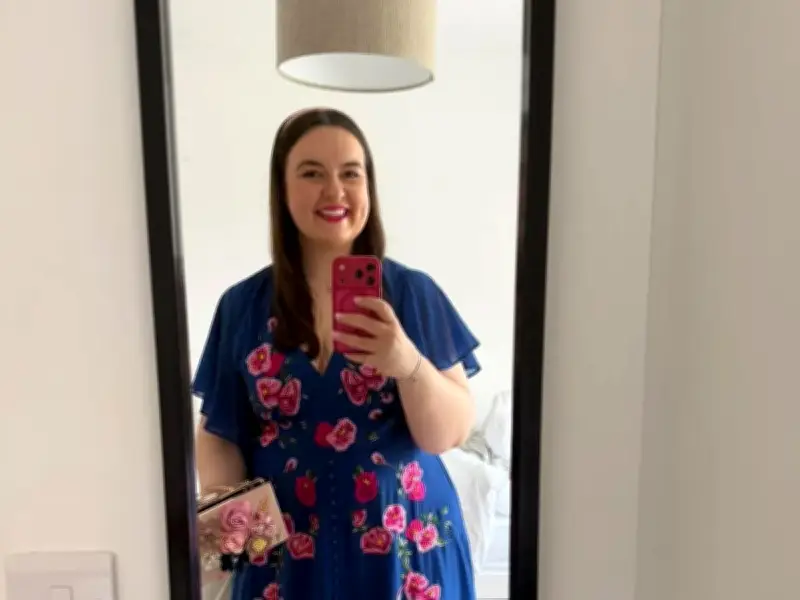
Katherine Glyde, 36, a business owner from Romford, Essex, is campaigning for better support for younger women experiencing menopause after a "football-sized" lump led to a full hysterectomy and immediate surgical menopause. She felt she does not "fit into any category" after symptoms were dismissed for 17 years before an endometriosis diagnosis.
Lump discovered before smear test
Glyde noticed a sizeable lump in her abdomen ahead of her cervical screening in February. Following the appointment, she was referred for "urgent" tests and scans, and was subsequently told she had fibroids – non-cancerous growths that develop in or around the womb – with one measuring 27cm. This meant she required a hysterectomy, a surgical procedure to remove the womb.
The total abdominal hysterectomy carried out in April triggered immediate surgical menopause, leaving her with a 25cm scar. She experienced her first hot flush just hours after coming round from surgery. Now, six months on, during World Menopause Awareness Month, she is calling for improved guidance and support for younger women going through the menopause.
"You don't fit into any category, really. You don't fit into the typical menopause space," Glyde told PA Real Life. "This happened to me in 24 hours. It didn't happen in a few years, it didn't happen gradually. There's no guideline for what you do afterwards, and I think this needs to change."
17 years of dismissed symptoms
From "period number one", aged 11, Glyde experienced heavy bleeding, severe pain and struggled with her mental health, but her symptoms were not taken seriously. "I would frequently bleed through my school uniform and have to get changed," she explained. She was prescribed the contraceptive pill by her GP aged 12, but her symptoms persisted and worsened.
She continued to visit the GP but said she was repeatedly dismissed and misdiagnosed, being told her symptoms were attributable to irritable bowel syndrome (IBS) and later glandular fever. "I got told it was everything but (endometriosis)," she said. After enduring 17 years of symptoms, she received an endometriosis diagnosis at age 28, followed by polycystic ovary syndrome (PCOS), now known as polyendocrine metabolic ovarian syndrome (PMOS).
Hysterectomy decision and recovery
Just before her routine smear test in February, she discovered a large lump in her abdomen. "The nurse said, 'I can't find your cervix, but it can move around, don't worry about that', and I said, 'Is that why I've got this weird lump in my stomach?'," Glyde explained. She was subsequently referred to gynaecology for urgent tests and scans, where she discovered she had four fibroids, with the largest measuring 27cm – swelling that doctors described as "the equivalent of being 34 weeks pregnant".
There were also concerns raised over whether the largest fibroid could be cancerous, though this has not been confirmed and investigations are still ongoing. Glyde said that due to her "period issues" from an early age and her later endometriosis diagnosis, she understood that conceiving naturally might not be an option. When it was confirmed that a hysterectomy was the most appropriate treatment, she "made peace" with this decision, though she still found it difficult.
"I think I coped with it well, but there would be certain moments that would just completely break me," she said. "I'd almost put (having children) aside... but when it was suddenly taken away, that's a whole other element of grief that you have to navigate."
Immediate surgical menopause
With pre-operative tests showing she had "no signs of perimenopause", she said she went from "one to one thousand" and experienced her first symptom almost immediately following the surgery in April. According to the NHS, menopausal symptoms can include hot flushes, depression, vaginal dryness, sleep problems, fatigue and night sweats.
Glyde explained that her HRT, which she takes in the form of patches, has been adjusted and her insomnia has since got better, but she continues to experience hot flushes and battles with her mental health. Additional side effects have included putting on weight, food cravings and hair loss, and she even temporarily developed tinnitus.
She said it feels as though she is perpetually functioning at around 60% health and she believes there is insufficient support for younger women going through menopause. She wants to campaign for better guidance and follow-up appointments for those in surgical menopause. "It's hard to see menopause and mid-life used interchangeably," she said. "I'm not the only person who's my age who's had a hysterectomy... but I've gone to menopause-specific events, and people don't think I'm there for myself."
Dr Susanna Unsworth, women's health expert for Intimina, said: "Menopause only affecting women over 50 is a common misconception. While the average age of menopause in the UK is 51, anything over the age of 45 is considered within the most common range. Furthermore, around 4% of women go through menopause before the age of 40."