
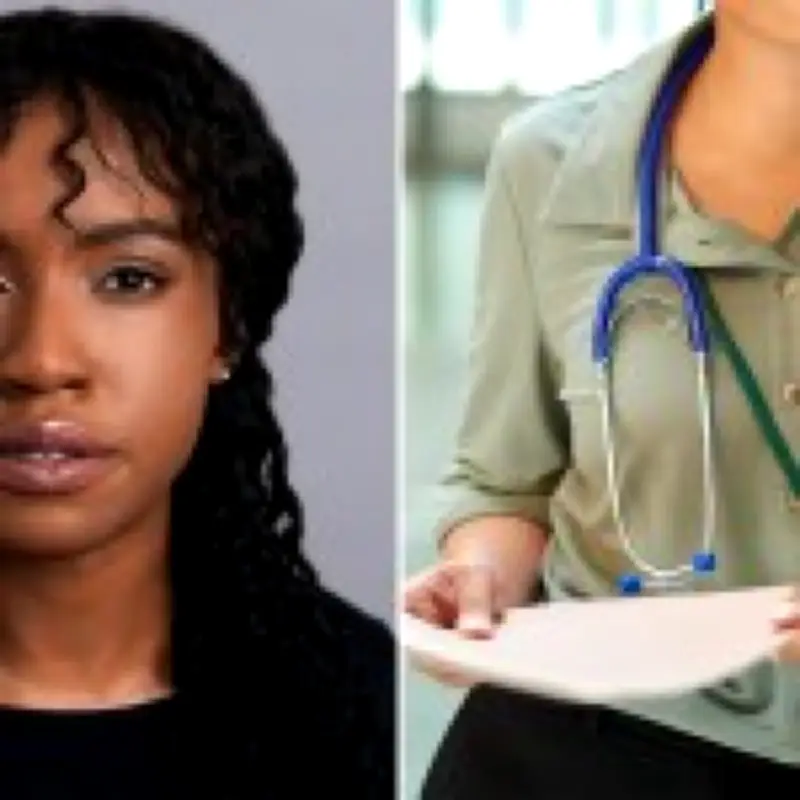
Erica James, a woman living with scoliosis, woke up last year feeling a lump around her belly button. Initially rationalising it as a sleep-induced bruise or a digestive issue, she booked a GP appointment. The doctor briefly pressed her stomach, diagnosed constipation, and prescribed a laxative.
Feeling reduced but trusting her GP, James followed the plan exactly—medication, water, more fibre. However, her body did not respond. The lump remained, and she experienced bloating and pressure around her belly button, visible even through her clothes. Bending down became painful, and stress caused cramping.
Second appointment revealed the truth
After a couple of weeks, James stopped the medication and booked an appointment with another GP for a second opinion. That second appointment changed everything. Before she fully explained, the new GP spotted the lump—visible from the end of the bed. The doctor examined her with more precision and said, 'This could be fibroids,' non-cancerous growths of tissue.
Hearing the word transported James back to 2017, when an ultrasound for her scoliosis had off-handedly revealed a small fibroid on her uterus. The doctor at that time assured her it was nothing to worry about. As it turned out, that doctor was wrong. The new GP told James she urgently needed hospital scans—and she began to cry, not just from fear but from relief that the lump finally had a potential name.
Waiting and learning about fibroids
Over the next two to three months, James underwent blood tests, stool tests, and waited for an ultrasound. She sought understanding online, finding spaces where Black women shared their experiences. She learned that many people with fibroids—Black women in particular—of a similar age (20s, 30s) did not feel seen by medical professionals. According to James, many GPs in the UK and US collectively lack sufficient information on fibroids to diagnose or treat them, allowing growths to become large enough to require surgery.
James was referred for a full 40-minute abdominal scan. Her mother accompanied her. Afterwards, she was told there were multiple fibroids, one around 7cm, but she needed to wait for an official diagnosis. A few weeks later, the hospital called. When the doctor confirmed the fibroids diagnosis, James cried again. They explained that multiple large fibroids on her uterus typically cause heavier and more painful periods—something she had often experienced without understanding why.
Impact and ongoing care
James realised her bleeding had become heavier when the lump appeared, and with bloating, it became clear how much the fibroids had multiplied since the 'small' one spotted in 2017. The doctor told her that while many women can get pregnant with fibroids, they can cause complications, especially when large. James's fibroids are outside her uterus, offering slight relief, but the number and size remain a scary concept—especially given she had been told it was constipation months earlier.
Now James has ongoing gynaecology appointments and monitoring to check if the fibroids grow and to determine if treatment is needed, such as injections to lower oestrogen levels or procedures to shrink them. She often waits months to be seen and is currently waiting for her next appointment. 'It's a frustrating waiting game,' she said, 'but what stays with me most is how often Black women are expected to prove their pain before it is fully explored.'
James discovered that Black women are up to three times more likely to develop fibroids, yet it was not considered during her first GP visit. 'I often think about how symptoms are read differently depending on skin tone, and how easily things can be missed when assumptions are made too quickly,' she added. 'If I hadn't pushed for a second opinion, I might still be taking medication for constipation.'
James now trusts herself differently and hopes sharing her story will make it easier for someone else to be believed the first time around.




