
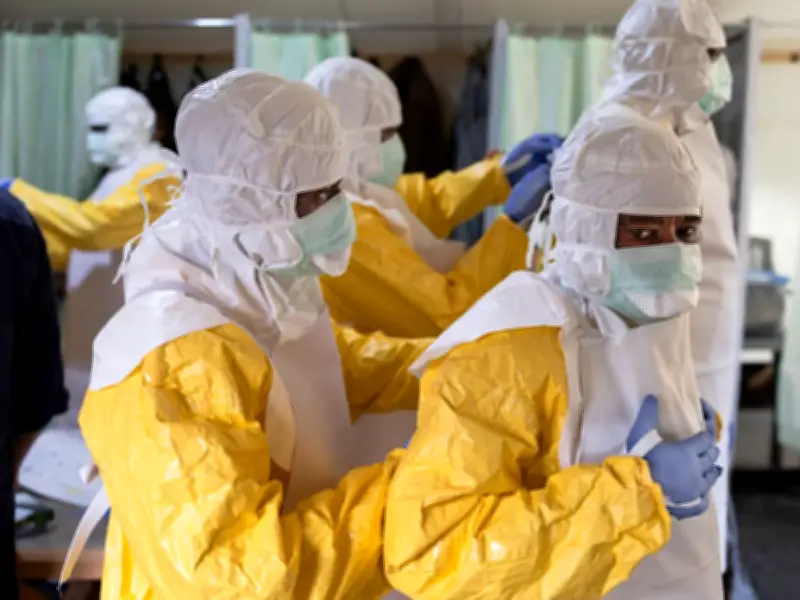
A British humanitarian worker is being monitored in isolation at a London hospital after being exposed to Ebola in the Democratic Republic of Congo. The UK Health Security Agency (UKHSA) confirmed the male patient came into contact with the virus while carrying out aid work on behalf of a humanitarian organisation.
As a precautionary measure, he was airlifted from the country aboard a specially chartered flight. He is currently being assessed by specialist medical staff and is not displaying any symptoms at this stage.
Evacuation and Monitoring
The UKHSA stated: "The individual is not currently displaying any symptoms and remains well, but as a precautionary measure they have been evacuated on a flight chartered solely for the evacuation. They are now being assessed and monitored in isolation by infectious disease specialists at a London hospital. The incubation period of Ebola ranges from two to 21 days and the individual will be closely monitored and required to isolate throughout this period."
Authorities stressed there are no confirmed cases of Ebola on British soil and the risk to the wider public remains low. Richard Pebody, director of epidemic and emerging infections at the UKHSA, said: "This individual has been transferred out of an abundance of caution, and we're pleased they remain well."
Previous UK Cases and Current Outbreak
Britain's most recent Ebola case occurred in 2015 when three healthcare workers contracted the virus after returning from Africa. Those infected must self-isolate for between two and 21 days.
The current Ebola outbreak in DR Congo has persisted for several weeks, with authorities warning it is advancing "substantially faster" than previous epidemics. According to the nation's health ministry, 930 fatalities have been recorded following 2,344 reported cases as of last Saturday.
Regional Spread and WHO Warning
Beyond DR Congo's borders, 20 confirmed cases have resulted in two deaths — one in Uganda and another in France. On Monday, the Democratic Republic's Ministry of Health reported progress: "Patient care and support capacities are consolidating, with 22 new recoveries recorded in 24 hours."
The World Health Organisation (WHO) has cautioned that dangers from this uncommon Ebola variant remain "very high", with transmission linked to multiple contributing factors. While Uganda appears to have contained the deadly Bundibugyo strain, the fatal virus continues spreading throughout neighbouring DR Congo, where widespread turmoil persists due to clashes between government forces and insurgent factions.
WHO states: "The risk in the Democratic Republic of the Congo remains assessed as very high due to ongoing transmission and the continued expansion of the outbreak into new health zones, increasing the potential for further national and regional spread."
Numerous factors are fuelling the ongoing transmission of the Bundibugyo strain, but WHO officials have identified the regional conflict as the primary driver. Populations are being compelled to repeatedly relocate to escape violence, while disruptions to food and clean water availability have accelerated transmission. A WHO report stated: "The outbreak continues in a complex humanitarian and conflict-affected environment, characterized by highly mobile and often displaced populations, many of whom have limited access to basic services, including food, clean water, shelter, health care and protection."




