
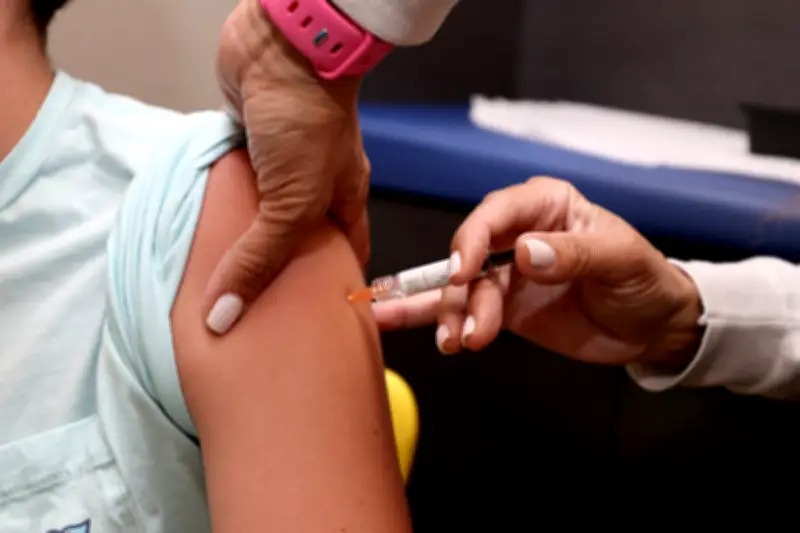
The Trump administration has ordered US health programs receiving federal funding to adopt new priorities within days, including a focus on “parental authority” in education and a move away from proven overdose-prevention methods like harm reduction. Experts say this signals greater political interference into public health and will exacerbate the opioid overdose crisis.
The new priorities, communicated by the US Centers for Disease Control and Prevention (CDC) to state, territorial, tribal, and local health programs, must be agreed to within five business days or by 1 July. The notice did not come from program staff at the CDC, who were unaware of the new requirement, according to a source familiar with the memo. Programs focused on immunizations, HIV, hepatitis, and tobacco received the notice.
Political Interference in Public Health
Nabarun Dasgupta, a street drug researcher and senior scientist at the University of North Carolina at Chapel Hill’s Injury Prevention Research Center, said the move “absolutely” appears to signal greater political interference into public health. “This is a warm-up. This is a warning shot,” he said, describing it as a “prelude” to imposing similar restrictions on other types of federal funding, such as direct service provision.
Dorit Reiss, a vaccines expert and professor at UC Law San Francisco, noted that some of the new policies “are in tension with public health” and would undermine work, including “prioritizing parental control over, potentially, children’s health and community health.” She added, “Similarly, housing programs and harm reduction programs save lives and promote health.”
Impact on Overdose Prevention and Harm Reduction
The new CDC memo deprioritizes housing first, harm reduction, and safe consumption programs for substance use—all strategies proven to help reduce drug overdoses and assist with substance use disorder. Dasgupta emphasized that harm reduction programs are critical frontline care for engaging people who are falling through the cracks. “The main thing that harm reduction programs do is bring those people into care and into services that allow them to make those better choices about what they put in their bodies,” he said.
Dasgupta highlighted the emergence of medetomidine, a drug adulterant replacing fentanyl on the east coast. Unlike fentanyl, medetomidine does not produce a high but can cause heart attacks among people who quit cold turkey. This represents a sea change in street drugs with consequences greater than the introduction of fentanyl, which contributed to a record 107,941 known drug overdose deaths in 2022. “This new form of adulterant really is a gamechanger in terms of being able to provide care, and in this exact setting is when you actually need harm reduction more than ever,” Dasgupta said. “You need to help them step down their use to the point where they can go into treatment, but if we use an abstinence-first model, if we move away from harm reduction, if we move away from housing first, then you’re going to end up filling ICUs and emergency rooms with people in this severe form of withdrawal that they weren’t expecting.”
Potential Attack on School Vaccine Mandates
The new priorities include “parental authority” and policies giving parents “greater control over their children’s education,” according to a copy of the memo obtained by the Guardian. This could be a reference to vaccination requirements for school attendance. The Trump administration has signaled a focus on ending these requirements, including letters on school vaccine mandates from Robert F. Kennedy Jr., the HHS secretary and a longtime vaccine critic.
Vaccine mandates are set at the state and sometimes local level. Requiring states, territories, tribes, and localities to agree to the CDC priorities may signal pressure to reduce these mandates, Reiss said. “It might be a next step in the fight against vaccines and vaccine mandates,” she said. The requirements may put pressure on states to reconsider vaccine mandates and “may be related to state immunization grants – a way to tell states that if they require vaccines they will lose grants,” she added.
Parental control of child education is not within the CDC’s purview, and federal vaccine grants are usually focused on access, not mandates. Withholding federal funding for state health programs because a state or locality mandates some vaccines would be “essentially begging for a lawsuit,” and states would have “very good arguments” against such a move, Reiss said. “Of course, that doesn’t mean they won’t try.”
Broader Implications and Legal Concerns
The CDC is also prioritizing evidence-based programs to reduce homelessness, drug use, and “public disorder,” which is not defined in the memo. A July 2025 executive order from the White House took aim at unstably housed and mentally ill people, creating a pathway to criminalize greater numbers of people, experts have said.
After this story was published, Emily Hilliard, a spokesperson for the US Department of Health and Human Services (HHS), said that “grantees were directed to review their work plans and ensure their activities align with the Department’s priorities and produce meaningful public health outcomes.”




