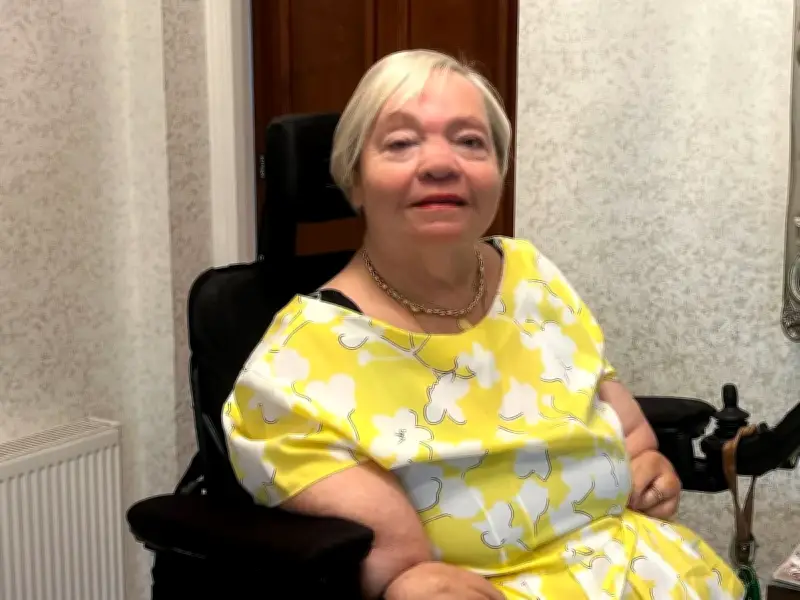
Teresa Smith, a Walton woman given just minutes to live when she was born 66 years ago, is now campaigning to build a unique memorial in Liverpool to commemorate the dozens of other Thalidomide survivors from Merseyside like herself. Smith, who was born on October 12, 1960, with exceptionally short limbs and weighing as little as a bag of sugar, was placed in her father's woolen coat pocket to keep her warm as she was rushed to Alder Hey Children's Hospital. Despite doctors' bleak prognosis, she survived and believes she is now the oldest female Thalidomide survivor in Liverpool.
The Thalidomide Tragedy
Thalidomide, created by the German company Grunenthal, was introduced in the 1950s as a medication for pregnant women suffering from morning sickness. In subsequent years, babies whose mothers had taken the drug were born with serious disabilities, including shortened arms and legs, blindness, deafness, heart problems, and brain damage. In some cases, babies died. The drug was discontinued in 1961.
Facing numerous battles throughout her life, Smith has recently been preparing for her latest "fight" by starting a fundraising drive to have a sculpture made to commemorate Merseyside's Thalidomide victims and families. Still in its early phases, she aims to raise £5,653 for the initial design and maquette stage of the sculpture, which she hopes will be located at Bootle Strand.
A Memorial for Recognition and Justice
Smith told the ECHO: "For me, the Thalidomide memorial is about much more than a sculpture. It is about recognition, justice and making sure that what happened to our generation is never forgotten."
She added: "Liverpool, Bootle and Sefton have a significant connection with the Thalidomide tragedy, yet we still do not have a permanent memorial here to acknowledge the lives affected. We are getting older now, and I believe we have waited far too long for this recognition. I want this memorial to remember the babies who lost their lives, to recognise those of us who survived and to honour our parents and families, many of whom faced unimaginable difficulties."
"This is also about the lessons that must be learned regarding medicines, disability, honesty and accountability. Australia has recognised its Thalidomide survivors through a national memorial. I believe Merseyside deserves recognition too. I am determined to see our proposed memorial at Bootle Strand become a reality."
Education and a Lifelong Fight
Smith hopes the memorial will serve as an educational tool for younger generations who may not have heard of the Thalidomide scandal. She said: "I think it'll be a form of education, I think the Thalidomide scandal should never be forgotten. We need to be bringing it more into schools. I know they have sometimes put it on the curriculum, but I think we need to keep reiterating [the importance] of Thalidomide and allow children to come and see this sculpture and read about the historical elements of it."
With her campaign to raise funds for the initial design and maquette stage set for November 26, Smith remains committed to overcoming this latest hurdle. She said: "My life's always been a fight, there's always been a discriminatory element. I've always had to theoretically prove myself, which most other people haven't had to do."
"I praise my parents for giving me the gift of being able to fight and challenge. My mum was Irish and she was very good at being able to challenge. I don't think I'm ever going to really change. I don't like injustice, I don't like inequality."