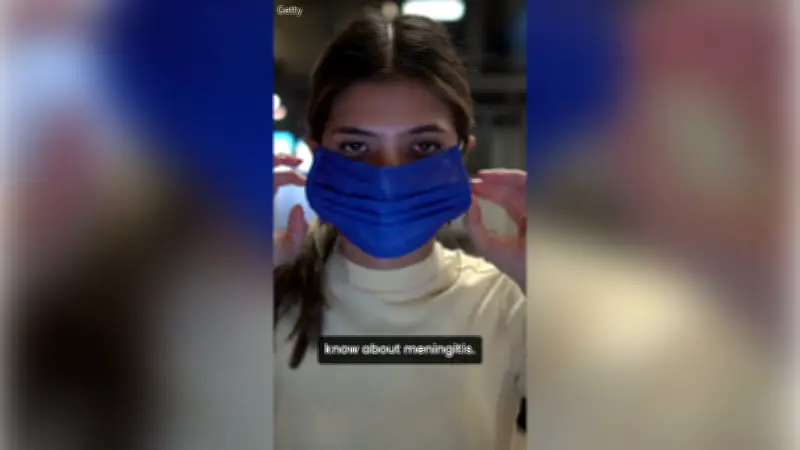
A university student has described contracting meningitis as "unlike anything you'll ever have" and is urging others to recognise the disease's flu-like symptoms. The 19-year-old, who is now studying at the University of Exeter, spent 48 hours in A&E after being diagnosed with a mixture of viral and bacterial meningitis.
Student's ordeal began before university
Sofia Mattacola Westley, from Northamptonshire, caught meningitis before beginning her studies in 2025. Speaking to Pharmacy2U, she explained that she was enjoying her last few weeks at home when she contracted viral meningitis, with traces of a bacterial infection from a concert. She was 18 years old at the time.
Three days later, Sofia woke up with symptoms of a common cold. She experienced a "fever and a lingering headache," which she mistook for a usual migraine. Thinking she was suffering from a regular illness, she took a bath with salt crystals to relieve herself. "When I got out a few hours later, I had a rash all over my body," she said.
Hospital stay and diagnosis
Sofia then began to vomit persistently, though her health was "up and down" after the initial symptoms. "I was feeling pretty decent one minute" and was able to enjoy the August weather, but then got in the shower and was "not able to do anything but throw up," she continued.
After Sofia passed out at home, her mum called 111. An ambulance picked her up, and she spent 48 hours in A&E, which she described as "horrendous." She was first put on a ward for five days, where she underwent a spinal tap, and then moved into a room with her mum for over a week, who refused to leave her side. The spinal tap informed doctors that she was living with a mixture of viral and bacterial meningitis.
During her time in hospital, Sofia said: "I literally couldn’t keep any food down, I couldn’t really drink, I couldn’t sleep." After receiving the correct treatment, she woke up one day and could "finally keep food down."
Long-term effects and advice
After two weeks, she was released from hospital but still suffers every day from long-term effects of meningitis, including chronic fatigue and low-pressure headaches. Having taken a year out of education, Sofia has started university this year but opens up about the mental and physical toll the illness has caused her. "I do just want to drop out; I’m really struggling to get back in the vibe of being academic and going out there socially," she said.
"I’ve lost motivation to do things in the future. I used to have such a good end career goal. I used to want to work in Formula 1. That’s all just gone; I just want to be at home by myself because it's hard to do things every day without feeling ill."
Sofia said she has only been out partying once during Freshers' Week and explained: "Going out is not something I look forward to anymore. The worst consequence of it is mentally what it's done to me." She advises fresher students to be "proactive in trying not to get ill" and added: "If you have a gut feeling that something’s not right, definitely get it checked out."
Recognising the signs of meningitis
A Pharmacy2U spokesperson said: "When students head back to university for the start of the year, the coming together of large numbers of people brings new pathogens like viruses and bacteria with them. Freshers' flu is the overarching term for this combination of common cold viruses that typically occur as these new germs are spread amongst the student population."
"On the other hand, meningitis is the inflammation of the protective linings around the brain and spinal cord. This is commonly caused by viral or bacterial infections, though it can also be triggered by fungal, parasitic and other non-infectious factors. Meningitis can affect anyone, but students are particularly at risk as they often live in close proximity with one another."
"Despite having some similar symptoms, this is a far more serious, and potentially fatal, illness that requires immediate medical attention, so everyone should be able to recognise the signs."
They added: "Many symptoms of meningitis are similar to freshers’ flu, including a runny nose, headaches and a high temperature. However, there are some more serious symptoms everyone should be aware of that could point towards meningitis." These include severe headaches, sensitivity to light, neck stiffness (not being able to touch your chin to your chest), having been in close proximity with someone who has been diagnosed, and a bruise-like rash. Depending on age, confusion, seizures and difficulty walking are other serious symptoms which can occur.
The spokesperson said: "People with meningitis can also experience rashes, but these often occur at the later stages of the illness or not at all. As a rash may not appear at all and symptoms can occur in any order you should never wait for a rash to appear to seek medical attention." A meningococcal rash can start as tiny red or purple pinprick spots and may develop into larger purple blotches that look like bruising. The glass test can be used to check whether a rash fades under pressure, but it does not rule out the disease: press the side of a clear glass firmly against the rash. If the spots remain visible through the glass and do not fade, seek urgent medical help.
"However, do not wait for a rash to appear before seeking help if someone is seriously unwell, as a rash may not always be present." If you, or someone else, is showing signs of meningitis, the NHS advises to call 999 or visit A&E.