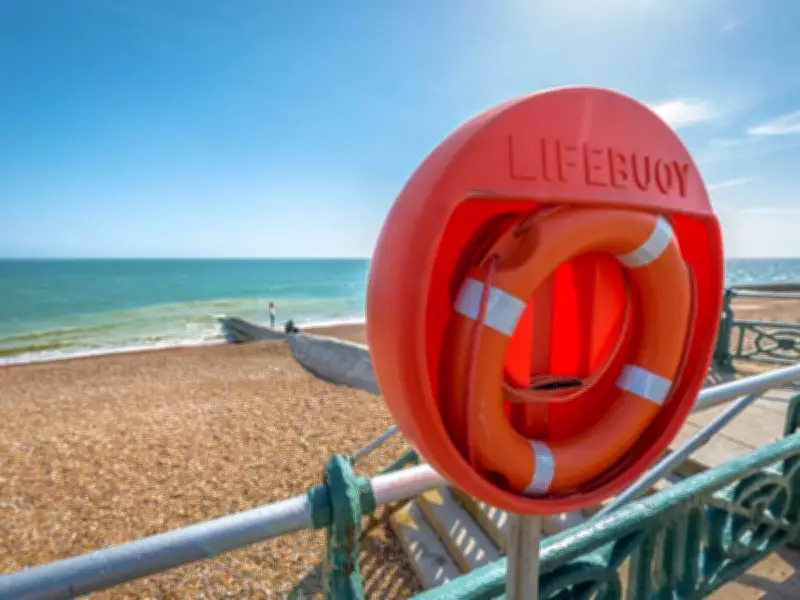
The Royal National Lifeboat Institution (RNLI) wants everyone to remember three important words if they ever find themselves in difficulty in water. The life-saving charity shared an educational video on its Facebook page.
In the video, the experts said in three words that if you ever get into trouble in water, you should 'float to live'. A team member also shared how to float. She asked: "Have you ever tried to float in water and your legs have started to sink? Maybe you start to panic and you think oh my god, I can't float."
How to Float to Live
"Well, we're here to tell you, firstly, you're not alone. And secondly, just because your legs start to sink doesn't mean you can't float to live. You see, we all float differently. And float to live is all about conserving your energy and controlling your breathing. Not about making the perfect starfish shape in the water," the team member said.

"So that might mean your legs dropping, your head tilted back, using your arms to gently scull the water. Because we all float differently. Just because your legs are dropping doesn't mean you can't float."
The video includes a demonstration, or people can view further instructions on the RNLI website. The advice says: "The best way to float is to tilt your head back with your ears submerged."
Practical Steps and Real-Life Impact
"Try to relax and breathe normally. You can gently move your hands and legs to help you stay afloat if you need to. Spread your arms and legs out to improve stability – and it's OK if your legs sink, we all float differently," the advice continues.
"Once your breathing is under control, call for help or swim to safety. Practise floating in a supervised location like a swimming pool." The idea is that floating helps you rest and recover your breathing. You can then swim to safety or call for help. According to the RNLI, the method has helped in real-life emergencies.
"This advice is useful to everyone, however you use the water. It has helped save the lives of more than 50 people in all sorts of situations. From children in rip currents to runners falling into canals, from people swept out by waves, to fisherman falling overboard," the charity said.
If you have fallen into water, it's also important to be aware of cold water shock. The RNLI says you should not try to swim straight away. Instead, wait for the initial effects of cold water shock to pass, which takes less than a minute.