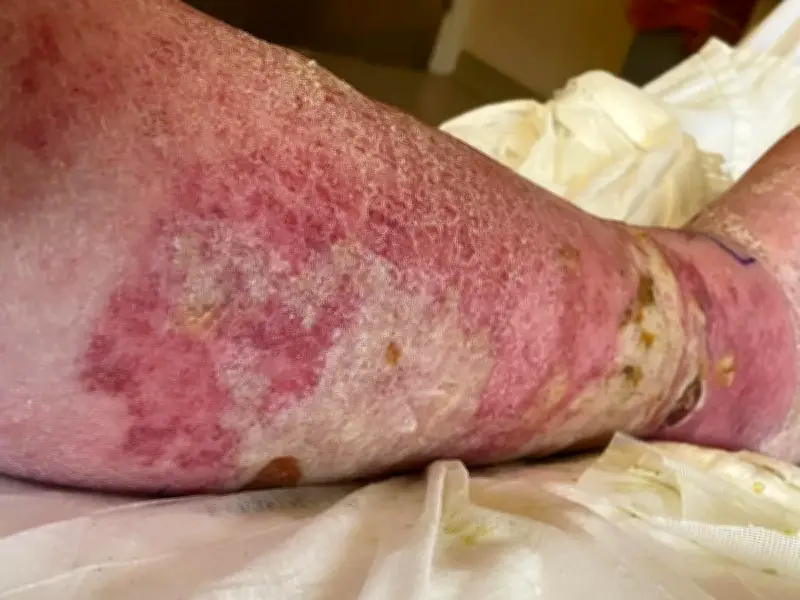
A retired estate agent from Blackpool spent 18 days in hospital after a bite from Britain's most venomous spider caused his leg to swell to the size of a "watermelon." Glenn Priestley, 73, was bitten by a noble false widow spider while renovating his 96-year-old mother's house.
Priestley initially felt only a "pin prick" sensation on the back of his left leg. The next day, however, the limb had swollen to 38 cm (15 inches) in diameter, prompting a visit to his GP.
Hospital Treatment and Diagnosis
After blood tests revealed raised infection markers, Priestley was sent to Blackpool Victoria Hospital's Medical Assessment Unit. Staff conducted an MRI scan, CT scan, a Doopla scan, and an X-ray before concluding, through a "process of elimination," that he had been bitten by a false widow spider.
Priestley described the pain as "unbearable at times," rating it nine out of ten and calling it "the most painful thing I've ever experienced." He added: "For the first nine days, I couldn't put my foot down to the floor as if I lowered it all the blood rushing through the wound was extremely painful."
Recovery and Ongoing Effects
The bite occurred on September 16 after Priestley picked up a blanket from the floor in the loft of his mother's home. He had earlier noticed a medium-sized brown spider climbing a wall but assumed it was a common house spider. He continued with his plans and attended two veterans' events the following day, despite increasing pain.
Priestley was discharged on October 6 after 18 days of recovery, most of which he spent in a wheelchair. He still requires a Zimmer frame because his foot and leg remain swollen and bandaged. Of the six spider species in the UK capable of biting humans, only the noble false widow and the cupboard spider can pierce human skin; Priestley believes the noble false widow, which can grow up to 1.5 cm, was responsible.