
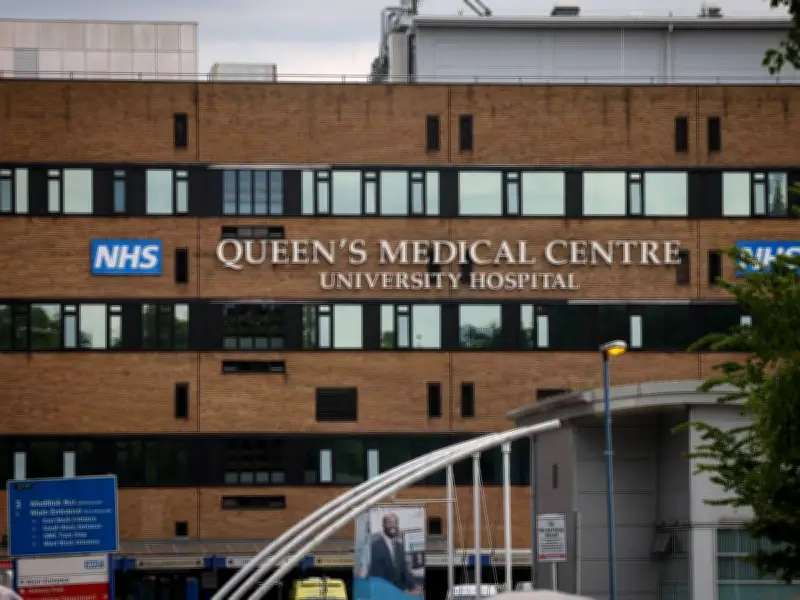
The Ockenden review has identified 'longstanding and deeply embedded systemic failures' at Nottingham University Hospitals NHS Trust (NUH), with hundreds of potentially avoidable maternal and neonatal deaths and injuries. The inquiry, led by senior midwife Donna Ockenden, revealed that bosses at NUH were aware of grave concerns within its maternity unit stretching back years, yet failed to act to prevent further tragedies.
Scope of the Review
More than 2,500 families and upwards of 800 members of staff contributed to the largest maternity inquiry ever undertaken in NHS history. NUH has already paid out millions of pounds in compensation and fines following prosecution for substandard care. Specialists on Ms Ockenden's review team uncovered deeply entrenched problems, noting that failures in care 'may have or substantially impacted on the outcome in six deaths' of women.
The review further detailed instances in which babies lost their lives, including through oxygen starvation, mismanaged labour, hospital-acquired infections and inadequate postnatal care provided by midwives and doctors. Among the babies who died were Harriet Hawkins, who died 'avoidably in 2016 following significant failures in maternity care', Wynter Andrews who died in 2019 'after significant failures in care', and Ladybird, whose parents were wrongly told to terminate a healthy pregnancy, the report said.
Potentially Avoidable Harm Cases
In total, experts conducting the review identified 'potentially avoidable' outcomes linked to 444 maternity cases examined up to May 2025, along with 76 neonatal (newborn) cases. Every one of these cases was assigned a harm grade of either 2 or 3, with grade 2 indicating 'significant concerns' and grade 3 flagging 'major concerns' over the standard of care provided. Grade 2 reflects sub-optimal care where alternative management could have altered the outcome, while grade 3 denotes situations where different management would reasonably have been expected to make a meaningful difference.
In total, 31 reviews into baby neonatal deaths at the trust were found to involve potentially avoidable harm at grades 2 and 3. At least eight of these babies should have survived. A further 30 cases of potentially avoidable harm were connected to 'massive obstetric haemorrhage', while 12 reviews into infant cases revealed significant or major concerns surrounding brain damage caused by a lack of oxygen.
Systemic Failures and Culture
Examining the catalogue of failings stretching back over many years, the report uncovered shortcomings in foetal monitoring, poor CTG interpretation, a failure to identify babies in distress during labour, and a failure to escalate certain cases to senior medical staff. 'In a number of cases these failures contributed to severe neonatal injury, stillbirth and neonatal death,' the report said. In numerous instances, following delivery, 'babies who demonstrated signs of poor feeding, hypoglycaemia, infection or clinical deterioration were not appropriately assessed or escalated, leading to avoidable harm and, in some instances, death.'
Assessors also discovered that certain families who voiced concerns to the trust were assured lessons would be learned, yet 'similar incidents recurred repeatedly over many years'. There was additionally 'evidence that harm was sometimes downgraded' by the trust, while some families were informed babies had died of natural causes when that was untrue. 'Across multiple cases and over many years, opportunities to recognise deterioration, escalate concerns and intervene appropriately were missed,' the report said.
Specific Findings
Experts on Ms Ockenden's team also discovered multiple examples where failures in neonatal care may have contributed to long-term brain injury and adverse neurodevelopmental outcomes in babies. Leadership instability was a 'major contributing factor' affecting the quality and safety of maternity services. Between 2017 and 2021 there was 'sustained turnover in senior maternity leadership positions' and senior operational roles.
A 'bullying and toxic culture' at the trust over years was reported. The review team heard how some staff members were 'specifically and consistently mentioned as forming intimidating cliques that were/are well known, but not confronted or challenged.' Staff also 'reported experiences shaped by longstanding cultural challenges, including hierarchy, bullying (particularly by some labour ward co-ordinators), nepotism and aggressive behaviour'. Staff reported 'a culture of organisational denial' over years, where poor outcomes 'were regularly dismissed as known complications.'
There were numerous instances of 'poor telephone risk assessment' when women phoned with concerns during pregnancy and labour, coupled with absent documentation and a 'culture of discouraging women to attend in-person'. Staff who worked at NUH prior to 2017 told the review team 'there was a culture of not admitting women who were seeking admission in labour'. One staff member said: 'There was nowhere for those women to safely go to, because they were perceived as bed-blocking on labour suite.' They said there was a lack of staff and 'honestly, when I worked there, it would be when they complained enough, when they complained loud enough..'
Some labouring women experienced delays in being examined, and there were instances where staff were hesitant to escalate concerns and transfer to the labour ward 'due to professional cultures.' The 'toxic bullying culture among labour ward co-ordinators' persisted for years and led to women receiving substandard care. Reviewers also discovered inappropriate use of the drug oxytocin to induce labour. Delays occurred in identifying and escalating cases of postpartum haemorrhage and major obstetric haemorrhage, resulting in harm to women.
During antenatal care, women consistently reported feeling dismissed, insufficiently informed and lacking support when voicing concerns, especially regarding reduced foetal movements or developing medical complications. Communication support proved inadequate for women whose first language was not English. Within postnatal care, some mothers presenting with severely elevated blood pressure or deteriorating conditions were not properly assessed, and there were 'failures in the recognition and management of the unwell or poorly feeding baby'. Certain patients received telephone consultations when face-to-face appointments were necessary. 'In several cases the consequences of these failures were severe and irreversible.'
Trust managers were frequently perceived as 'invisible, unapproachable and unresponsive', dismissing concerns, engaging in bullying behaviour, and displaying rudeness and aggression. Since at least 2012, there existed a 'running theme of poor governance within maternity', encompassing serious incidents left uninvestigated and a failure to implement lessons and changes following incidents. Staffing shortages and 'operational pressures' impacted every aspect of maternity services. Staff reported routinely operating 'beyond safe capacity'.
Certain patients reported insufficient pain relief, with one stating: 'It felt brutal... traumatic... they were screaming at me... "you need to pull yourself together"...' Another patient said staff were dismissive and said 'Is this your first baby...? Take some paracetamol and have a hot bath.'
The review also examined 17 babies and one adult who died and what happened to them after death. It uncovered 'recurring examples of failure to protect the dignity of the deceased, including an early gestation baby disposed as clinical waste; dehumanising language by clinicians; and poor mortuary care, including failure to comply with legal requirements.' On Monday, Nottinghamshire Police confirmed that two men had been arrested 'in connection with operating practices in the mortuary service' provided by the trust.
Response and Recommendations
In her introduction to the report, Ms Ockenden said: 'We owe it to every mother, every baby and every family whose terrible experiences are recorded here that they are never repeated.' She further stressed that 'the culture of compounding of harm needs to stop'. Detailing the case of Jack and Sarah Hawkins, she said baby 'Harriet's avoidable death was compounded by a systemic cover-up and investigations designed to mislead, which took a profound toll on the couple's wellbeing.' She went on to state that the organisations which let the Hawkins family down included the trust, the Nursing and Midwifery Council, the Human Tissue Authority and the Care Quality Commission (CQC) regulator.
Ms Ockenden also warned that many of the oversight systems put in place for maternity care 'are no longer fit for purpose'. The measures outlined in the review 'when implemented will drive improvement both within perinatal services at Nottingham University Hospitals NHS Trust and across England', she stated. 'The evidence heard by the review team makes clear that we are not yet consistently providing safe, equitable and compassionate care to all women, babies and families. That must change.'
Ms Ockenden raised concerns that a new national framework for clinical governance, introduced to hospitals across England in 2022, may also be flawed. She noted that 'like many other trusts NUH has struggled to implement PSIRF (Patient Safety Incident Reporting Framework). In maternity, the policy for including incidents is vague, resulting in under-reporting.'
Health Secretary James Murray vowed to 'deliver lasting change', stating: 'We will reflect on these findings and lessons from Nottingham will form part of our national plan to deliver real improvements in maternal and neonatal care for all families.' NUH trust chairman Nick Carver and chief executive Anthony May, who both took up their posts in 2022, issued an unreserved apology in an open letter, acknowledging that while progress had been made, significant work remained. They stated: 'We apologise unreservedly to the women and families who have suffered harm, loss, trauma or distress while receiving care in our services.'




