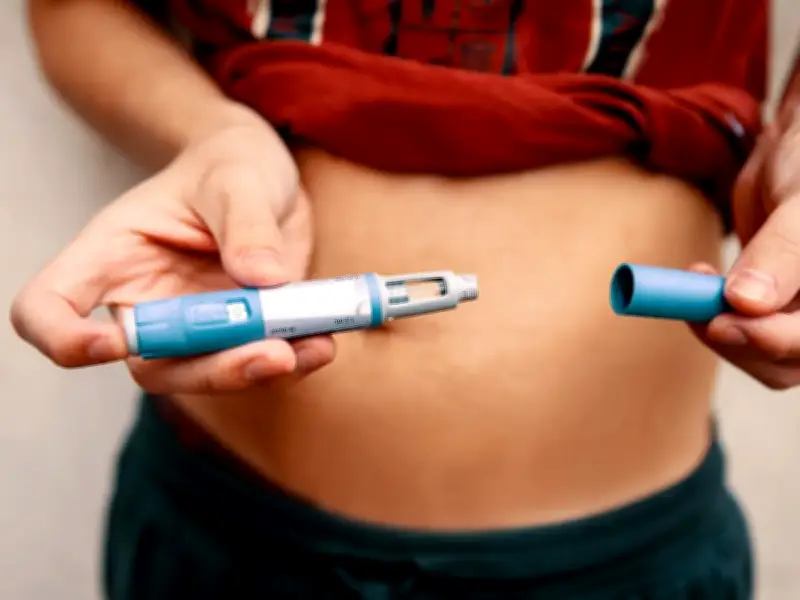
Dr Amir Khan, an NHS GP and television doctor, has issued a fresh warning to anyone considering stopping weight-loss injections such as Wegovy or Mounjaro. Speaking on his podcast, No Appointment Necessary, with co-host Cherry Healy, he outlined the risks of discontinuing the medication without substantial lifestyle changes.
Weight returns quickly after stopping
Dr Khan cautioned that ceasing weight-loss injections without implementing significant lifestyle modifications frequently results in the weight returning. He clarified that research shows that within four weeks of discontinuing the medication, hunger hormones and 'voices in your head' return to their previous levels.
"What the studies show, and there have been studies on this, within four weeks your body reverts back in terms of the voices in your head, the hormones that have been changed by these drugs all revert back to what they were within four weeks," he said. He explained that the body essentially "resets to factory settings" within this period.
Most lost weight returns within a year
He noted that within one year of stopping, evidence indicates people regain roughly 60% of the weight they shed, and many return to their initial starting weight within two years. "Within a year, studies suggest you've put on 60% of the weight that you lost within a year," he said. "And then within two years, a lot of people go back to the weight they started with before the drugs."
He added that for those on the medication for type 2 diabetes, treatment can continue indefinitely: "If you're on it for type two diabetes, you can be on it for as long as you need to be on them, which can be forever because it's managing your long-term chronic condition."
Why the body fights back
According to Dr Khan, weight returns after ceasing injections because the body's internal hormonal systems revert to their former state. He explained that within four weeks of discontinuing the medication, the hunger hormones and 'voices in your head' that were suppressed by the drug return to their factory settings.
"All it knows is that you are taking in less calories and that puts it into starvation mode. So, it will fight back. It will try and switch on your hunger hormones again. It will slow down your metabolism," he said, adding that the body holds on to fat and storage more aggressively and prioritises organs and muscles over hair and nails, which can weaken and fall out.
He noted that weight often plateaus rather than continuing to drop: "So, you'll find that you're not losing weight as much. Now, that isn't the drugs not working because you've lost some weight. What you shouldn't be doing is putting on weight. What usually happens is the weight kind of stabilises and plateaus, and that is your body fighting back."
NHS treatment duration and how the drugs work
As a general rule, the NHS advises a minimum two-year course of treatment with weight-loss injections to allow sufficient time for lifestyle changes. Dr Khan observed that this is not a rigid guideline and that many people may need treatment for longer, given that obesity is a complicated, long-term chronic condition.
"NHS suggests two years at least to make all those changes, but that isn't a hard and fast rule and a lot of people may need to be on it for longer than that," he said. "I suspect what we'll find is actually two years isn't enough, and things bounce back as they once were, and they'll be on it long term. And what is tricky is you might be on it for two years, you stop it, the weight comes back, and you have to go back on it again, and it's better to have been on it and not stopped it."
Mounjaro and Wegovy belong to a drug class known as GLP-1s, which are incretin hormones the body produces naturally. The injections work in three principal ways: slowing gastric emptying, regulating insulin, and brain signaling. They slow the passage of food from the stomach into the small bowel, helping people feel satisfied for longer. For those with type 2 diabetes, the medications signal the pancreas to produce more insulin when food is consumed. The most substantial impact occurs in the brain, where the medications suppress the hunger hormone ghrelin while stimulating the fullness hormone leptin, effectively diminishing food cravings.