
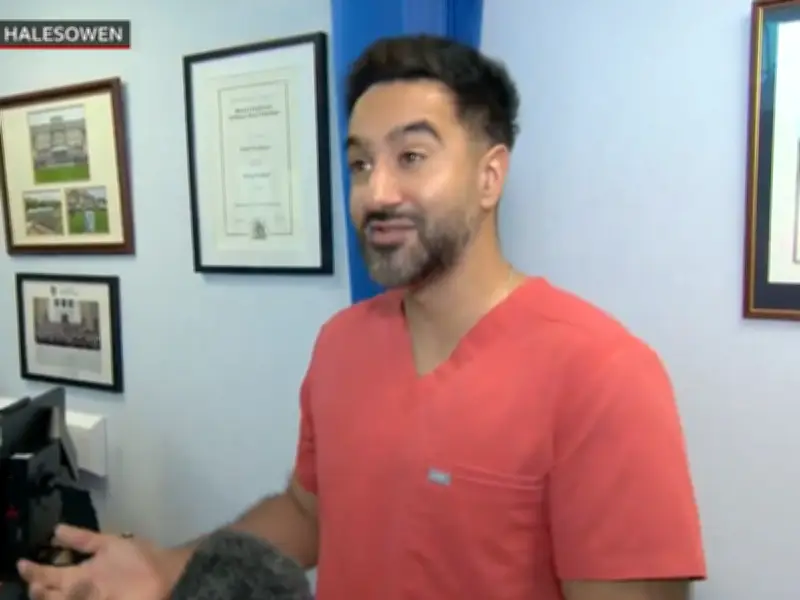
An NHS doctor has urged the public to follow a critical four-hour rule as the UK endures a red alert heatwave, with temperatures expected to reach 40C.
Doctor's warning on peak heat hours
Appearing on BBC Breakfast, NHS doctor Mohit Mandiratta advised people to avoid going outside between 11am and 3pm if possible. He said: “So, it is about doing all the simple things. Wear loose fitting cotton clothing, wide-brimmed hats, wear sunscreen, make sure it’s in date, make sure it’s at least factor 30. Get yourself some sports drinks if you can. They mimic what circulates in our system. So, are better for hydrating.”
He added: “We should be having six to eight cups or mugs of drinks a day. More when it’s warmer. So, more when we’re sweating, more it’s about not going out in the peak heat. 11 to 3 p.m. is when we shouldn’t go out. And again, checking on those vulnerable people. So, if you know you’ve got neighbours, family members who really shouldn’t be going out, who might be at risk, check in on them.”
Extreme heat and red weather warning
A red Met Office weather warning for extreme heat covering an area from London to Swansea and Somerset to Birmingham came into force at 9am on Wednesday and is due to last until 9pm on Thursday. During the peak, temperatures could approach the UK’s all-time high of 40.3C, recorded in Lincolnshire in July 2022.
The Met Office warned that a combination of extreme heat and humidity could impact public health, infrastructure, power and water supplies, and cause heat-related issues for transport, energy and water sectors.
NHS pressure and vulnerable groups
Speaking about NHS pressure, Dr Mandiratta said: “We know that health settings always get busier. That red warning is really important because that’s a risk to life as well as infrastructure. So obviously we’ve got the very old, the very young, those with chronic long-term health conditions will particularly be vulnerable. But actually everybody can be affected by this.”
He noted that UK buildings are not designed for such heat, with double glazing and radiators, and urged people to stay safe by avoiding peak heat, staying hydrated, and keeping cool.
Health alerts and school closures
Red heat health alerts have also been issued by the UK Health Security Agency (UKHSA) for the East of England, East Midlands, London, the South East, the South West and the West Midlands, with amber alerts for the North East, North West, and Yorkshire and The Humber. These alerts are in place from 1am Wednesday to 11pm Thursday, meaning “adverse temperatures are likely to impact on the health and wellbeing of the population”.
On Tuesday, the highest temperature logged was 34.6C in Wisley, Surrey, according to the Met Office. Extreme temperatures on Wednesday and Thursday are expected to cause problems for parents as schools shut early or close to protect pupils. Almost 100 schools in Somerset will be fully closed on both days, according to Somerset Council. About 100 will be at least partially closed in Buckinghamshire, along with 86 schools in Gloucestershire. Some schools have told children they can wear PE kit instead of full uniform.
Transport disruption and advice
Transport bosses have urged people to avoid travelling on Wednesday and Thursday and warned those who do to “prepare for a disrupted journey”. National Rail warned of disruption to Gatwick Express, Great Northern, Southern and Thameslink services until Friday. Avanti West Coast said it planned to run fewer services between Tuesday and Thursday, with “a risk of further disruption”. Chiltern Railways has axed more than half its services until Friday “to ensure the safe operation of the railway”. Eurostar has cancelled four trains between London and Paris on Wednesday and Thursday “due to expected adverse weather”.
The AA reported its overall workload was up 6% above planned levels on Tuesday. A spokesperson said: “As temperatures remain high, drivers should not underestimate the strain that hot weather can place on vehicles, particularly older cars and those that have not been serviced recently. We would encourage drivers to check tyre pressures, coolant and oil levels before setting off and to watch for signs of overheating. We also advise occupants to use caution when entering a vehicle in hot weather, as seats, trim and other interior surfaces can quickly reach temperatures that may cause discomfort or minor burns. Anyone travelling during the heat should carry plenty of water, keep a mobile phone charged, and ensure they have enough fuel or battery charge in case they encounter delays or become more reliant on air-conditioning than usual, as this can increase fuel or EV charge consumption. Preparing for the unexpected can make a significant difference if a breakdown occurs in extreme temperatures.”




