A mother has described the heartbreaking moment she was left at "breaking point" after receiving dangerous sleep advice from an expert that her health visitor had referred her to. MPs have been warned that infant lives are "still at risk" by a "wild west" baby sleep industry operating with zero compulsory background checks or regulation.
Following a parliamentary debate highlighting the urgent need for reform, the Department of Education has announced an extra 3,000 surprise Ofsted visits will take place each year in a major bid to spot risks early. The announcement has been met with emotional praise from campaigners, including 41-year-old Katie Wheeler. Her nine-month-old daughter, Genevieve, tragically died in May 2022 after being strapped face down onto a beanbag and left unsupervised at a nursery.
Katie, who launched the Campaign for Gigi, said she was "absolutely thrilled" by the crackdown, adding: "We know this will go a long way towards keeping children safe from harm."
Mother's Desperate Search for Help
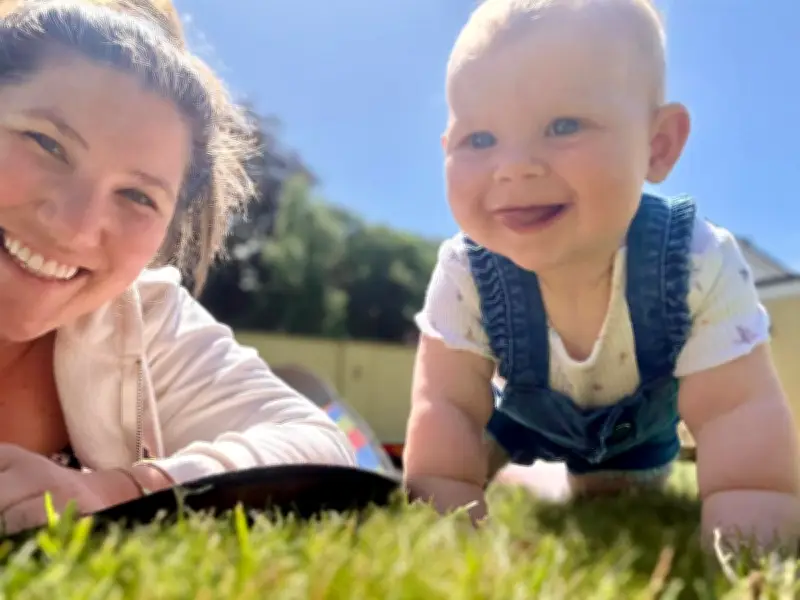
The terrifying reality of the unregulated advice is something 30-year-old mum Josie Alder knows all too well. When her daughter Tully Joy, now 10 months old, refused to nap unless held, Josie found herself surviving on broken nights that pushed her to "breaking point".
"We were spending all day and night holding her," Josie, from Torquay, Devon, recalled. "We didn’t want to do crying it out, but we couldn't function. Our relationship was suffering."
Desperate for help, she turned to her health visitor. Despite bringing up the problem numerous times, she was told to "hang in there" and reassured that she was doing the right thing. Eventually, she was referred to what she was told was an experienced nursery nurse.
But the appointment gave her little comfort after she was told to avoid some of the sleep training she had seen online. "The first thing she said was, 'I got your referral, I don't think there's anything I can do to help,'" Josie recalls. The practitioner warned her against any form of sleep training and told her that babies crying around sleep could raise cortisol levels and cause harm. She also told Josie not to seek help from paid sleep consultants - who are also unregulated - because "that's all they will suggest".
"It felt like I was being told I was forbidden from looking for help," Josie said. "It left me feeling there's nobody out there. I couldn't go back to work, I wasn’t sleeping, I couldn't have five minutes to myself."
Dangerous Advice and Suffocation Risks
Worse still, the advice then turned dangerous. The practitioner encouraged Josie to place a soft comforter toy in the cot to help her settle. This contradicts strict guidance from the NHS and The Lullaby Trust, which states that soft toys, duvets, and pillows should never be placed in a sleeping environment before 12 months of age due to suffocation risks. At the time, Tully Joy was only eight months old.
Josie's experience illustrates a growing problem that MPs have now taken to Parliament. During a recent debate examining the regulation of maternity nurses, nannies and infant sleep consultants, MPs heard that lives could still be at risk because of the largely unregulated baby sleep industry.
The Government has since confirmed it will launch a Call for Evidence into whether the title "nurse" and related terms should receive more legal protection that prevents anyone from using them. Concerns were raised that desperate parents are turning to practitioners with no clinical qualifications, professional registration or regulatory oversight.
The rise in inspections is part of an effort to ensure nurseries are actually safe. It also includes stricter checks before they open, and mandatory face-to-face interviews with applicants.
Campaigner's Call for Stronger Safeguards
Katie has tirelessly campaigned for safer sleep practices and says she was shocked to discover how little regulation exists around people offering sleep advice to parents. "It's absolutely brilliant that this is finally being looked at," she says. "Even after everything we've experienced, I found it shocking to hear what is happening in people's homes and realise there is no regulation around it."
Katie, who has worked closely with The Lullaby Trust, said she was alarmed by the growing amount of sleep advice circulating on social media that contradicts long-established safe sleep guidance. "When I had my youngest daughter after what happened to Genevieve, I was terrified every time she went to sleep," she says. "You end up Googling things in the middle of the night and immediately there are snippets of information telling parents to use pillows or roll up towels if babies are rolling over. That's such dangerous advice."
She points out that the NHS-backed "Back to Sleep" campaign has existed for decades and is credited with saving thousands of babies' lives. "The advice is very simple and it's backed by science," she says. "I don't understand how we've reached a point where people are openly challenging it."
Katie believes exhausted parents are particularly vulnerable to misinformation because they naturally assume anyone presenting themselves as an expert is trustworthy. "As parents, you take for granted that people wouldn't tell you things that are dangerous," she says. "The term 'nurse' carries legitimacy. I don't think it's unreasonable for parents not to question that."
She is now calling for stronger safeguards around who can offer infant sleep services and use healthcare-related titles. "You should not be allowed to offer those services unless you are properly qualified," she says. "Children have lost their lives preventably. People think these things are rare until it happens to them."
Nurse Specialist Highlights Lack of Regulation
For sleep specialist and registered nurse Hannah Love, those concerns are long overdue. Hannah, 47, has spent more than two decades working with children and families. After qualifying as a Paediatric Nurse in 2000, she spent eight years travelling the world as a nanny for professional golfers, caring for dozens of children and developing what she describes as a gentle, responsive approach to infant sleep.
Later, she worked one-to-one with families facing complex sleep difficulties while continuing her professional development through nursing and specialist training. "I started hearing horror stories about the awful advice people had been given," she says of the explosion in online sleep coaching that accelerated during and after the pandemic. "They had to stop night-time feeds at six months, put babies on their stomachs, stop breastfeeding. I knew this was wrong from my experience."
According to Hannah, the problem often stems from a lack of expertise meaning parents are often being given incorrect or dangerous advice. "There are many factors that can influence sleep, such as medical or nutritional issues. But if you don't have training in these areas then you can't advise on them," she says.
Among the most common complaints she hears are parents being told their baby is "broken", being sold supposedly gentle approaches that later involve controlled crying, or being given recommendations that conflict with established safe sleep guidance. "Safe sleep has to come absolute top," she says. "If babies are asked to sleep on their tummies or with comforters, that has to be addressed."
Social Media Complicates the Issue
The rise of social media has only complicated matters. Parents struggling through months of sleep deprivation are increasingly turning to Instagram, TikTok and Facebook groups in search of answers. Yet the most visible voices are not always the most qualified.
"How many followers or likes you have has no credibility on your training," Hannah says. "Unfortunately, it's tempting for people to trust someone with loads of followers and comments. When you're desperate, and you're not thinking with your logical brain, you're only thinking, 'What can I do?' If someone says they can get your baby sleeping in 24 hours, of course you're going to follow that. But sleep isn't simple. It's complex."
Hannah has created her own online community, published a book on her gentle C.A.L.M Approach and runs free Sleep Well workshops to help struggling parents. "Parents need to be careful who they are taking advice from," she says. "If they are a mum who had a baby and did a short course, they're probably not the best person to take advice from."
Her concerns mirror the findings of the BBC investigation that prompted parliamentary scrutiny. The inquiry exposed how some individuals are marketing themselves using titles that imply medical expertise despite having little or no formal healthcare training.
At present, almost anyone can call themselves a sleep consultant or sleep specialist. Hannah argues that this leaves parents vulnerable at precisely the moment they are least equipped to scrutinise credentials. "At the moment, there's nothing to protect parents," she says. "Anyone can call themselves a sleep specialist."
Need for Better Postnatal Support
Yet she also believes regulation alone will not solve the problem. Over the past decade, many of the support services parents once relied on have been eroded. Health visitor numbers have fallen, Sure Start centres have disappeared from many communities, and postnatal support has become increasingly difficult to access. "There needs to be more postnatal care," Hannah says. "There needs to be regulated, government-funded access to health and support."
That struggle is something that has left Josie questioning her parenting methods going forward. Her daughter, now 10 months old, is sleeping better after she enrolled on Hannah's free programme. Feeding and sleep are gradually becoming less intertwined, and other family members can finally settle her. But Josie remains frustrated that the support she needed most was largely unavailable through public services.
"The right advice isn't being given freely, so parents are being forced to pay," she says. "A lot don't have that option while on maternity leave, so we're left trying to figure it out alone. It's detrimental to a whole family."
The experience has been so difficult that it has changed how she thinks about future children. "If I have another baby, I wouldn't breastfeed," she says. "Which is such a shame because I love it. But the thought of being stuck for a third time without any support, it's completely put my life on hold twice now. You just want someone to help."
For trusted baby sleep advice, visit The Lullaby Trust's website or call their helpline on 0808 802 6869.