The NHS is rolling out 'groundbreaking' DIY cervical screening kits to millions of women in England who have rarely or never attended a smear test, in a bid to boost uptake and potentially reach an additional 400,000 women every year.
The Department of Health confirmed that 4 million women across England who have rarely or never attended cervical screening will be offered the tests over the next year. The move follows a trial which saw 27,000 YouScreen kits issued to London patients who were overdue a smear, whereby 85% of those offered one accepted and 56% returned a self-sample.
How the home kits work
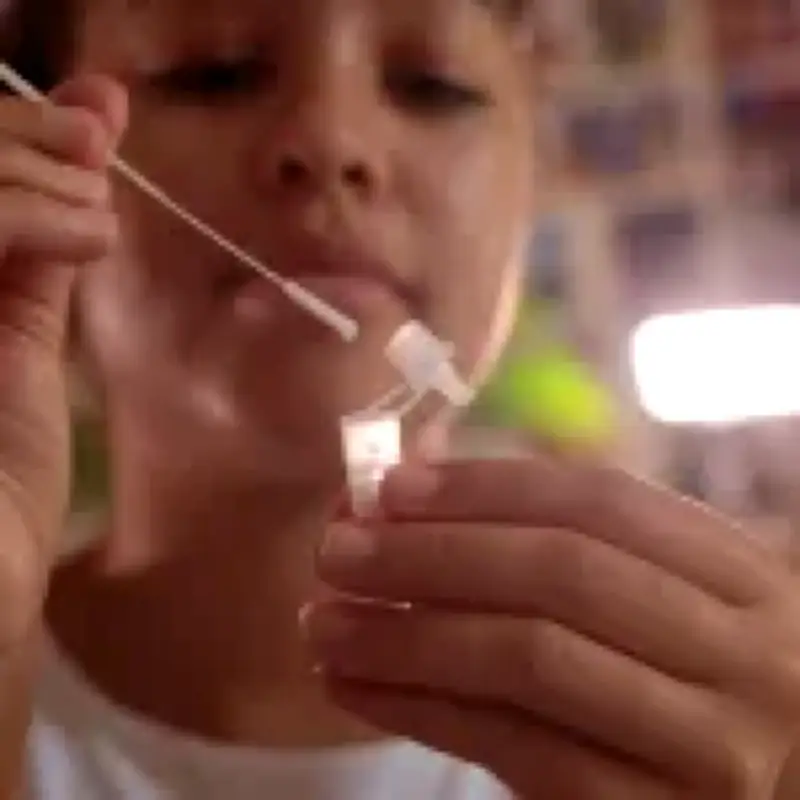
The kits look similar to a Covid-19 lateral flow test, with a long swab which is entered into the vagina. The sample is then put into a test tube and sent to a lab. Dr Raj Arora, a GP specialising in women's health, skincare and mental health, said: 'Essentially these kits are looking to detect Human Papillomavirus (HPV), a virus that causes most cervical cancers.'

Dr Donald Grant, GP and senior clinical advisor at The Independent Pharmacy, said: 'Medical professionals will be able to detect HPV cells to understand if the patient is at risk or suffering from cervical cancer. If HPV cells are detected, the patient will be contacted for an in-person cervical screening.'
Accuracy and self-testing advice
While the NHS says cervical screening appointments with a clinician is still the best way to prevent cancer, these self-screenings can be just as precise and pick up the same abnormalities as tests carried out in a doctor's surgery. However, Dr Arora noted: 'Studies have shown a similar accuracy to in-clinic cervical screening as long as the test is carried out correctly.' Dr Grant agreed, adding: 'Accurate results largely depend on the user's ability to follow the instructions and correctly collect the swab.'
Dr Grant advised caution when handling the sample, commenting: 'As soon as the swab is collected, it should be carefully placed in the provided packaging to avoid skewing the results, allowing for a more accurate diagnosis.' Dr Arora added: 'It's also important to ensure that you rotate the swab for the instructed period of time (around 20-30 seconds) or 5-6 times.'
How to get a kit
According to the NHS, eligible patients will receive an invite to order a free self-sampling kit on the NHS App or via text message, email or letter. Otherwise, home HPV tests can be purchased online through providers such as Check4Cancer and Superdrug Online Doctor. Since these aren't approved as part of the UK's cervical screening programme, you should still attend a smear test when you're invited.
Lead investigator Dr Anita Lim, from King's College London, said: 'Self-sampling has been hailed as a game-changer. It is crucial we make cervical screening easier… to help protect more people from this highly preventable cancer. The YouScreen trial has given us the evidence we need to demonstrate that self-sampling helps get more women screened.' Dr Grant concluded: 'Ultimately, women should choose the testing method that best suits their needs and provides the most comfort. However, the importance of regular screening, be that at home or with a GP, should never be undermined.'