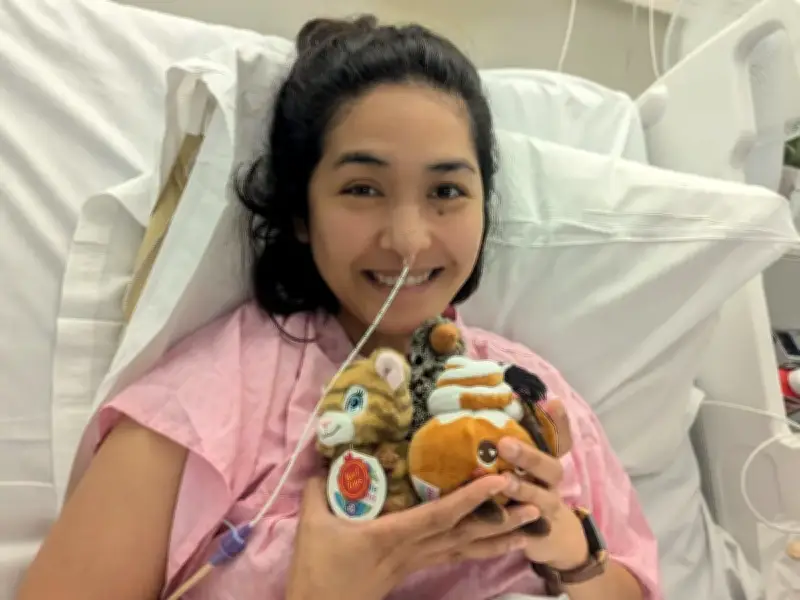
A 33-year-old Bridgend woman who regularly did CrossFit had to relearn how to walk after suffering a sudden brainstem stroke. Jermaine Perpetua, a construction site manager, was working away from home in Norwich when she fell ill, with her symptoms initially mistaken for a migraine.
Stroke Symptoms Mistaken for Migraine
Jermaine had been exercising when she noticed an aura, something she had experienced before with migraines. Believing she had pushed herself too hard, she returned to her accommodation, ate, and tried to rest. Her condition then deteriorated as she was suddenly struck by vertigo, leaving her feeling as though she was drunk. Despite feeling increasingly unwell, she continued to believe she was suffering from a migraine and hoped sleeping would help her recover.
The following day, she visited a walk-in clinic. Shortly after leaving, she experienced a sudden and severe pain in her head while waiting at a pharmacy to collect medication. As the pain intensified, she realised something was seriously wrong when she tried to drink water and found she could no longer swallow. Her ability to walk also began to deteriorate, leaving her struggling to keep her balance.
Relearning Basic Movements
Following the stroke, Jermaine faced a lengthy recovery, including having to relearn basic movements she had previously taken for granted. "They had to teach me how to walk again. You would never think someone would teach you how to walk," she said. One of her biggest challenges in hospital was losing the ability to swallow, with eating and drinking becoming her main focus.
Jermaine initially expected medication to help her recover quickly, but instead she was told she would have to give her body time to heal. Gradually, her swallowing began to improve, but returning home to Wales did not mean an immediate return to her previous life.
Fundraising and Awareness
Having expected to recover within a month, she soon discovered the lasting impact a stroke could have, particularly when it came to fatigue. Despite the challenges of recovery, Jermaine has since taken on a fundraising challenge of her own, participating in the 2026 Cardiff Half Marathon and raising more than £3,000 for the Stroke Association.
She has also shared her experience to help raise awareness of stroke and its impact on people's lives. Her story has helped inspire a giant 2.5-metre ice brain sculpture unveiled on London's Southbank ahead of World Stroke Day. Created by the Stroke Association, the sculpture was carved entirely from ice and unveiled by Daisy Jones & The Six star Josh Whitehouse. It was designed to highlight the complexity and fragility of the human brain and the lasting effects a stroke can have. Jermaine's brain scan was one of five used to inspire the sculpture, bringing attention to the experiences of people whose lives have been changed by stroke.