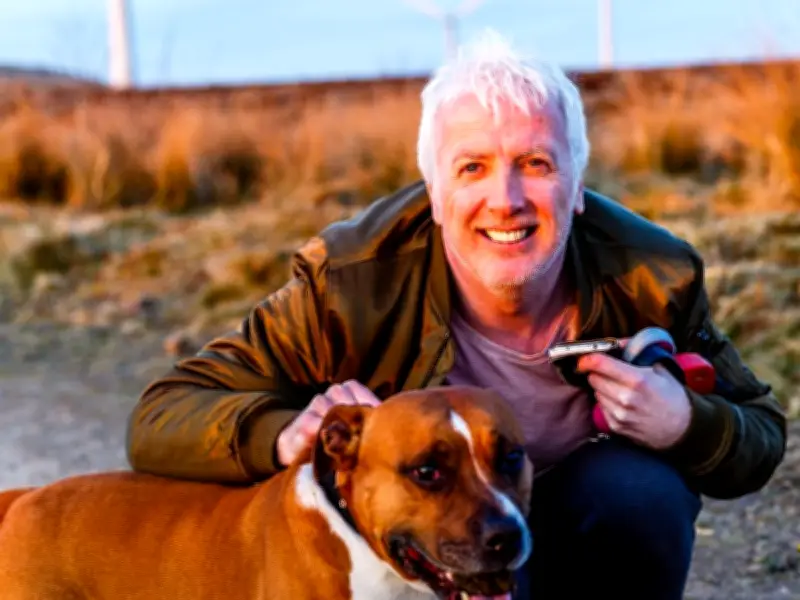
Brian Hurton, 55, died alone on his bathroom floor after a three-hour delay in dispatching an ambulance, despite twice telling 999 call handlers he was struggling to breathe. An investigation by the Scottish Ambulance Service (SAS) found his case was incorrectly logged and help should have been sent immediately.
Two 999 calls ignored
Brian, who was registered blind but had no other health conditions, dialled 999 at 5.55pm on November 18 last year. In transcripts published by the Daily Record, he said: 'I'm just (pause) I'm struggling to breathe and I feel like I'm going to collapse.' He also reported having sweats and was gasping. The call handler told him an ambulance was not being sent and a clinician would call back instead. The incident was labelled 'teal', meaning further assessment was required.
Ten minutes later, Brian made a second 999 call, saying he was 'losing breath' and alone. He was again told an ambulance was not attending immediately. The call handler said: 'Someone's gonnae phone you back as quickly as they can Brian alright. Ok take care, bye bye.'
Failed attempts to contact
A clinician tried to call Brian at 7.07pm but the call went unanswered and a voicemail was left. Two more attempts were made in the next ten minutes. When they confirmed he had not self-presented at hospital, the call was coded 'unable to access' – but an ambulance was still not dispatched until 9.12pm. Paramedics arrived seven minutes later to find the door propped open and Brian dead on the bathroom floor.
Systemic failures identified
Records showed SAS call demand was 'below predicted levels' that night, but there were 'lengthy delays and extended hospital turnaround times at local hospitals', impacting ambulance availability. The Scottish government target for hospital turnaround times is 15 minutes; throughout the incident, times exceeded that, with the longest delay being 241 minutes and between seven and nine ambulances stacked at the local hospital.
A post-mortem showed Brian died of an aortic dissection, a life-threatening medical emergency where the main artery in the heart tears. His sister Allison said: 'When I read those transcripts I couldn't believe what I was reading. He would have been in agony. Most probably he wouldn't have been saved. But we just don't know. If the ambulance had come he would have felt he was getting cared for. He would have been comfortable and not petrified.'
Family demands independent inquiry
The family only received the review findings in May, six months after Brian's death. The review found that the initial call should have been categorised at the highest response level, the time waited for clinical review was 'in excess of the expected response time', and his case had not been visible to all clinicians throughout on the computer system. Allison said: 'We want an independent inquiry. Brian was one of the nicest people and helped everybody he could. He went about helping his neighbours and the elderly yet when he asked for help he was let down, not once, but twice. He was scared and he died all alone.'
The family's call comes just days after the Daily Record reported the death of Julie Parker, 55, who died after a four-hour ambulance wait in Kilmarnock. Allison said: 'When I read her story I thought, obviously nothing has changed.'
Official responses
An SAS spokesman said: 'We would once again like to extend our sincere condolences to the family of Mr Hurton. Due to the seriousness of this case, the Scottish Ambulance Service undertook a full Significant Adverse Event Review rapidly, and we remained in contact with the family throughout the entire process. We understand that nothing can change the outcome, but we hope that our adoption of the review's recommendations demonstrates our commitment to learning and improvement.'
Health Secretary Angela Constance said: 'My sympathies and thoughts are with Brian's family at their tragic loss. This should not have happened, and it is clear there has been a failure in call handling. I welcome this report's acceptance by the Scottish Ambulance Service of where Brian was failed by the services that should have responded quickly to his asks for help. SAS must learn from this investigation and I will be meeting with them to ask how they will be taking all appropriate steps to ensure improvements to call handling.'
She added that in the first 100 days of government, a new national plan for hospital flow will be brought forward to shorten waits and ease A&E pressures.