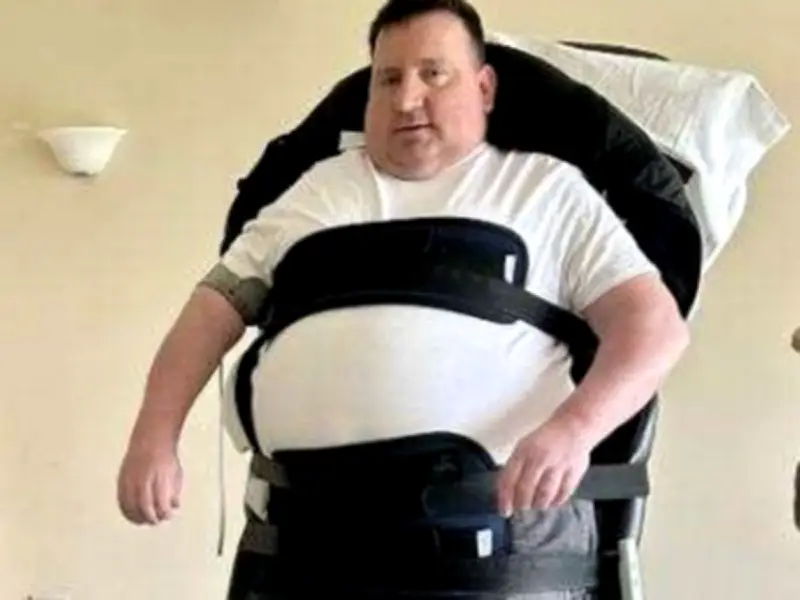
Jonathan Hammocks, a 53-year-old from Grantham, was left paralysed after falling down the stairs at home in April 2021. He sustained a spinal cord injury in his neck, resulting in paralysis from below the neck and requiring 24-hour care. He has no bladder or bowel function and suffers from chronic nerve pain in his arms.
Initial hospitalisation and rehabilitation
After six weeks in hospital and six months of rehabilitation, Hammocks could not return to his previous accommodation because it was upstairs. He was instead placed in a dementia care home, deemed the most suitable option within his allocated funding. During three months there, he was hospitalised six times due to catheter problems. “After about my fifth water infection, I ended up with a chest infection and got sepsis,” he said.
The Spinal Injuries Association, a charity supporting people with spinal cord injuries, warned that a blocked catheter can lead to autonomic dysreflexia, causing life-threateningly high blood pressure.

Years in complex care
Hammocks then spent three years in a complex care facility, where he had very little freedom. He only went out for two hours a week with an occupational therapist. “I’ve just basically lived in a room or a hospital ward for the best part of five years,” he said. “I only got three hours of occupational therapy a week, and I used two of those hours to go to Tesco’s café and have a coffee.”
Securing funding and moving home
Hammocks has now secured funding for live-in carers and moved into his own home. The Spinal Injuries Association commented: “There is currently a postcode lottery in funding and care for those living with spinal cord injury. This is leading to distress for those we support and in some cases a danger to the individual. Spinal cord injury is a complex condition requiring specialist care and support and we are witnessing more unacceptable delays in accessing the vital services that people need.”
Life at home
Hammocks said life at home has transformed his outlook. “I’ve never been busier, there’s always something to do. It’s like a weight’s been lifted, I’ve adapted really well. The biggest bonus is being able to see my daughter far more in my own home, not a clinical setting. It’s just the feeling of having the freedom to go out and have two or three hours, even four hours if I need to. I’m just really happy being where I am.”