
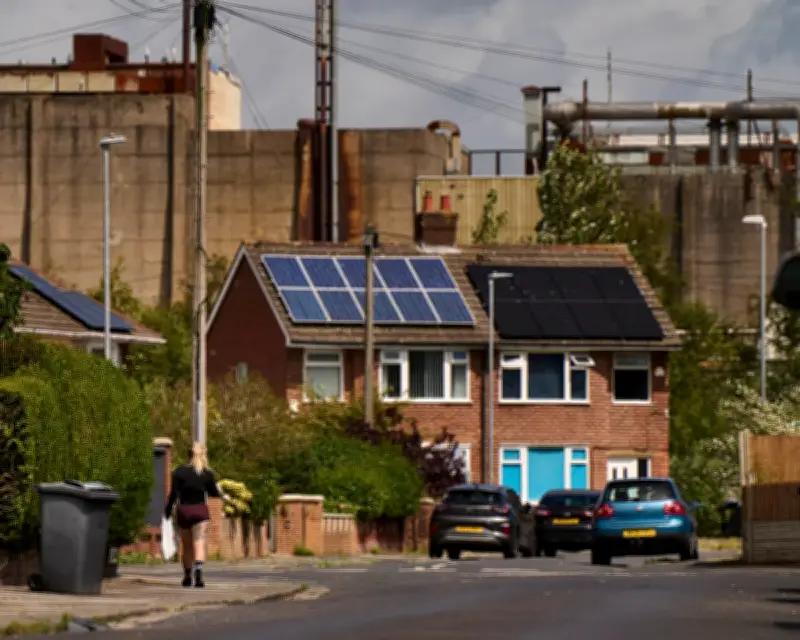
Fifteen years ago, Liz Hurst was diagnosed with kidney cancer at age 32, an uncommon occurrence for her age and sex. She now lives with the question of whether her illness was caused by decades of exposure to perfluorooctanoic acid (Pfoa) emitted from the AGC Chemicals Europe plant in Thornton-Cleveleys, Lancashire. A government-commissioned study released last month found higher-than-expected rates of kidney cancer near the facility, which released an estimated 49 tonnes of the carcinogenic chemical between the 1950s and 2012.
Study Findings and Expert Concerns
The study, while noting elevated rates, found no evidence of a cancer cluster or direct environmental link. However, world-leading experts have described the findings as a “major source of concern” and called for further investigation, including blood testing. Pfoa, a type of per- and polyfluoroalkyl substance (Pfas), is known as a “forever chemical” because it does not break down in the environment. It was banned globally in 2020. The plant used Pfoa to produce polytetrafluoroethylene (PTFE), another forever chemical used in non-stick coatings.
Hurst, who lived near the factory until recently, recalls regular “cloud burst drills” at her primary school to prepare for chemical spills. She also worked in the factory’s labs as a science student. AGC Chemicals Europe stated it was not involved in those drills. “It was just always there,” she said.
Contamination and Community Impact
In 2024, Wyre Council and the Environment Agency (EA) launched an investigation into historical emissions. Soil and local produce testing revealed widespread contamination. Residents were advised not to eat eggs laid within 1km of the factory and to wash and peel homegrown produce. For Alan Hodson, 61, who has an allotment bordering the site, the discovery was devastating. Soil samples from his plot showed Pfoa levels seven times Belgium’s guideline level. The EA recommended the land be classified as officially contaminated, leading to the allotment’s imminent closure.
“It’s like I’ve got a lead pair of wellies on,” Hodson said. “I’ve not been sleeping. I just think of all that time I spent here – I could’ve been doing something else.” Sam Hammond, 48, who lives next to the allotment with her five children, found her garden had Pfoa levels 40 times the Belgian guideline. One of her duck eggs contained so much Pfoa that eating just one per week would exceed the European safe weekly level by 10 times. She and her children had been eating these eggs daily for years. “I just think it’s disgusting that we’ve been left in limbo like this,” she said.
Legal and Regulatory Response
Wyre Council stated all agencies are committed to transparency, and the EA plans to contact residents once formal conclusions are reached. A spokesperson said: “We are working closely with our partner agencies to ensure the process moves forward as quickly as possible.” In the US, Pfas contamination has led to billion-dollar settlements. In Europe, ClientEarth filed a complaint against the Belgian government in July 2024 for failing to protect citizens from Pfas pollution. In Thornton-Cleveleys, law firm Leigh Day is investigating a potential claim on behalf of Hammond for loss of enjoyment of land and personal injuries. More than 90 residents have expressed interest in legal action, with 50 undergoing blood tests.
AGC Chemicals Europe said: “We take our responsibilities to our employees, our local community and the environment very seriously. While it would not be appropriate to comment on individual cases or allegations, the multi-agency Health Cell report concluded that there was no evidence of a statistically significant kidney cancer cluster, no clustering of cases close to the current AGC Chemicals Europe Ltd site, and no indication of a link to environmental levels.”
Hurst, now cancer-free since 2019 after having her left kidney removed, wants answers. “I just want to know if it has caused my cancer,” she said. “I want as many people around the area to know about it, so that they can get the healthcare that they need. I’m just angry.”




