
Why Hydration Matters in Extreme Heat
As temperatures soar, the body relies on sweating to cool down, but this rapidly depletes water stores. Dr Lewis James, a lecturer in sport, exercise and health sciences at Loughborough University, explains that even at rest, about 75 to 80% of the energy we use appears as heat. Without sweating, body temperature would rise 1.3°C per hour. When external temperatures exceed skin temperature, sweating becomes the primary cooling mechanism, and fluid loss can exceed 500ml per day.
Mild dehydration impairs cognitive and physical function, causing headaches, fatigue, and reduced concentration. Bridget Benelam, a nutrition scientist at the British Nutrition Foundation, warns that severe dehydration can lead to constipation, urinary infections, and life-threatening conditions. The pee test is a reliable indicator: dark yellow or brown urine suggests dehydration, while pale urine indicates good hydration.
How Much to Drink and When
Dr Neil Maxwell, a specialist in applied environmental physiology at the University of Brighton, notes that 70-80% of people start the day dehydrated after a hot night. He recommends 300-500ml of water first thing in the morning to set a stable baseline. Spreading intake throughout the day is more effective than chugging large volumes. Dr James suggests drinking a large glass of water with each meal, totaling about a pint per meal, plus additional drinks between meals.
For exercise, aim for 500-750ml per hour of intense training, and pre-hydrate with 500ml two hours before activity. This allows kidneys to process the fluid and balance blood volume.
What to Drink: Water, Tea, Milk, or Beer?
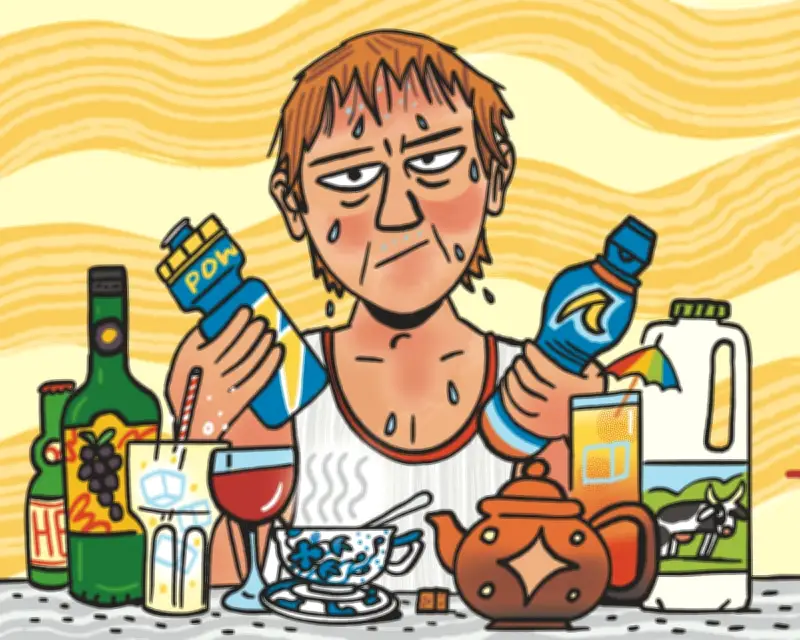
Tap water remains the gold standard, says Maxwell. Sparkling water and diet soft drinks can hydrate but may cause bloating, leading to premature stopping. Milk is hydrating and provides nutrients, but fruit juice and smoothies contain free sugars; limit to 150ml per day. Tea and coffee have negligible diuretic effects—only after about five espresso shots does caffeine become a concern. A warm cup of tea can actually cool you down by triggering a disproportionate sweating response, but this fails in humid conditions when sweat cannot evaporate.
Alcohol is trickier: one low-ABV drink (around 4%) may have a net hydrating effect, but two or three drinks suppress vasopressin, increasing urine output and causing net dehydration.
Do You Need Electrolytes?
For most people, food provides enough electrolytes. Prof José González-Alonso of Brunel University states that bananas, apples, and other fruits supply potassium and magnesium. Sports drinks are unnecessary unless exercising intensely for over 60 minutes in heat, sweating heavily, or unable to snack. Overdrinking plain water can cause hyponatremia—dangerously low blood sodium levels. Symptoms include cell swelling and potential danger. To avoid this, add salty snacks or electrolyte supplements during heavy sweating. Good dietary sources include avocados, sweet potatoes, spinach, and water-rich foods like cucumber, watermelon, and strawberries.
Simple Rules for Staying Hydrated
Drink a large glass of water every couple of hours, preferably with meals. Increase intake during heatwaves and physical activity. Dr James emphasizes that drinking a bit too much water has no downside—excess is simply excreted. By following these guidelines, most people can defend against dehydration without complications.




