
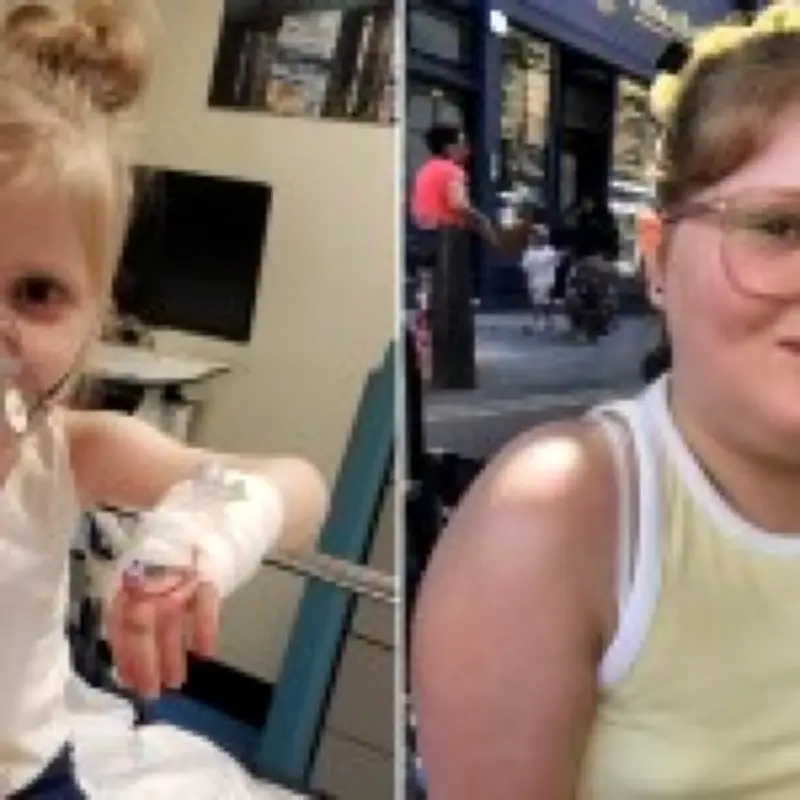
Faye Condon, now 12, was diagnosed with Juvenile Dermatomyositis (JDM) at age five after developing muscle weakness and struggling to walk or run. However, her mother Christina Condon never believed the diagnosis and repeatedly asked doctors at Bristol Children's Hospital to investigate other possibilities.
Unnecessary treatment and side effects
Despite her concerns, Faye underwent six rounds of chemotherapy over five months, along with regular injections, which left her feeling seriously unwell. Christina described the side effects as 'horrific'. During this period, Faye became severely ill and contracted viral meningitis following a blood product transfusion.
Second opinion reveals true condition
After Faye's condition failed to improve, doctors at Derriford Hospital in Plymouth agreed to seek a second opinion and referred her to specialists at Great Ormond Street Hospital. There, at age 12, she was diagnosed with a rare genetic condition called Emery-Dreifuss muscular dystrophy (EDMD), which causes progressive muscle weakness, joint stiffness, and potentially life-threatening heart problems.
'All it took was a specific genetic blood test,' Christina said. 'They were so convinced it was JDM that they never looked for anything else.'
Impact on family and child
Discussing the chemotherapy, Christina said it was completely 'unnecessary' as there is no cure for EDMD. 'Doctors ruined my little girl's whole childhood,' she said. 'We put our lives on hold because we were always told she was going to get better. If we'd had the right diagnosis years ago, we could have made memories while she was still able to walk and prepared our home for what was coming.'
Now, Faye uses a wheelchair and is rapidly losing the use of her legs. She requires overnight ventilation and regular monitoring due to the condition's effect on her heart.
Formal complaint underway
Christina has begun the process of making a formal complaint against Bristol Children's Hospital. She first sought medical help for Faye in 2019 after her daughter experienced hip pain, frequent falls, and difficulty walking. Every test came back negative, and a muscle biopsy suggested a congenital muscle disorder, but doctors continued to pursue an autoimmune diagnosis.
Metro has contacted Bristol Children's Hospital for comment.




