
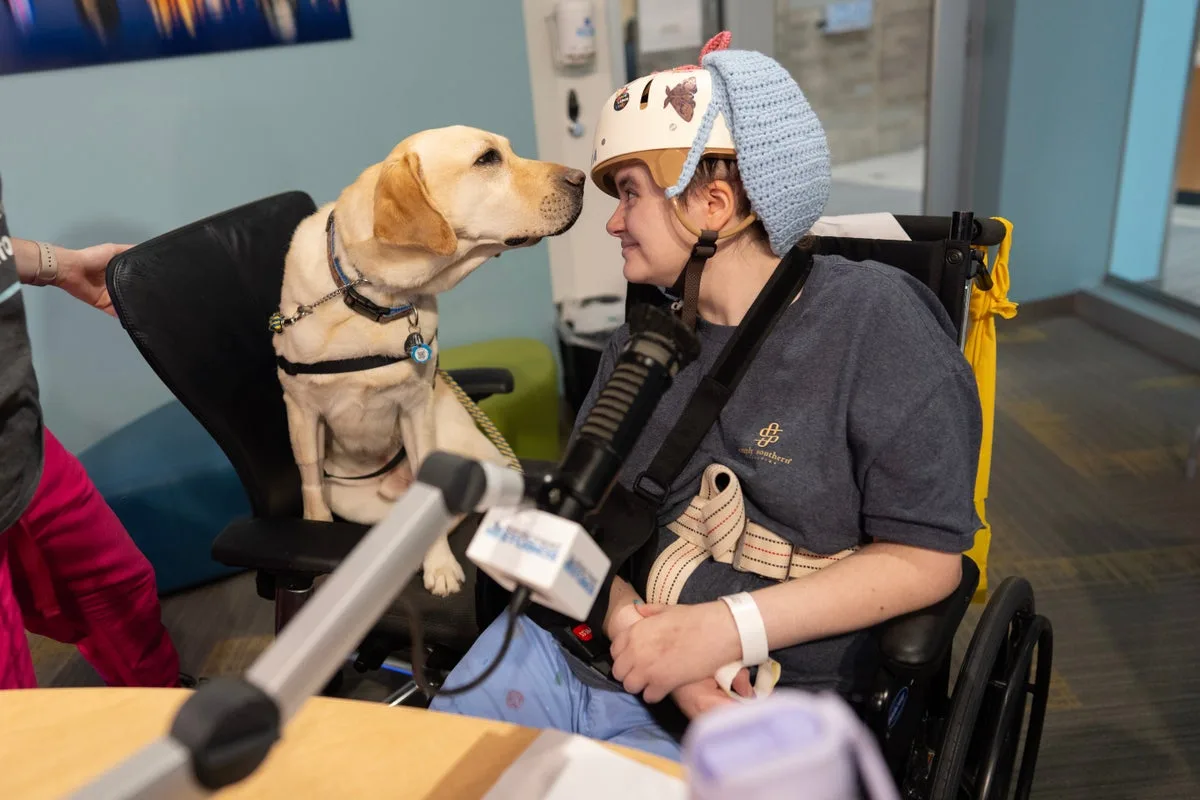
At Cincinnati Children’s Hospital, 5-year-old Calvin Owens, tethered to medical equipment, managed to stand and toss a ball to facility dog Hadley during his first outdoor visit in over a month. Such moments are common among the four full-time facility dogs at the hospital, which are specially trained to provide emotional support, motivate movement, and reduce fear in young patients.
Unlike typical volunteer therapy dogs, facility dogs are full-time working animals placed in hospitals by nonprofits such as Canine Companions. Their ranks are growing across US children’s hospitals, with the annual Facility Dog Summit nearly doubling attendance from 2024 to 2025. One nonprofit, Canine Assistants in Georgia, has placed over 80 dogs through its children’s hospital initiative.
Research supports the benefits. A 2022 study coauthored by Kerri Rodriguez of the University of Arizona found that facility dogs provide comfort, build rapport, and normalize the hospital environment. A 2021 study in the Journal of Pediatric Nursing concluded that animal-assisted therapies help control pain and blood pressure in children, while other research shows reductions in anxiety and stress markers like cortisol.
Hospitals fund these programs through grants and fundraising, covering food and veterinary costs for breeds like Labradors and golden retrievers. Dogs work in sensitive areas; for example, Hadley serves the cancer and blood diseases unit and receives frequent baths to protect immunocompromised patients. In rare cases, dogs are allowed inside isolation rooms for dying children, where comfort outweighs infection concerns.
New programs continue to emerge. Johns Hopkins Children’s Center introduced its first two facility dogs in March, joining established programs at Mount Sinai Kravis Children’s Hospital, Norton Children’s, and St. Louis Children’s Hospital. Experts say the dogs provide a sense of normalcy in a sterile, stressful environment, making a real difference in children’s healing.




