Access to Work, a government scheme that helps disabled people stay in employment, has seen awards slashed by up to 85 per cent, with no right of appeal, according to a BBC Radio 4 Moneybox investigation.
The scheme provides funding for specialist equipment and in-person support, but users report that their awards are being drastically reduced or removed entirely, even when their needs have not changed.
Growing complaints over cuts
Presenter Paul Lewis said: “Work is seen as the way out of poverty and to reduce the benefits bill, but there are growing complaints that a scheme to help people get and keep work is being quietly cut. Access to Work the scheme is called and it pays for specialist equipment and support to help disabled people and others with health conditions find work and stay in it.”
He added that charities, MPs and disabled people are reporting a growing number of cases where existing support is being reduced or taken away “even from people whose needs haven’t changed with no right of appeal.” Many are asking their employer to bear the cost or giving up work completely.
The government denies that the rules have changed, but earlier this year the National Audit Office reported that the Department for Work and Pensions (DWP) was applying its guidelines “more rigorously” and consistently, confirming that some customers had their funding reduced even though their circumstances had not changed.
Individual stories of impact
Rana, who was born deaf, said that from 2023 Access to Work funded a support worker who allowed her to do her job and “participate in the workplace on an equal basis with hearing colleagues.” Her funding was cut by more than half in 2025 and removed altogether this year, replaced “solely with equipment.” She said: “Whilst technology can help it cannot replace the human support I need to communicate effectively and fully participate at work. This decision is deeply demoralising. Access to Work should enable disabled people remain in the workforce and progress in their careers not making that harder.”
Jenny, a disabled content creator who uses a wheelchair, said her renewal award was about 85 per cent less than before. “There’s no formal process for reconsideration or for tribunal. We called up on the day I got the renewal to put in a request for reconsideration but were told it was going to be at least five weeks before they even started looking at it. I still have to run my business, I still have support workers that I need.” She said the situation was having a massive toll on her mental health and impacting her family, with her husband having to take time off work to support her.
Committee concerns and DWP response
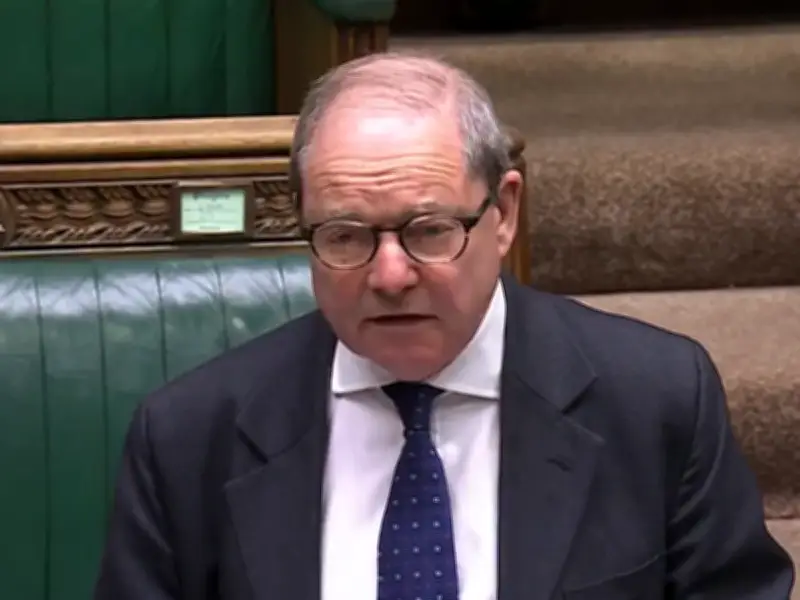
Sir Geoffrey Clifton-Brown, Conservative chair of the Public Accounts Committee, said: “This is an important benefit, trying to help disabled people of all sorts get into the workplace. When they don’t receive the benefit they are entitled to it is distressing. We did, unfortunately, come across a large volume of written evidence describing multiple failings with the DWP’s administration of the schemes.” He cited poor communication, unanswered emails, unreturned calls, and support being reduced “without a clear rationale.” He added: “That is unacceptable, people should have their circumstances properly explained to them by the DWP.”
Mr Lewis noted that the backlog of applicants has doubled, along with spending in the last five years, and asked whether this was about reducing costs or DWP staff making mistakes while clearing the backlog. Mr Clifton-Brown said the backlog rose from 22,000 in 2022 to 66,000 in 2026, and that despite 480 additional staff being employed, it was likely to remain until September 2027. He said it was taking an average of 37 weeks for cases to be processed, against a guideline of 25 working days.
A DWP spokesperson said: “Access to Work is a lifeline, but demand for the scheme has grown significantly in recent years, with the number of people supported nearly doubling in five years. That’s why we’ve taken action by employing nearly 500 additional staff to clear the backlog and are working with disabled people and their organisations to improve the scheme. If anyone is unhappy with their original decision, we encourage them to exercise their right of reconsideration.” The DWP confirmed that the current waiting time for new Access to Work applications is 37 weeks.