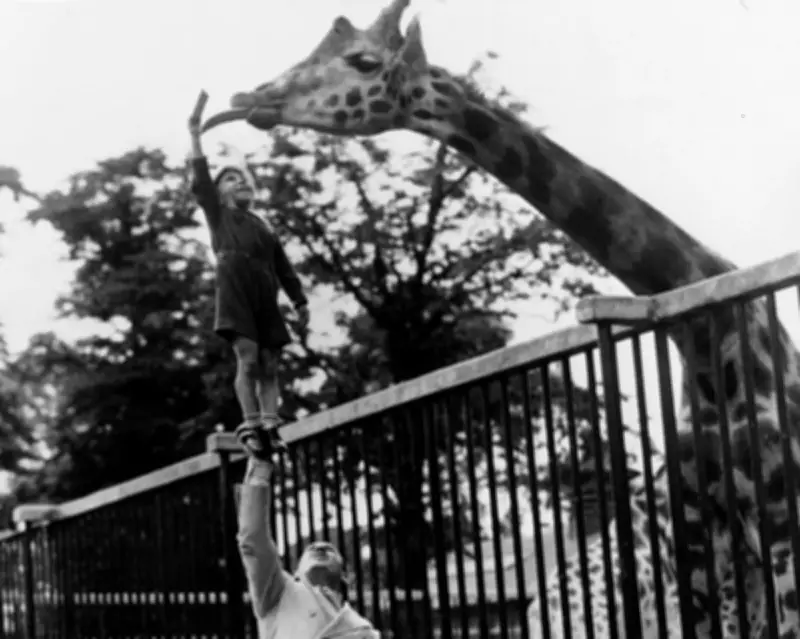
Readers have responded to the Guardian’s picture essay on the work of zoo vets, sharing their own memories and insights. One letter highlights the pioneering work of Calvert Appleby, a vet at Edinburgh zoo from 1948 to 1959, whose early career may predate that of Oliver Graham-Jones, often cited as Britain’s first dedicated zoo vet.
Pioneering veterinary work
John and Michael Appleby, sons of Calvert Appleby, recall that their father’s first years involved a PhD in veterinary pathology while working at the zoo. They note that for these early vets, animal physiology was often unknown, requiring experimental treatments. For example, a crocodile with an abscess was anaesthetised with chloroform via a large cotton-wool ball on a long pole, but did not survive, as reptiles cannot tolerate chloroform. Appleby later received an award for his pioneering work on reptiles and amphibians.
Challenges and successes
The Applebys also recount a story of moving a sick camel indoors during winter, only for the camel to return to the paddock. Zoo vets remained a small community, with annual European gatherings from around 1960. Appleby made friends from both sides of the Iron Curtain, one of whom travelled from Berlin to London for his funeral in 2004.

Magical moments after hours
Gavin Greenwood of Brighton worked at London zoo in the early 1970s as a “ground executive,” a euphemism for a bin-emptier and dung-shoveller. He recalls the magical atmosphere after the public left, when staff could interact with animals: tugging a rhino’s horn, scratching a wolf’s ear, and communing with an orangutan named Alice, whose keeper said she fancied him.
Correction on Winnie the Pooh
Dr Ann Thwaite of London corrects the notion that AA Milne named his bear after his son. Christopher Robin named his bear Winnie after the Canadian bear at London zoo, which was known as Winnie (from Winnipeg) long before the boy was born. She refers to her book Goodbye Christopher Robin for more details.