
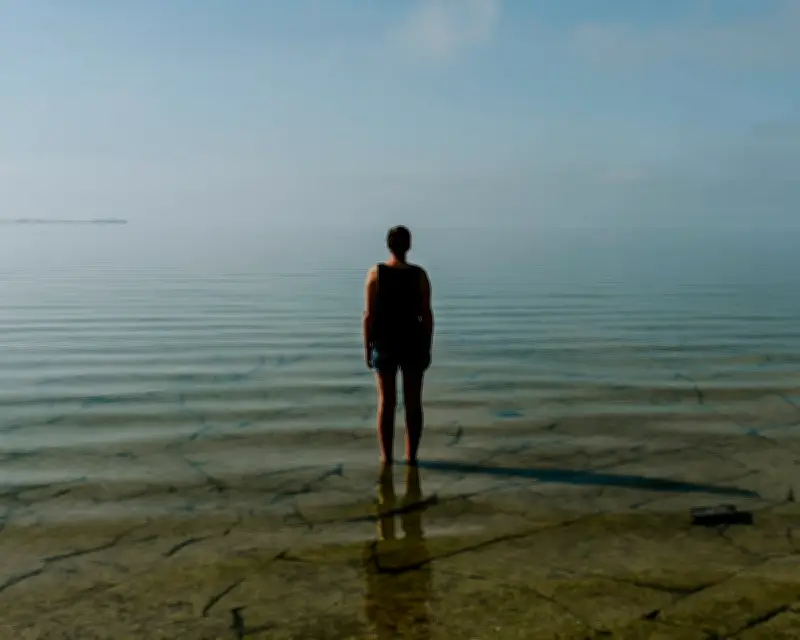
The neurological and psychological benefits of being in, on, or near water are increasingly recognized, with a growing number of therapeutic programs harnessing the power of blue spaces—oceans, rivers, and lakes—to treat trauma, anxiety, and addiction.
Personal Stories of Healing
Dave Phillips, a 67-year-old former British army corporal, stood on a cliff edge in Cornwall several years ago, overwhelmed by the loss of loved ones and untreated PTSD from his military tours. He considered ending his life, but his late partner's voice stopped him. Seeking help, he found Turn to Starboard, a British charity that uses sailing to help veterans cope with trauma. "It [the sea] takes me away from all the stresses and strains of life. It’s got the power of calmness," Phillips says. Today, he is circumnavigating the UK on two tall ships, raising money for the charity and carrying the Invictus Games flag.
Sally Terry, CEO of Turn to Starboard, notes, "I’ve seen it awaken something in people." The charity's program is part of a broader movement known as blue-space therapy, which has gained momentum in recent years.
The Science Behind Blue Space
Marine biologist Wallace J Nichols popularized the concept with his 2014 book Blue Mind, which explores the neurological and psychological benefits of water exposure. His science-backed findings show that being near water lowers cortisol levels and improves happiness. This has led to a surge in therapeutic programs: Sophie Pyne, co-founder of Waves of Recovery, a surf therapy program based in California, says that at her first conference in 2022, there were nearly 50 similar organizations. "Now there are over 100, all over the world. It’s growing every year," she says.
Waves of Recovery helps people confront mental health and addiction through surfing retreats. Pyne, who struggled with burnout and addiction herself, says getting on a surfboard made her feel "alive, free." The program works alongside treatment centers, using nature as a co-healer. "We’re all in wetsuits, we don’t have our makeup on. They get to see me more as a human walking alongside them," she explains.
Expanding Applications
Blue-space healing is not limited to surfing. Scuba diving and freediving are emerging as therapeutic practices. Dr. James Jung, a California-based psychiatrist and former US military combat veteran, runs Inner Depths, a freediving center off the California coast. He discovered the ocean's transformative effects while working through his own mental health challenges. "Recovery from trauma is really getting somebody to lean into a process rather than a destination," he says. For his clients, the goal is to learn to freedive, which helps regulate the nervous system and re-regulate brain systems.
Catherine Kelly, a geographer who has studied blue spaces for decades, notes that water provides a unique sense of calm. "Research from ecotherapy shows us that nature, but particularly water, gives us this feeling of calm that we don’t get in other spaces," she says. She observes that when people go to the water, their shoulders drop, their eyes and face soften, and they start breathing more slowly, entering a "state of drift."
Challenges and Future Directions
Despite the growth, research into blue spaces is still in its early stages. Kelly explains, "The research is only starting to be funded now because everybody was focused on green space for years. If you are a policymaker trying to fund social prescribing, it’s much safer to send people for a therapeutic intervention in a woodland, a garden, a park or a national park than it is to send them into the water."
Nevertheless, the movement continues to expand. Phillips, reflecting on his journey, says, "I feel I’m different, in a good way, because I’ve gone back to me. I can remember back when all this started, all my mental health issues, I just wanted me back. And I’m here now."




