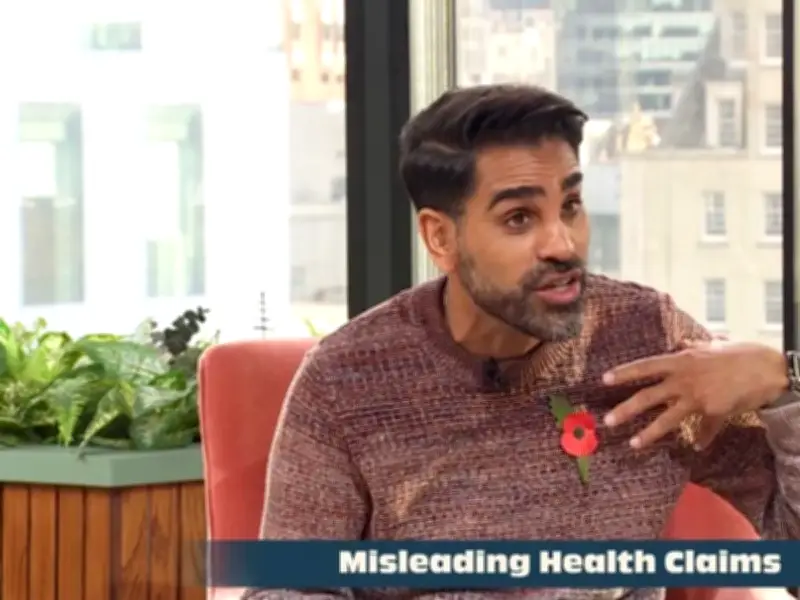
Dr Ranj Singh has expressed deep concern about AI-generated health content spreading online, saying videos using his likeness are "completely fake" and have misled many people. Appearing on BBC Morning Live, he told hosts Gethin Jones and Helen Skelton that the public should be "very concerned" about such material.
AI imagery used to sell false claims
Dr Singh revealed that "AI-generated imagery of Morning Live" is being used to promote false health claims, with some content able to "mislead people." He showed a photo of Jones alongside a so-called expert on the BBC show, stressing that the image was fake and not actually him.
He added: "I've had AI videos of myself out there that are completely fake - and there's virtually no regulation in the space at the moment."
AI has benefits but needs regulation
The doctor said he is not completely opposed to artificial intelligence, noting it can be helpful in areas including healthcare. He said he is working with the NHS on a project to speed up sepsis diagnosis in children, and described AI as a valuable tool when properly regulated and used for such purposes.
However, he warned that AI can invent facts, generate realistic-looking videos and photos, and create deepfakes that make false claims seem credible. He urged people to check sources, verify claims, and not rely on AI alone for health advice.
Five questions to ask about health claims
Dr Singh advised asking five questions when reviewing health information: What is the evidence, and is it backed by genuine scientific research? Is the research new and current, or old information rehashed? Is the person presenting trying to sell something, which requires "transparency"? Does the claim match official sources like NICE, NHS and relevant charities? And who is presenting the information - are they qualified, relevant, registered and an expert?
He added: "Popularity is not proof. Don't share unverified claims unless you are absolutely sure it's true and if it sounds too good to be true, then it probably is."
Misleading claims and publication does not equal truth
In the same segment, the BBC expert said the public "have to be cautious and wary" of online information, even if it is not AI-generated. He explained that health claims often start with a kernel of truth grounded in real science before being twisted into something inaccurate.
As a "classic example," he cited misleading claims about alkaline water. He said: "Drinking alkaline water doesn't do anything to your blood acidity because your body is already very good at doing that. And actually if you drink water that's too alkaline, you end up in serious trouble because it's not very good for you."
He also stressed that being published does not automatically make a claim true, noting that a study in five mice is "not the same" as a large randomised controlled trial involving many people. He warned against confusing correlation with causation.
Keywords that suggest fake information
Dr Singh urged people to look out for keywords such as miracle, detox, and guaranteed results. He said the phrase "what doctors don't tell you" is "a big red flag for me."
He warned that such content often promises a quick fix, targets a worry, and tries to sell a "solution," using misleading or emotionally charged language. He added that seeing the same person online repeatedly can create a misleading sense of trust, and that what helps one person may not help another. He urged people not to change their health routine based solely on something seen online and to seek help from their doctor if concerned.