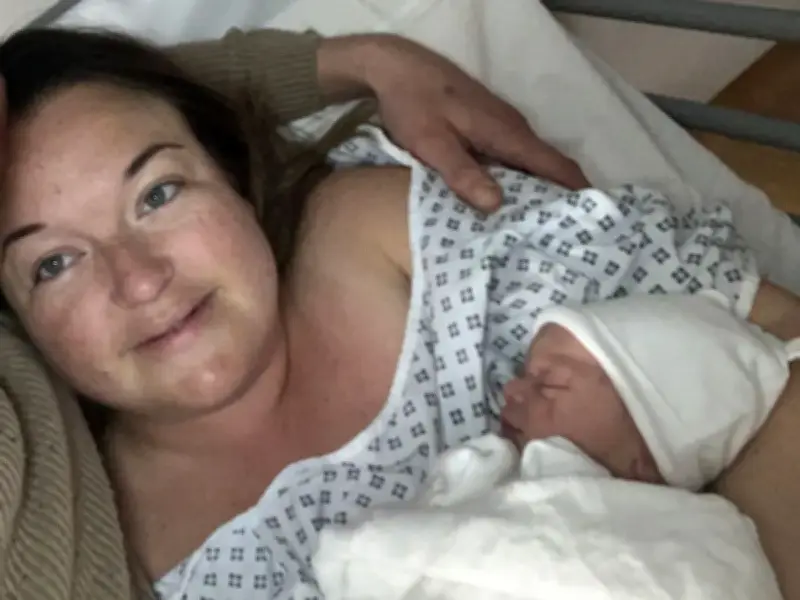
Ezrah Pollard was just 19 days old when he started showing signs of infection, but an ambulance had not been dispatched even an hour after his parents called NHS 111. The newborn later died from devastating brain injuries caused by the infection, and his mother says she cannot understand why he was not given the highest priority for an ambulance.
Ezrah's parents, Sarah Doolin and Craig Pollard, from Cornwall, called NHS 111 at roughly 8.30pm and were transferred to the South West Ambulance Service. They were told a paramedic would assess their son at the house and were instructed to wait for its arrival. The call was classed as category two, which usually has an average response time of 18 minutes.
When the couple chased the ambulance an hour later, it had still not been dispatched "owing to significant operational pressures", according to a new prevention of future deaths report by coroner Andrew Cox. It later emerged that there was a four-hour wait for category two calls that night.
Coroner calls for change after avoidable delay
Ms Doolin says she can't understand why a baby wouldn't be category one, and her views have been backed by a coroner who has called for change. The coroner's report said there was an avoidable delay in getting Ezrah antibiotics, with concerns raised that future deaths may happen if no action is taken.
Ezrah had been signed off by a senior midwife who was 'thrilled with his progress' the day before he fell ill in March 2022. Ms Doolin, 39, initially thought Ezrah had a cold but he became less interested in feeding as the day progressed.
"I was still completely unaware of the idea that he could be very sick," Ms Doolin said. "I thought maybe he needed a dirty nappy to clear his belly and I was thinking around things like a little cold. By early evening things were more alarming. Ezrah’s breathing had changed, and I now know this is called a grunt and it’s a sign of infection. But, to me, it sounded like he was coughing gently."
Parents drove son to hospital
Ezrah's parents drove him to the Royal Cornwall Hospital, roughly 20 miles from their home in St Martin, where staff could see he was seriously ill. He was then transferred to a hospital in Bristol, where a CT scan revealed devastating brain injuries.
Ezrah died of an infection caused by group B streptococcus (GBS), a harmless bacteria found in between 20% to 40% of people. During birth it can sometimes pass to the baby, causing serious illness, with symptoms usually starting within seven days. Ezrah had late onset GBS, which is less common and develops in babies aged between seven days and three months.
An inquest was told there is currently no pathway for babies up to the age of three months to have a category one ambulance response, which is seven minutes on average. Ezrah was classed as category two despite having "red flag markers" of infection, including "fever, grunting, breathlessness, 'deathly colour' and drowsiness", the report said.
Mother calls for better communication
Ms Doolin said: "I would love to see that change. I don’t understand why a baby is not considered category one. Newborn babies aren’t ever category one unless they’ve stopped breathing. In which case, by that point, it’s too late."
According to NHS England, a newborn would be a category one response if they were unconscious, fitting, choking on solids, in cardiac arrest, or suffering major blood loss. Neither NHS 111 nor the South West Ambulance Service were able to provide Ezrah's parents with information on why the ambulance was delayed, Mr Cox's report said.
The report stressed that "Ezrah required immediate antibiotics, yet their administration was avoidably delayed". It said that even if a category one response is not "considered appropriate" for young babies with signs of infection, parents should be advised to take their child to hospital immediately.
Ms Doolin called for better communication, saying she had to "repeat everything multiple times to different services". She said she feels "hopeful" that Ezrah's inquest could spark change nationally.
"It would be amazing to see that taken more seriously," Ms Doolin added. "I remember thinking when I phoned 'he'll be priority', and obviously he didn't end up being. I understood from the inquest that they weren't even looking at the category two calls because they were too busy looking at category one and trying to make that work."
She suggests clinicians could check the call list right through from category one onto the other categories, allowing them to make parents aware of delays so they can make their own way to hospital and allow babies to be treated more quickly.
Ms Doolin, an English teacher, and her husband Mr Pollard, 42, have since raised more than £100,000 in Ezrah's memory. The couple, who have a three-year-old daughter, are also campaigning to raise awareness of the symptoms of infection in newborn babies.
Dr Timothy Godfrey, medical director of enhanced and critical care at the South Western Ambulance Service NHS Foundation Trust, offered his "sincere condolences" and said that since 2022 "clinical oversight of waiting calls has significantly increased" at the trust.