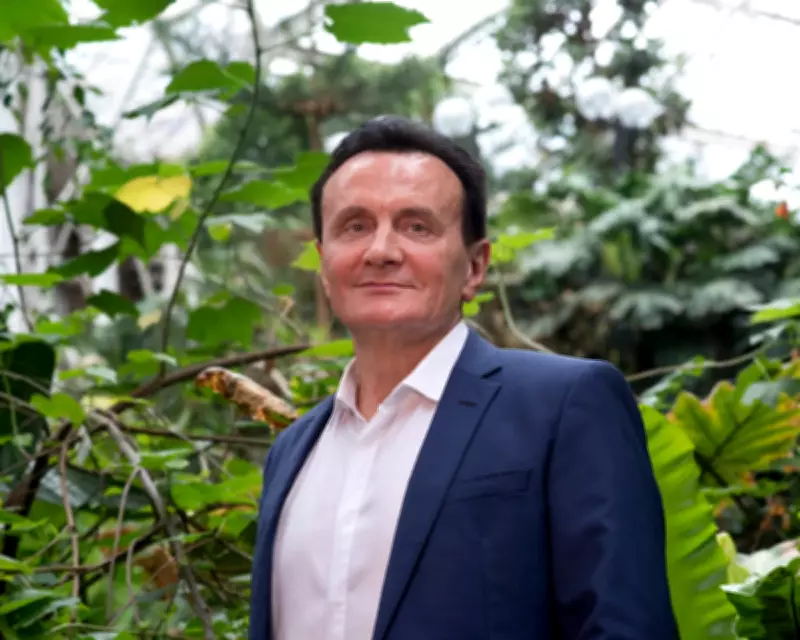
AstraZeneca's chief executive Pascal Soriot has publicly commended the UK government's recent drug pricing agreement with the United States, describing it as a "very positive step" towards creating a more attractive life sciences environment in Britain. However, he has made it clear that this deal alone is unlikely to be sufficient to revive a previously paused £200 million investment in expanding the company's research hub in Cambridge.
Investment Pause Amid Global Priorities
During a recent business update, Soriot elaborated on the company's strategic decisions, noting that while the UK-US pricing arrangement announced in December is a welcome development, it probably will not be enough to justify restarting the Cambridge project, which was frozen in September. He emphasized that the United States remains "the most attractive market in the world" for pharmaceutical innovation and sales.
Global Expansion Contrasts with UK Caution
This stance comes in stark contrast to AstraZeneca's aggressive investment plans elsewhere. Just two weeks ago, during Keir Starmer's visit to Beijing, the company announced a massive $15 billion (£11 billion) investment in China, its second-largest market. Additionally, AstraZeneca is channeling $50 billion into US factories and laboratories by 2030. The firm also recently listed its shares in New York, though it maintains its primary stock listing in London.

Persistent Tensions Over Drug Pricing
Despite Soriot reiterating AstraZeneca's commitment to the UK, the relationship between the pharmaceutical giant and the British government has been strained. A long-running dispute over drug pricing and the availability of new medicines on the NHS has been a significant point of contention. The December deal, estimated to cost the NHS £1 billion over its first three years, was reached under pressure from former US President Donald Trump to lower traditionally high American drug prices.
Practical Implementation Concerns
Soriot pointed out that the company still needs to understand the practical implementation of the UK-US agreement. He acknowledged that as a "first step," the deal will improve patient access to several medicines, but he expressed doubts about its adequacy for many truly innovative products. He highlighted that only 40% of medicines sold in the US are available in Europe, underscoring the challenges in drug accessibility.
Specific Drug Access Issues
A case in point is AstraZeneca's breast cancer infusion Enhertu, which has not been recommended for use on the NHS in England and Wales by the National Institute for Health and Care Excellence (NICE), the body responsible for assessing the cost-effectiveness of new medicines. Soriot stressed that the high risks and costs associated with drug development must be adequately recognized in pricing models.
Financial Performance and Future Goals
Amid these discussions, AstraZeneca provided a robust financial outlook. The company forecast steady sales and profit growth for the current year, with Soriot aiming to achieve a target of $80 billion in annual sales by 2030. Following the announcement, AstraZeneca's share price on the FTSE 100 rose by 2% in London trading.
Detailed Financial Projections
The pharmaceutical firm predicted that 2026 revenues will grow by a mid-to-high single-digit percentage at constant currency rates, though it noted "some impact" from US price cuts. Core profit growth is expected to be in the low double-digit percentage range. In the previous year, sales increased by 8% to $58.7 billion, while profits rose by 11%. Fourth-quarter sales grew by 2% to a record $15.5 billion, slightly exceeding analysts' expectations.
Product Performance and Pipeline
Sales of cancer drugs surged by 20% to $7 billion in the quarter, but revenues from cardiovascular products declined by 6% to $3.1 billion, partly due to generic competition. Soriot revealed that AstraZeneca now boasts 16 blockbuster medicines—each with annual sales exceeding $1 billion—and aims to increase that number to 25 by 2030. The company is currently conducting more than 100 late-stage clinical trials and expects to present results on over 20 of them this year.

Historical Context of UK Investment Decisions
This is not the first time AstraZeneca has scaled back its UK investment plans. A year ago, the company abandoned a planned £450 million expansion of its vaccine site in Speke near Liverpool. The recent pause on the Cambridge investment further highlights the cautious approach the firm is taking towards the UK market, despite its global headquarters being located in Cambridge.
Soriot's comments underscore a broader trend in the pharmaceutical industry, where companies are increasingly weighing the attractiveness of different markets based on pricing policies, regulatory environments, and growth potential. While the UK-US drug pricing deal is seen as a step in the right direction, AstraZeneca's actions suggest that more substantial incentives may be needed to secure major domestic investments in the competitive global landscape.