
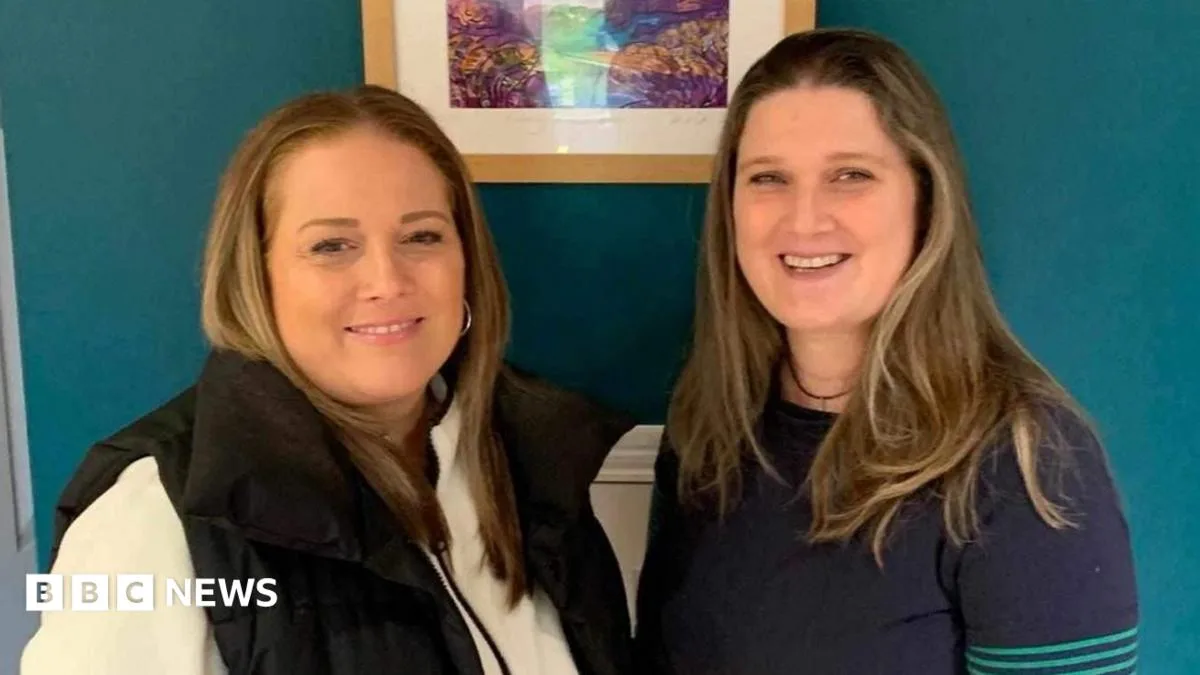
Two sisters from Cardiff have spoken out about their experiences with spontaneous coronary artery dissection (SCAD), a rare and potentially fatal heart condition, after suffering heart attacks just three days apart. Rebecca Lewis, 48, a teacher, experienced a heart attack in her classroom last November, caused by a SCAD—a tear in the wall of a coronary artery. Her sister Angharad had a similar episode shortly after visiting her in hospital.
SCAD is a rare condition that cannot currently be predicted or prevented, primarily affecting women in their 40s or 50s or those who have recently given birth. Symptoms include chest pain, tightness in the arms, neck, jaw, back, or stomach, dizziness, fatigue, nausea, and sweating. In some cases, it can lead to cardiac arrest.
Rebecca was fortunate that the consultant who treated her had previously worked at Glenfield Hospital in Leicester, a leading centre for SCAD research. She credits this expertise for her correct diagnosis. Angharad, treated at a different hospital, was only diagnosed after Rebecca insisted she be checked for SCAD, leading to a transfer to Cardiff. 'If it wasn't for Becky, I would've been sent home not knowing why I'd had my heart attack,' Angharad said.
Professor David Adlam, who leads SCAD research at Glenfield Hospital, notes that many cases go undiagnosed. He urges healthcare professionals to consider SCAD in patients with heart attack symptoms, as its treatment differs from conventional heart attacks—focusing on allowing the artery to heal naturally rather than inserting stents.
Research into SCAD is currently funded by the charity Beat SCAD, with a pilot project in Scotland. The Welsh government has stated it expects NHS Wales to follow professional guidelines for acute coronary syndrome and is prepared to collaborate on research for rare cardiac conditions. Rebecca and Angharad are still recovering, with Rebecca emphasising the importance of awareness: 'It was the last thing I was thinking at 48 years of age that I'd be having a heart attack.'




