
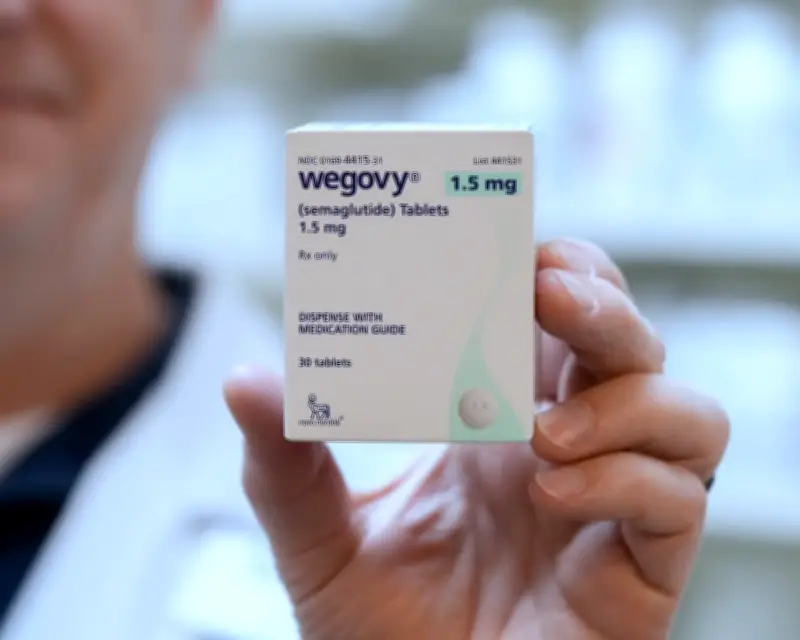
The United Kingdom's medicines regulator, the Medicines and Healthcare products Regulatory Agency (MHRA), has approved the Wegovy weight-loss pill for use by patients in the UK. This decision makes the UK the third country to authorize the tablets, following the United States and the United Arab Emirates.
First GLP-1 Receptor Agonist Tablet Approved
This marks the first time a GLP-1 receptor agonist tablet for weight loss has been approved by the MHRA. Previously, UK patients using the drug had to rely on the injectable version.
Emil Kongshøj Larsen, executive vice-president for international operations at Novo Nordisk, the Danish manufacturer, hailed the approval as a landmark. He stated: “This is a landmark approval, making the UK the first country in Europe to approve Wegovy pill. We hope this approval supports increasing access to obesity care in the UK.”
Eligibility and Clinical Trials
The pills, which contain semaglutide, are approved for adults who are obese (a body mass index of 30 or above) or overweight (BMI of 27 to 30) and have at least one weight-related health condition. Clinical trials demonstrated that participants on the highest dose lost between 14% and 17% of their body weight after 64 weeks.
Availability and Pricing
Wegovy tablets are not yet approved by the National Institute for Health and Care Excellence (Nice), so they will not be available on the NHS. Eligible patients will need to obtain a private prescription. Prices have not been finalized, but patients hope they will be cheaper than injections, which typically cost between £90 and £300 per month depending on dosage and length of prescription.
Dosage and Administration
New patients will start on 1.5 mg, with doses increasing to 4 mg, 9 mg, and 25 mg, with at least one month at each level. Those already treated privately with weekly 2.4 mg Wegovy injections can switch directly to 25 mg tablets once daily if suitable, according to the MHRA.
Patients must take the pills whole with a sip of water on an empty stomach after fasting for at least eight hours, then avoid food or drink for at least 30 minutes.
Side Effects and Expert Opinions
The most common side effects are gastrointestinal disorders, including nausea, diarrhoea, constipation, and vomiting. The MHRA advises anyone experiencing side effects to consult their doctor, pharmacist, or nurse and report them via the yellow card scheme.
Prof Victoria Tzortziou Brown, president of the Royal College of GPs, expressed interest in Nice's assessment of the pills for general practice. She noted: “Weight-loss medication can potentially benefit many patients, and being able to take it in tablet form would certainly be easier than having to inject it.” She emphasized that the medication should not be seen as a magic solution and must be part of a broader approach to healthy weight management.
Naveed Sattar, a professor of cardiometabolic medicine at the University of Glasgow, commented: “Expanding the range of effective treatments is important in helping people sustainably reduce caloric intakes within an increasingly obesogenic environment. With obesity rates in the UK now at very high levels, and associated with substantial multimorbidity, additional treatment options for sustained weight loss are greatly needed.”
Jason Murphy, head of pharmacy at Chemist4U, described the announcement as a major step forward in treating obesity, increasing access for millions more people. He said: “For those uncomfortable injecting themselves or that find a daily pill more compatible with their life, today’s announcement could be life-changing.”
Katharine Jenner, executive director of the Obesity Health Alliance, cautioned: “An oral Wegovy pill could help widen access to effective treatment, especially if it is cheaper and easier for patients to use. But we must be clear that weight-loss drugs are not a replacement for prevention. No medicine can fix a food system that leaves too many families surrounded by cheap, heavily marketed, less healthy food.” She noted that 65 health organisations and experts have written to the chancellor urging the government to protect evidence-based policies to improve the nation's diet.




