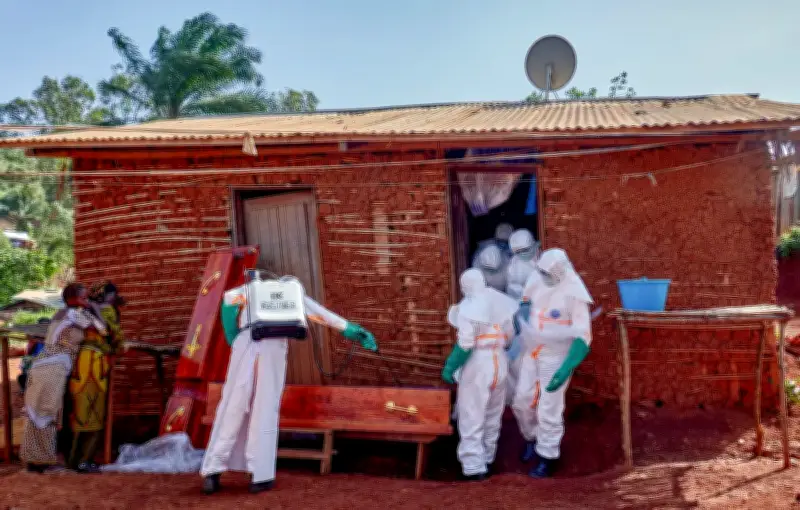
Nearly 100 days after Africa's public health watchdog reported an Ebola outbreak in the Democratic Republic of the Congo (DRC), the disease has become the country's biggest and most deadly on record, with almost 5,000 cases and more than 2,000 deaths since 15 May.
According to Dr Jean Kaseya, director general of the Africa Centres for Disease Control and Prevention (Africa CDC), speaking at a press briefing in mid-August, the outbreak is on course to be "the largest one in the world".
Why are case and death figures still increasing?
The outbreak was declared on 15 May but is thought to have been spreading unreported for months before that date. "The outbreak had a big head start, it is still way ahead of us and we are playing catch-up," Dr Tedros Adhanom Ghebreyesus, director general of the World Health Organization (WHO), said last week.

The Bundibugyo virus causing the latest outbreak is a rarer type of Ebola and has no licensed vaccine or medicine. Health workers must rely on identifying cases, isolating them for treatment, and monitoring their contacts.
Uganda successfully contained the virus after travellers from the DRC imported it, declaring its outbreak over after just 20 cases and two deaths. But in Ituri and North Kivu, the DRC provinces with the highest numbers of cases, armed conflict has displaced tens of thousands of people, and officials have been unable to identify enough contacts. Africa CDC estimates the response is tracing about 12% of contacts – the target is 95%.
Authorities are now switching to a door-to-door approach to seek people with symptoms and appointing people in every village to be part of the response effort.
Where are the 850 unaccounted cases?
As of 15 August, there had been 4,945 confirmed cases, with 730 people in treatment centres, 1,040 survivors, and 2,325 deaths. That leaves 850 people who tested positive but are unaccounted for, representing a high risk of onward transmission.
In the hardest-hit areas, many locals have little trust in authorities, questioning why the government is suddenly present when communities had been struggling alone with other diseases like cholera and malaria. Mistrust leads to infected people coming forward late, if at all, and sometimes fleeing treatment centres. Some families prefer home care and traditional burial practices involving touching bodies, which spreads Ebola through body fluids.
Is promised money reaching the frontline?
The availability of banknotes has been an issue for paying workers. The airport in Bunia, the provincial capital of Ituri, has been closed to commercial flights for months, making it harder to bring cash in. In remote areas, there are no banks and mobile money systems are unavailable, says Prof Yap Boum of Africa CDC. "The frontline responders, the community healthcare workers, the people working in treatment centres […] you need to pay them with cash. If you don't have the cash in the city, and therefore in those villages, it's difficult to run some operations," he says.
Some staff, including nurses and safe burial teams, have gone on strike over lack of pay, saying they "see no point in risking our lives" without compensation. Officials insist payment problems are being ironed out. Africa CDC says $518m (£382m) is needed for the direct health response, and another $882m for surrounding humanitarian issues. Donors have pledged more than enough, but not all funding has been released – Tedros said last week that only $264m of the $518m had been disbursed. "Depends on financing," he warned.
Are there treatments or vaccines?
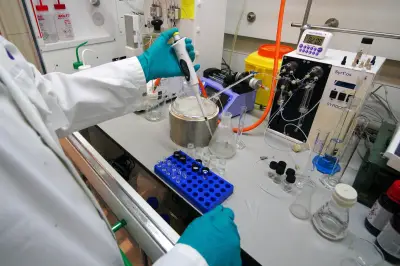
Testing is now available in labs in Ituri, rather than requiring samples to be sent to Kinshasa. Safety trials have begun of two vaccines designed specifically against Bundibugyo. New evidence suggests the existing Ebola vaccine Ervebo, designed for the Zaire strain, may offer enough cross-protection to cut death rates, and officials plan to roll it out on that basis. Trials have begun on some drugs both as treatment and prophylaxis.

What will things look like in another 100 days?
The outbreak will not be over by December, but WHO officials hope a renewed focus and village-by-village case seeking will reverse the spread within three months. An early indicator would be a fall in the case-fatality rate, which stood at 47% as of 15 August. A high rate likely reflects late reporting; a fall would suggest improvements in tracing and treatment.
Another key thing to watch is any further spread to neighbouring countries – South Sudan, which neighbours Ituri, has its own humanitarian crisis that would make an Ebola response harder. Authorities there have been stepping up surveillance, including training health workers in border towns. Potential vaccines and treatments, and an intensified response, are reasons to be hopeful, but if current efforts fail, the outbreak could surpass the biggest on record, which killed more than 11,000 people in west Africa between 2014 and 2016.