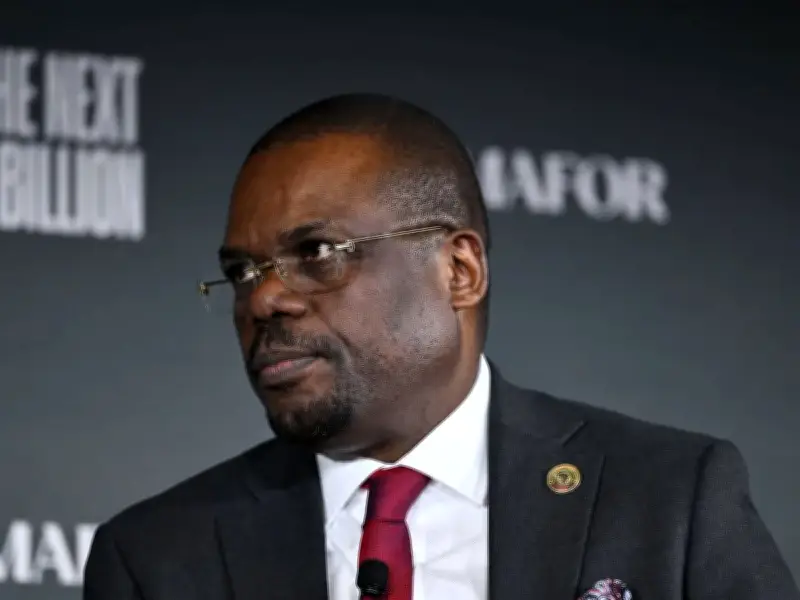
The head of the Africa Centres for Disease Control and Prevention (Africa CDC) has warned that the deadly Ebola outbreak could reach the UK unless urgent action is taken to combat the epidemic.
Dr Jean Kaseya, director general of the Africa CDC, drew comparisons between the rapid spread of Ebola and Covid-19, saying: "We shouldn't forget that at the beginning of Covid, many countries said there was zero risk of being affected, but a few months later, they became the hotspot. We don't want to see the UK and other countries become the hotspot."
Unprecedented geographic spread
Dr Kaseya cautioned: "We want all countries to know that they are not safe if they don't take appropriate measures. Each country, not only in the African region, but all continents, must now increase the preparedness level and the possibility for treatment."
He noted that it is the first time three African regions have been affected by Ebola, describing the geographic extension of the outbreak as "unprecedented."
Since the most recent outbreak began in May, figures from the Democratic Republic of Congo's health ministry show more than 9,800 cases and upwards of 4,700 deaths, making it the most devastating Ebola outbreak ever recorded in the country. Kenya has recorded nine cases and two fatalities to date.
Outbreak timeline and international response
Ebola infections were also documented in Uganda during May and June, though the World Health Organisation (WHO) subsequently declared the country clear of the virus in August.
By September, the WHO warned that the current outbreak was on course to eclipse the devastating 2014-16 epidemic in West Africa — the deadliest on record — which claimed the lives of more than 11,000 people, predominantly across Guinea, Liberia and Sierra Leone.
UN health officials cautioned in August that the outbreak gripping the Democratic Republic of Congo was spreading "exponentially."
UK Foreign Office minister Kirsty McNeill announced that an additional £51.8 million would be committed on top of the existing pledge of £26.9 million, which had originally been made in May.
Speaking in September, Ms McNeill stated: "We are working closely with international partners to support the African-led response. We acted early to allocate an initial £26.9 million to fund the immediate response in DRC and Uganda, support the World Health Organisation and Africa Centre for Disease Control (CDC) in coordinating the regional response. I am pleased to announce to the House a further £51.8 million, taking our total funding to £78.7 million."
She added: "We are also taking a leading role internationally. I met the head of Africa CDC Dr Jean Kaseya, in Addis Ababa last week, and I'll be discussing this issue with ministerial counterparts ahead of the UN General Assembly later this month."