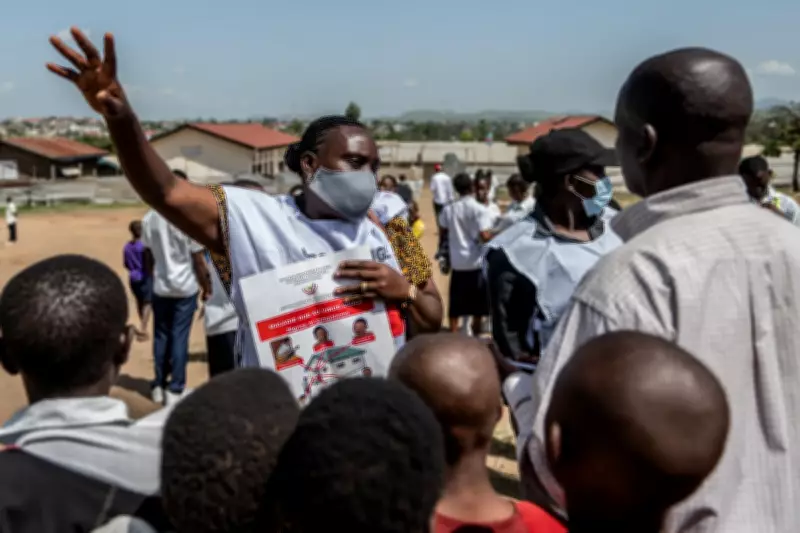
Health workers responding to a rapidly spreading outbreak of a rare type of Ebola in eastern Congo face two distinct dangers: the virus itself and attacks from suspicious residents. With suspected cases nearing 1,000, the situation is increasingly volatile.
Double Threat for Aid Workers
Vanny Birungi, a Red Cross volunteer in Bunia, encounters both the rare Bundibugyo Ebola strain—which has no vaccine or treatment—and hostility from locals who have pelted her with stones and verbal abuse. “We continue to tell them that the disease is out there. Some accept, and others don’t,” she said.
The region is plagued by armed groups that have killed thousands and displaced many, eroding trust in outsiders. Surveillance has been weakened by U.S. and other aid cuts, delaying detection of the outbreak.

Healthcare Facilities Under Attack
Three attacks occurred in the past week. On Sunday, armed men stormed a hospital, forcing evacuation of Ebola patients. On Saturday, a Doctors Without Borders tent was set ablaze in Mongbwalu, and on Thursday, a center in Rwampara was burned after relatives were barred from retrieving a body. Anger stems from Ebola prevention practices that prevent families from handling deceased loved ones.
Heather Kerr of the International Rescue Committee emphasized, “Trust is almost as important as the health response.” Armed conflict complicates travel for aid groups, who risk attacks in remote areas.
Outbreak Scale and Challenges
WHO Director-General Tedros Adhanom Ghebreyesus reported over 900 suspected cases and 220 suspected deaths. “We are now playing catch-up with a very fast-moving epidemic,” he said. Congo has faced 17 Ebola outbreaks, but early tests were for a more common type, wasting time. Testing for Bundibugyo is scarce in a region where clinics rely on generators and a major airport is rebel-held.
Health workers report being underprepared. An unknown number have been infected, and some have died. A Congolese doctor died in Rwampara, and in Uganda, at least three health workers have been infected. The Red Cross suspects three volunteers died from Ebola in March, which would push back the outbreak timeline.
Mistrust and Community Engagement
Many residents still believe Ebola is a myth. Pierre Basola, a Bunia resident, declared, “Ebola is a white man’s invention.” Action Aid reported high skepticism in Ituri province. “The only way to go is community engagement,” said country director Yakubu Mohammed Saani. How to improve trust quickly remains unclear.
Mado Nditamba, a 70-year-old resident, said, “We go to the doctors, but they also die. We leave everything to God.” Both WHO and Africa CDC believe the outbreak is larger than reported cases.