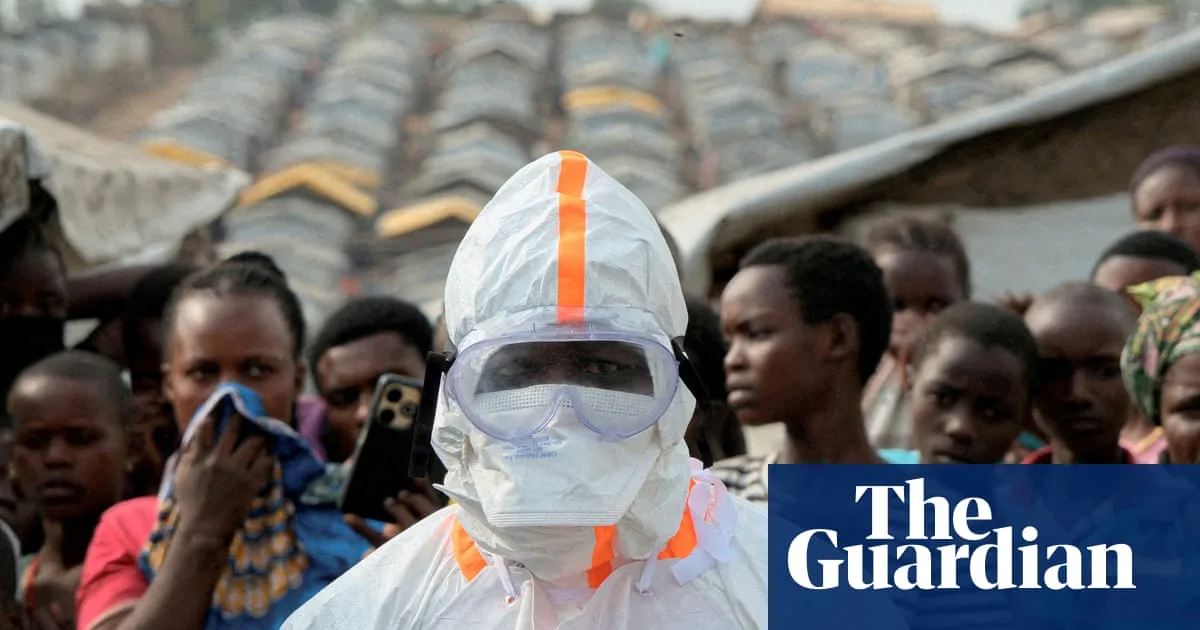
The Ebola outbreak in the Democratic Republic of the Congo (DRC) is the fastest growing on record, with conflict, aid cuts and misinformation fuelling the spread and leading to attacks on healthcare workers. According to government data from 8 July, there have been 1,759 cases and 600 deaths, and the virus has also spread to Uganda, where 20 cases and two deaths have been reported.
The outbreak is caused by the rare Bundibugyo variant, for which there is no approved treatment or vaccine. Wessam Mankoula, head of emergency preparedness at the Africa Centres for Disease Control and Prevention, described it as the fastest growing Ebola outbreak ever. Suspected cases have now been recorded in Tshopo and Haut-Uélé provinces, indicating continued spread beyond the initial centre in Ituri.
Eastern DRC has been plagued by armed conflicts for years, particularly in Ituri, North Kivu and South Kivu, where militias and rebel groups operate. Ladd Serwat, a senior analyst at the Acled conflict monitoring group, said militant activity has complicated humanitarian access and could significantly hinder containment efforts. The region hosts 3.3 million displaced people, according to the International Organisation for Migration.
Humanitarian funding for the DRC declined sharply in 2025, largely due to a US freeze on foreign aid. Carla Martinez, the DRC head at the UN’s Office for the Coordination of Humanitarian Affairs, said the cuts forced more than ten organisations to reduce or suspend activities, weakening local health systems and surveillance networks. She warned that the outbreak highlights the vulnerability of underfunded humanitarian systems.
Healthcare workers and treatment centres have come under attack, with 10 Red Cross volunteers attacked during the current outbreak, four of whom sustained injuries. Alex Lock, a spokesperson for the International Federation of Red Cross and Red Crescent Societies, said most incidents occurred during safe burials and were driven by mistrust from misinformation about the disease. The rapid spread of the virus has been intensified by such hostility, experts warn.