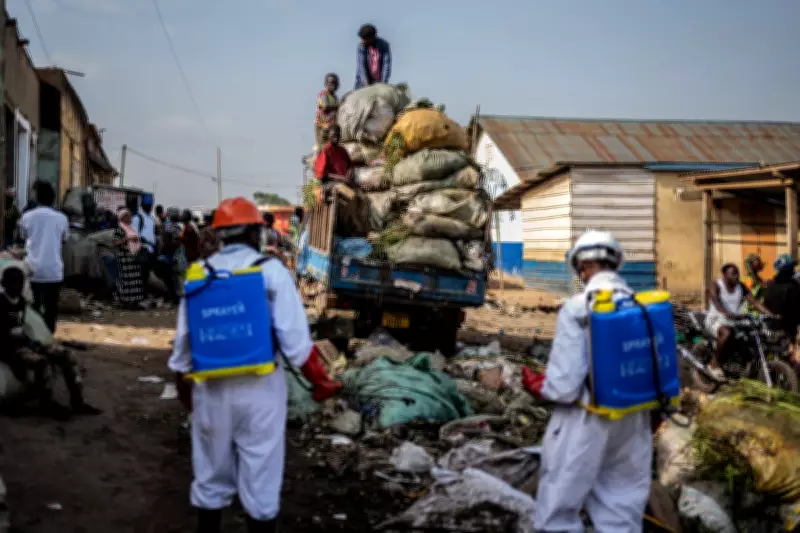
Arson attacks on Ebola treatment centers in eastern Congo highlight the severe complications authorities face in containing an outbreak declared a global health emergency. The burning of facilities in two towns at the outbreak's epicenter reflects anger in a region plagued by rebel violence, mass displacement, government failures, and international aid cuts that have crippled health services.
Violence and Instability
Eastern Congo has long suffered from violence involving dozens of rebel groups, some backed by foreign nations or Islamic State. The Rwanda-backed M23 rebels control parts of the region, while the Congolese government's hold on Ituri Province—the outbreak's epicenter—is fragile. The Allied Democratic Forces, a Ugandan Islamist group linked to Islamic State, is a dominant rebel force responsible for attacks on civilians. Doctors Without Borders reported that insecurity has driven doctors and nurses away, leaving health facilities overwhelmed and conditions catastrophic.
Mass Displacement
Nearly 1 million people in Ituri are displaced by conflict, according to the UN humanitarian office. This outbreak unfolds in communities already facing insecurity, displacement, and fragile healthcare systems, said Gabriela Arenas of the International Federation of Red Cross and Red Crescent Societies. The disease could spread to large displacement camps near Bunia, where initial cases emerged. Authorities have reported over 700 suspected Ebola cases and more than 170 suspected deaths, mostly in Ituri, but cases have also appeared in North Kivu, South Kivu, and Uganda.

Aid Cuts and Resource Shortages
International aid cuts by the US and other wealthy nations have devastated eastern Congo, reducing capacity to detect and respond to outbreaks, said Thomas McHale of Physicians for Human Rights. Aid groups lack essential equipment like face shields, protective suits, testing kits, and body bags. Julienne Lusenge of Women's Solidarity for Inclusive Peace and Development noted, "We only have hand sanitizer and a few masks for the nurses." The Bundibugyo Ebola virus type has no approved vaccine or treatment.
Community Backlash
The burning of treatment centers in Rwampara and Mongbwalu—areas with the highest case counts—reflects local anger over years of violence and government neglect. Colin Thomas-Jensen of the Aurora Humanitarian Initiative said the attacks may stem from "built-in skepticism and anger." Strict burial protocols for suspected Ebola victims have also fueled resentment, as authorities take charge of burials to prevent disease spread. In Rwampara, youths set fire to a center while trying to retrieve a friend's body, accusing foreign aid workers of lying about Ebola. Authorities have banned funeral wakes and gatherings of over 50 people, with armed soldiers guarding burials.