
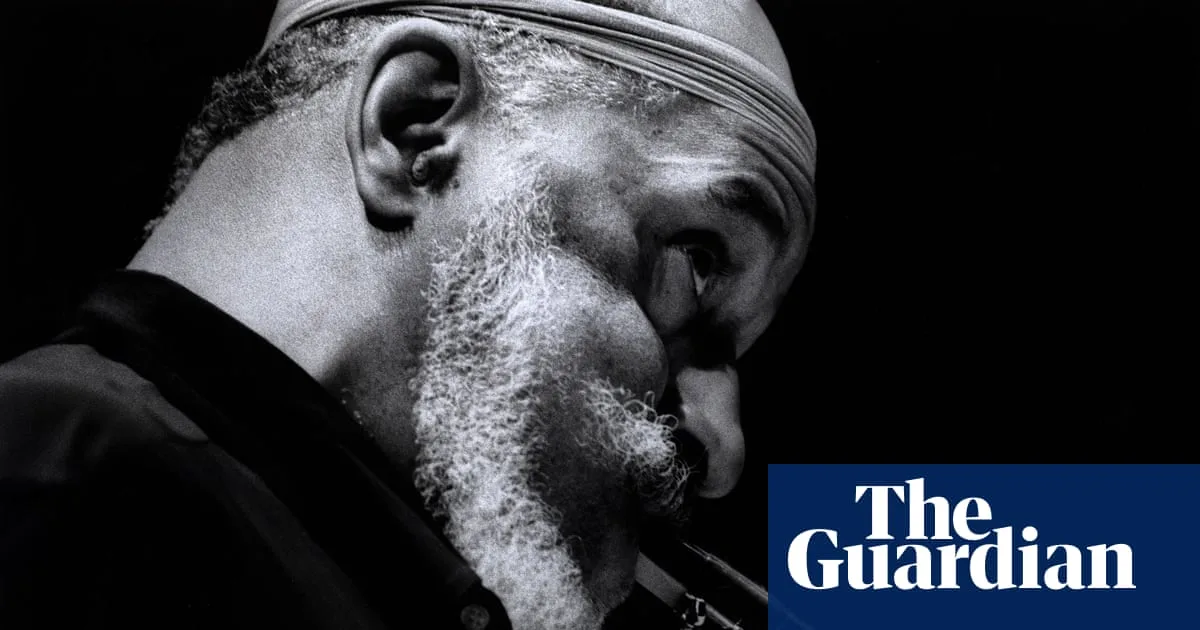
Sonny Rollins, one of the most celebrated jazz saxophonists of all time, has died aged 95. His death was announced on his website on Monday, with a statement expressing “deep sorrow and profound love”. His publicist Terri Hinte confirmed the news. The statement said the “Saxophone Colossus” died at his home in Woodstock, New York, on Monday afternoon, though no cause of death was given.
Born Walter Theodore Rollins in New York City in 1930 and raised in Harlem, he earned his nickname from his grandmother. Inspired by his piano-playing sister, violin-playing brother and jazz heroes such as Louis Jordan and Fats Waller, he began learning the saxophone aged seven. His high school band featured future stars Jackie McLean, Kenny Drew and Art Taylor, and he later performed with Bud Powell and J.J. Johnson.
With more than 60 albums released from the late 1940s onwards, Rollins was among the last living stars of the bebop generation. His inventive improvisations and melodic brilliance, showcased alongside Miles Davis, Thelonious Monk and John Coltrane, helped move jazz into startling new expressive territory. Davis described him as “a legend, almost a god to a lot of the younger musicians”, while Barack Obama said in 2011 that Rollins had inspired him to take risks.
Rollins struggled with heroin addiction, committing an armed robbery in 1950 to fund the habit. He served 10 months on Rikers Island and kicked his habit through a rehabilitation programme in 1955. His subsequent burst of creativity was remarkable: he released his debut album as bandleader in 1953, and recorded 17 more by the end of the decade, including landmarks such as Saxophone Colossus (1956), Way Out West (1957) and Freedom Suite (1958).
In 1959 he took a three-year break, practising for up to 15 hours a day on the Williamsburg Bridge, which inspired his 1962 comeback album The Bridge. Another sabbatical between 1969 and 1971 saw him travel to an Indian ashram to study yoga, philosophy and meditation. Reflecting on death, Rollins once said: “I think when the creative person ends, he continues in the next existence.”




