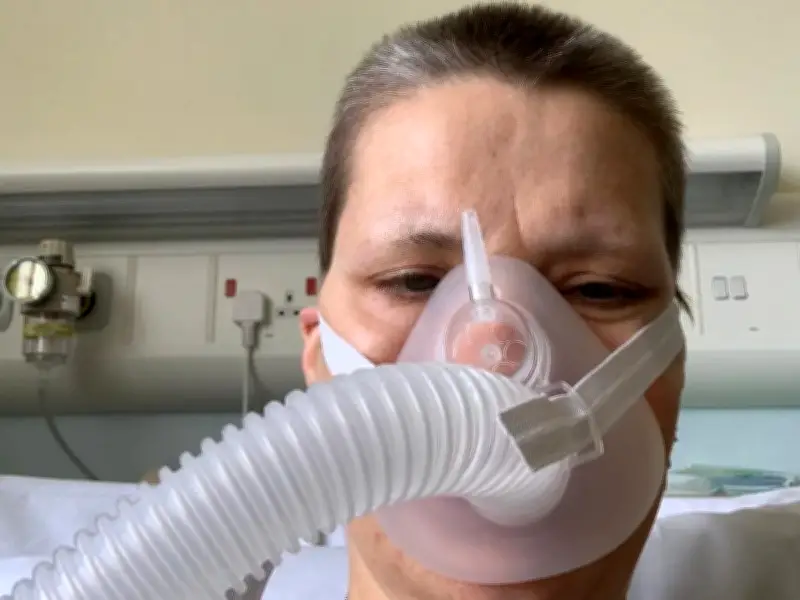
A County Durham mum was told she had probably had cancer for "seven to ten years" by the time she was finally diagnosed. Taekwondo-loving Leanne Armstrong, 52, went to the GP after a lump in her abdomen began causing her severe pain while training in the martial art.
It turned out that Leanne had a tumour on her liver - the first visible sign of an until-then invisible cancer. She has neuroendocrine cancer, a form of the disease often misdiagnosed for years.
Leanne, a former school catering supervisor from Blackhall, actually even considers herself "lucky" compared to some, as her cancer was identified comparatively quickly once she went to the GP. Charity Neuroendocrine Cancer UK recently released a report highlighting how, on average, it takes just under five years for someone to be diagnosed.
Raising awareness after delayed diagnosis
Leanne said she was determined to support efforts to raise awareness about the cancer, especially as its symptoms are often missed or seen as likely caused by other conditions. She said: "I have always done what I can for the charity. My original GP told me how they had, in their 20 years, heard about my cancer but never actually come across it. And I thought about how many people are out there who will end up in my situation - where the cancer could be found seven to ten years earlier."
"If that had been the case for me I probably wouldn't have been at the stage that I was. Now I just want to get the word out there about the symptoms."
From training pain to diagnosis
Recalling her own experience, she added: "I have been one of the lucky ones. I had thought I just had a hernia or a cyst. The size of the tumour would go up and down - so initially I thought it was just a food allergy even. I do taekwondo and was doing sit-ups - and I just had this burst of pain. I had to roll over to hide my face as I was in tears, it was that sort of acute pain. It happened a few times. I went to the GP and they sent me for a CT scan. I never thought it would be a tumour, as I say, I just expected it to be a hernia or cyst. But I was told they were putting me on the two-week wait timeline [for cancer referrals]."
"They told me it was neuroendocrine cancer and told me to look up the charity - and they said they would be referring me to the Freeman which is a centre of excellence for this."
Leanne is now a patient at three hospitals - the Freeman in Newcastle, James Cook in Middlesbrough and Guy's and St Thomas's in London - and receiving specialist treatment. However, she knows her cancer has spread widely - including to her bones where there are upwards of 30 lesions.
Treatment and ongoing care
Leanne is now waiting for a referral for a second course of an innovative kind of radiotherapy called Peptide Receptor Radionuclide Therapy (PRRT) - which helps to treat advanced neuroendocrine tumours. She previously underwent such treatment during the pandemic.
Looking back, Leanne reflected on how her kind of cancer was often "invisible". She said: "I was told I had probably had this seven to ten years already. I had started the taekwondo about 14 years ago [at this time] and nothing had rung the alarm bells before. There was no indication that anything was seriously wrong. I had lost a lot of weight, but I thought it was just life, maybe the menopause, things like that... That's what you're often told."
Leanne, who has son Rhys, who is 28, has recently been receiving bone strengthening treatment to allow for chemotherapy, and she has paid tribute to the cancer care across the NHS - including her "amazing" specialist nurse at the Freeman and the team looking after her at James Cook.
Report highlights widespread misdiagnosis
She was speaking to mark World Endocrine Cancer Day, which took place on Tuesday. The day saw the publication of report from International Neuroendocrine Cancer Alliance (INCA). This found that more than half of people (51.9%) in the UK were initially told they had something else, rather than this cancer.
Leanne's treatment has included a number of surgeries - including having half of her liver and her gallbladder removed - but she has maintained her taekwondo. In 2025 she even made the grade as a 5th Dan black belt.
The charity's figures also show that for one in three people, this happened more than once. Just 24% of people received the right diagnosis the first time.
Martyn Caplin is one of the country's leading experts in the field. He is a professor of gastroenterology and neuroendocrine cancer and London's Royal Free Hospital. He highlighted the risk of delays.
Prof Caplin said: "Delayed diagnosis is not simply a matter of waiting longer for answers. The sooner a patient is diagnosed, the more treatment options are available, even if the cancer cannot be removed surgically. Neuroendocrine cancer can be challenging to recognise, and no clinician can be expected to know everything. But when symptoms persist, or the explanation does not fit, we must remain open to other possibilities and ensure that specialist advice and appropriate diagnostic investigations are accessible."
Neuroendocrine cancer affects 6,000 people each year - one person is diagnosed every 90 minutes.
Lisa Walker, chief executive of Neuroendocrine Cancer UK, said: "Six years on people with neuroendocrine cancer are still waiting, on average, almost five years for the correct diagnosis. That is far too long. Patients should not have to wait years for their cancer to be recognised, navigate disconnected services or repeatedly explain their history to different professionals. Our Seen Too Late report highlights the need to make neuroendocrine cancer more visible. That means recognising it sooner, ensuring timely access to specialist expertise and making sure care is joined up around the person, wherever they are in the system."