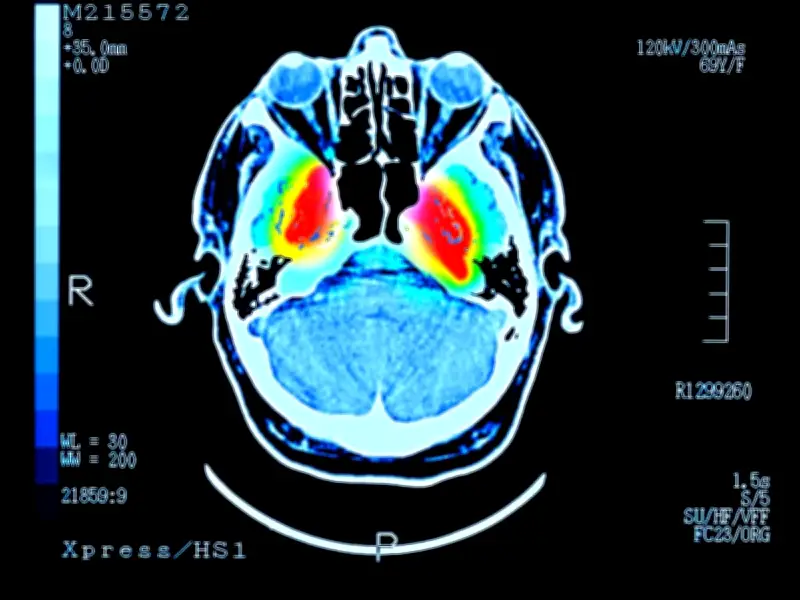
A new study suggests that subtle changes in the shape of brain waves during deep sleep could be an early sign of Alzheimer's disease, potentially appearing years before memory problems begin.
According to News Medical, "deep sleep disturbances may precede Alzheimer's symptoms." The publication notes that while "sleep problems are common in Alzheimer's disease," they "may begin years before memory symptoms appear" and could serve as an early indicator of the condition.
Study Details and Findings
The study, published in Springer Nature on November 9, 2026, involved 116 adults. Researchers examined sleep patterns at two levels, according to the News Medical team. The authors found that "deep sleep shows changes in both macro- and micro-structure over the spectrum of patients from preclinical to early AD," with slow wave shape changes appearing early, "perhaps representing a sensitive early biomarker of preclinical AD."
Preclinical refers to a very early stage of a disease, before any clear symptoms appear.
Understanding Slow-Wave Sleep
The Sleep Foundation explains that slow-wave sleep is the third stage of sleep and the deepest, most restorative kind, playing an important role in growth, memory, and immune function. Each night, people move through four sleep stages: three non-rapid eye movement (NREM) stages and one REM stage, cycling through them about 4–6 times. Slow-wave sleep usually occurs early in the night, with each period lasting about 20–40 minutes. Most adults spend around 10%–20% of their sleep in this stage, though this amount generally decreases with age.
During slow-wave sleep, the brain clears out waste proteins like amyloid-beta and tau, which can build up into the "plaques and tangles" seen in Alzheimer's disease, according to News Medical. Some studies have found that disrupted slow-wave sleep is linked to early, pre-clinical Alzheimer's-related changes in the brain.
Broader Neurological Context
Further research from Harvard Health describes the glymphatic system, a cleanup process that occurs on a cellular level each night during sleep. As people slumber, cerebrospinal fluid collects and removes brain waste, including deposits of amyloid and other proteins linked to Alzheimer's, Parkinson's disease, and Lewy body dementia.
Potential as a Non-Invasive Marker
In participants with no cognitive impairment, those with steeper and taller slow waves tended to have better thinking and memory over time. This link was strongest in men, although that male-specific result "is an exploratory finding."
The study's conclusion suggests sleep patterns start changing early in Alzheimer's and get worse as the disease progresses. In the preclinical stage, features of deep slow-wave sleep are linked to changes in cognition over time. The study reads: "Sleep macro- and microarchitecture are altered early and progressively deteriorate across the Alzheimer's disease continuum. Slow-wave features relate to cognitive trajectories in preclinical Alzheimer's disease, with exploratory analyses suggesting stronger associations in men. These findings support slow-wave morphology as a candidate non-invasive marker for future sleep-based intervention studies."
It is worth noting that correlation does not equal causation, and more studies are needed to confirm these suggestions.