The World Food Programme (WFP) has been forced to cut food aid for half a million people in Gaza due to funding shortages. The UN agency, one of the largest food suppliers to the Gaza Strip, currently assists 1.6 million people but warned this number will drop to 1.1 million as winter approaches the war-torn territory, where around two-thirds of the population rely on food aid to survive.
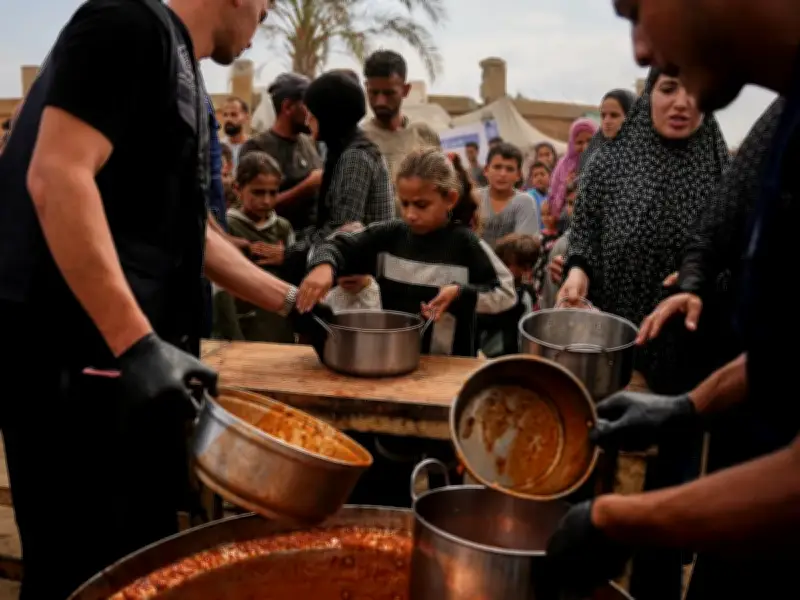
The reduction means families in Gaza will receive significantly less food. The WFP will cut the number of hot meals provided in community kitchens from 250,000 to 150,000 a day.
Funding falls by more than half
The UN agency said funding for its Palestinian operation has fallen by more than half from previous years, with the WFP stating it urgently needs $450m to maintain its "critical" operations in the Gaza Strip and West Bank.
The WFP had been providing 1.6 million people in the Gaza Strip with food parcels, wheat flour, bread, hot meals, nutrition support, school snacks and cash assistance. The agency said: "WFP no longer has sufficient funding to sustain this level of support."
Families receiving food assistance will now receive only one food parcel instead of two, and a smaller bag of wheat flour. People living in hard-to-reach areas, for example near the yellow line of Israeli military control, will receive a hot meal every other day instead of daily.
Winter malnutrition warning
The agency added that it urgently needs to provide more food assistance as winter approaches to "prevent malnutrition among young children and pregnant and breastfeeding women".
Nearly all of Gaza's population of 2.1 million people have been displaced since the start of the Israel-Hamas war in 2023, with many homeless or living in refugee camps.
The funding shortfalls have also impacted the WFP's work in the West Bank, with the number of people receiving assistance halving from 400,000 to 200,000 in September.
Call for recovery and stability
The WFP's Palestine director, Shaun Hughes, said: "We need to invest in recovery. This humanitarian operation isn't affordable or sustainable in the long term."
"Ultimately that's also what everyone in Gaza is telling us. They really don't want to be reliant on these handouts, don't want to stand in the hot meals queue every day. They want to have some chance of stability and recovery."
This comes more than a year after the Donald Trump-brokered ceasefire deal came into effect, but the US President's promise to develop the Strip "to improve life for its people" has not happened. Violence has continued, with the territory suffering Israeli strikes nearly daily.
Food prices in Gaza remain high even after the ceasefire, and with 80% of the population unemployed, most people cannot afford to buy food available in shops and markets in the Strip. The Palestinian Ministry of Health last week warned that malnutrition and starvation rates in Gaza have reached "catastrophic" levels. At least 466 Palestinians have died from either malnutrition or starvation since 2024, and it is estimated that 74,200 children would need treatment for acute malnutrition through to April 2027.