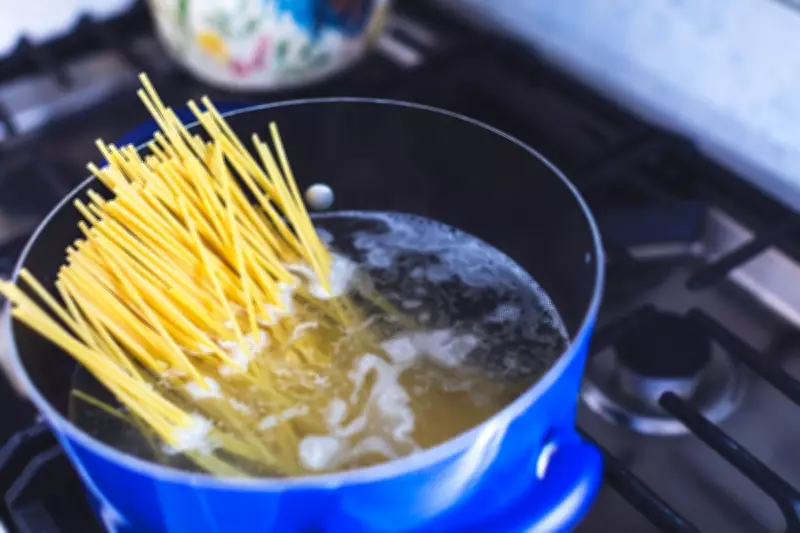
The Scientific Secret to Perfect Pasta Revealed
Whether you prefer your spaghetti al dente or soothingly soft, achieving pasta perfection at home can be surprisingly difficult. Many home cooks have experienced their pasta disintegrating into an unappetising beige mush, particularly when working with gluten-free alternatives. Now, groundbreaking scientific research has finally uncovered the physics behind the ideal pasta cooking process, providing definitive answers to age-old culinary questions.
Cutting-Edge Science Meets Kitchen Basics
A comprehensive study published in the journal Food Hydrocolloids has utilised some of the world's most advanced scientific facilities to investigate what happens to pasta at the microscopic level during cooking. Researchers turned to the Diamond Light Source, the UK's national synchrotron facility, which functions as a circular particle accelerator. Here, they studied the scattering of X-rays at low angles to reveal pasta's hidden internal structure.
The scientific investigation continued at neutron facilities including Isis in the UK and the Institute Laue Langevin in France. By using neutrons - subatomic particles that form atomic nuclei alongside protons - researchers could illuminate the microstructure of both regular and gluten-free spaghetti under various cooking conditions. This innovative approach allowed scientists to examine starch and gluten structures across scales ranging from tens to thousands of times the radius of an atom.

The Gluten Scaffold: Nature's Perfect Structure
The research reveals that in regular wheat pasta, gluten forms a remarkably strong scaffold that holds starch granules firmly in place even during vigorous boiling. This structural integrity gives traditional pasta its characteristic firmness and contributes to its slower digestion rate. The study employed sophisticated techniques using mixtures of normal and "heavy water" containing deuterium isotopes, allowing researchers to make either gluten or starch invisible to neutron beams and examine each component separately.
In stark contrast, gluten-free pasta lacks this protective scaffolding. The starch granules in gluten-free alternatives swell and collapse much more easily during cooking, explaining the mushy texture and rapid breakdown that often occurs when these products are prepared under non-optimal conditions. Artificial compounds made from processed starches, which manufacturers use to substitute for gluten, degrade particularly quickly during cooking.
The Salt Solution: More Than Just Flavour
The research team made a significant discovery about the role of salt in pasta cooking. Beyond simply enhancing flavour, salt profoundly affects the microscopic structure of spaghetti. When regular pasta is boiled in properly salted water, the gluten maintains its structural integrity, and starch granules suffer less deterioration during the cooking process.
The study identified the optimal salt concentration as precisely seven grams per litre of water, with additional water required for larger pasta quantities. Researchers determined that regular pasta should be cooked for ten minutes, while gluten-free alternatives require eleven minutes for optimal results. Interestingly, when salt concentration was doubled, the internal order broke down more rapidly, and starch granule structures were significantly altered by the cooking process.
Gluten-Free Challenges and Future Improvements
For gluten-free pasta, the absence of gluten's protective scaffolding creates inherent structural fragility. Even small amounts of salt cannot compensate for this missing element. The most extreme degradation occurred when gluten-free spaghetti was cooked for thirteen minutes instead of eleven, particularly in very salty water. This makes gluten-free alternatives less tolerant of both overcooking and incorrect salt concentrations.
Understanding pasta structure at these microscopic scales, invisible even under conventional microscopes, promises to revolutionise the design of better gluten-free foods. Researchers hope to develop gluten-free alternatives that are more resilient to imperfect cooking conditions and more closely mimic the texture of traditional wheat spaghetti.

Regular wheat pasta naturally has a low glycaemic index because gluten slows the breakdown of starch granules during digestion. Gluten-free pasta, typically made from rice and corn flour, often lacks this structural advantage, potentially causing sugars to be released more rapidly during digestion. With neutron scattering techniques, food scientists can now identify which ingredients and cooking conditions best recreate gluten's beneficial structure.
Scientific Tools Transforming Food Research
This research represents a fascinating convergence of cutting-edge scientific tools with everyday culinary concerns. Neutron scattering, which has played fundamental roles in advancing our understanding of magnetic materials, batteries, polymers, and proteins, is now helping explain how common foods behave at microscopic levels. The study demonstrates how experimental techniques primarily developed for fundamental research are increasingly transforming practical food science applications.
The research was conducted by Andrea Scotti, Senior Lecturer of Physical Chemistry at Lund University, and colleagues, and was originally published by The Conversation under a Creative Commons licence. Their work provides not just theoretical insights but practical guidance that could transform how home cooks and professional chefs alike approach this staple food preparation.