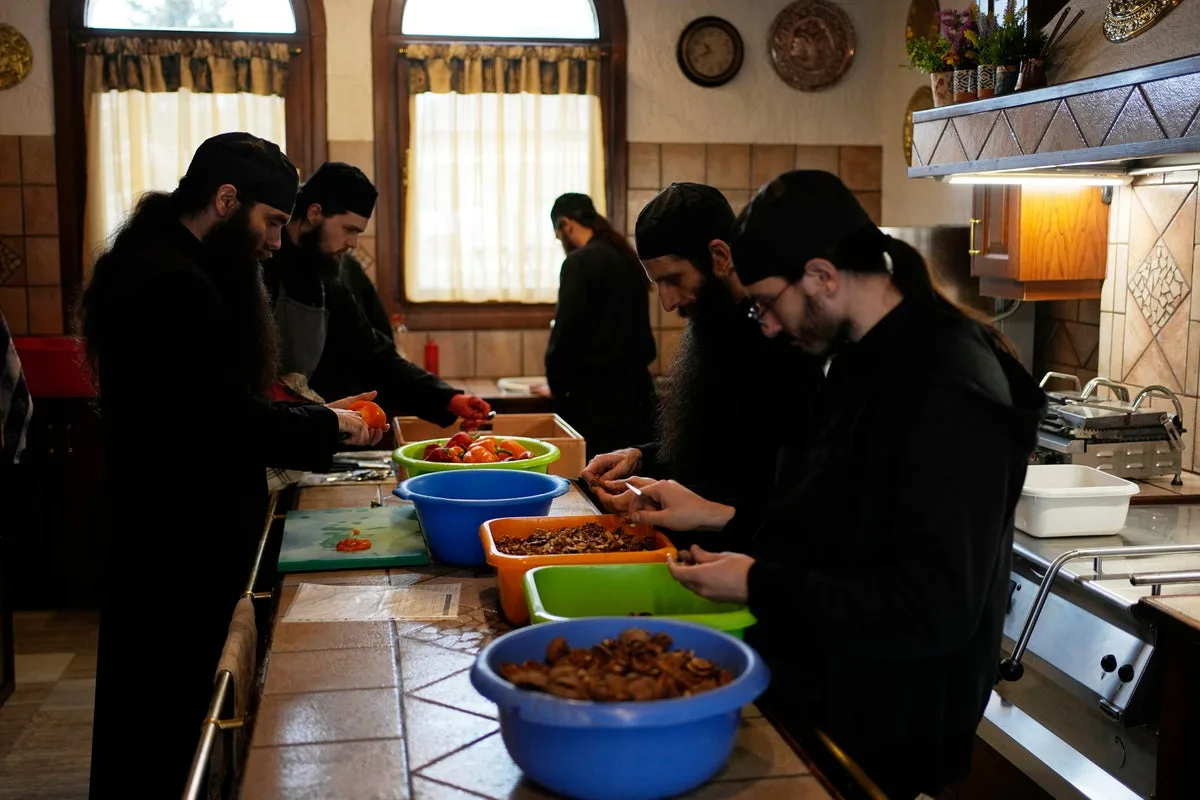
For six weeks each year, millions of Orthodox Christians adopt a largely vegan diet as part of a centuries-old ritual of spiritual renewal. The Lenten fast involves abstaining from meat, dairy, eggs, and fish with backbones, with oil and wine prohibited on weekdays. This plant-based meal plan has become a seasonal rediscovery of vegetables and oil-free cooking in Orthodox-majority nations like Greece, where even McDonald's offers seasonal items such as shrimp wraps and plant-based McVeggie burgers.
At the Monastery of St. Augustine and Seraphim in central Greece, 40 monks follow these rules strictly, growing most of their own produce. Their meals are basic but not bland: oven-roasted potatoes coated with tahini instead of oil, and lentil dishes flavored with homemade vegetable stock. Father Nektarios Moulatsiotis, the abbot, compares the practice to endurance training: 'The church is a gym for the soul.' He argues that a disciplined diet can enhance self-control and awareness beyond religious settings.
Researchers have studied Orthodox monks' health for decades, looking for clues to preventing heart disease, diabetes, and strokes. Sports nutritionist Eirini Babaroutsi notes that fasting done correctly has benefits, such as increased fiber intake. 'It also matters what we do eat, not simply what we avoid,' she says, suggesting international additions like porridge with oat milk and vegetable wraps with olive paste. However, she advises that a six-week fast is not suitable for older adults or young children, and the church exempts those with serious health conditions.