
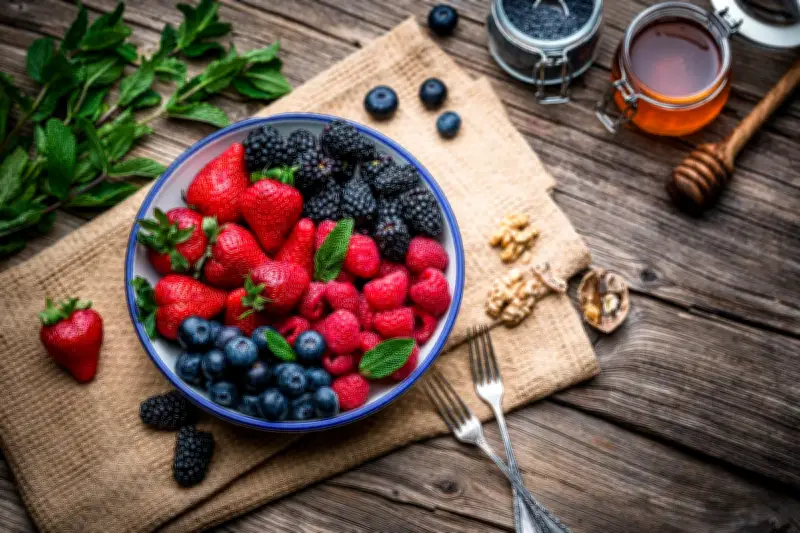
Berries are among Americans' favorite fruits, enjoyed sprinkled on yoghurt, blended into smoothies, or baked into crumbles. Fortunately, they are as healthy as they are delicious and versatile: low in calories, full of vitamins and antioxidants, and a good source of fiber.
Research shows that, depending on the type, berries support cardiovascular health, may boost gut health and fight inflammation, and show promise as part of a "healthy dietary strategy for diabetes prevention and management," to quote researchers. Meta-analyses also link compounds in berries with improved cognitive health.
Why Are Berries Good for the Brain?
Berries bring a meaningful dose of antioxidants to the table. "Berries' high polyphenol content is what we think makes them so protective" when it comes to mental processes such as memory and attention, said Maggie Moon, a registered dietitian.
Polyphenols are a broad category of plant compounds; in berries, the most active and proportionally meaningful of them are anthocyanins, which also give many berries their blue, purple and red pigments. Researchers are investigating whether berry polyphenols and the metabolites produced when gut microbes process them may influence inflammation and blood-vessel function. Because the brain depends on an extensive blood supply, better vascular function is one plausible route by which berries could support cognition.
"In simple terms, the anthocyanins are likely creating a healthy working environment for brain cells by improving blood flow into the brain, which improves oxygenation and nutrient delivery," said Tim Crowe, a nutrition scientist who closely follows anthocyanin research. "What's good for our blood vessels is also good for our brain."
The equivalent of a daily cup of blueberries was linked to slightly improved speed of information processing relative to a placebo in older adults with mild cognitive impairment over a six-month period, according to research by Mary Ann Lila, a professor in the department of food, bioprocessing, and nutrition sciences at North Carolina State University. That suggests berries could not only be neuro-protective, but an intervention for those already experiencing cognitive decline. "A pretty amazing result," said Lila.
A particular pattern of eating called the Mind diet – a version of the Mediterranean diet geared toward supporting cognitive health – involves berries. "We have a strong indication that diets that are higher in berries over many years tend to have slower cognitive decline and delaying of cognitive ageing," said Moon, who has written a book about the Mind diet. In the 2015 study informing the Mind diet, researchers observed 923 participants. They found those who prioritized whole foods including berries, leafy greens, nuts and seeds, beans, fatty fish and olive oil – while avoiding sweets, ultra-processed foods and red meat – for an average of 4.5 years had a 53% lower risk of developing Alzheimer's compared with those who did not.
Which Berry Is the Healthiest?
Experts say that if you're eating any berry – strawberries, blackberries, currants, raspberries, blueberries – you're benefiting. "All berries are good. We should eat a heck of a lot more than we do," said Lila.
However, some studies suggest wild berries may have a bit of a nutritional leg up on their conventionally grown counterparts, because they develop an "abundance of phytochemical resources" to "defend them against the environment," Lila said. "Those are the same phytochemicals that when we consume them … dispel human chronic diseases."
Each type of berry has its own valuable nutritional fingerprint. Some punch above their weight in particular categories. For instance, cranberries are the only commercially cultivated berry with a significant amount of "a particular kind of polyphenol called an A-type proanthocyanidin" which helps prevent recurrent urinary tract infections, said Lila.
Blackcurrants, meanwhile, provide the most vitamin C per cup of raw berries – about 190mg, compared with only 15mg in blueberries. Raspberries are fiber champions, with 8g, or about a third of your daily fiber needs, per cup.
Blueberries contain high levels of anthocyanins, and are colloquially lauded as a superfood – but that doesn't necessarily mean that blue is best. Other varieties could have similar benefits, but blueberries are "the well-studied one" because they are known to produce positive findings in nutrition research studies, said Crowe. Moon recommends eating a cup of berries a day, though she notes that any amount you add to your diet regularly is a net positive. "The more people are eating fruits and vegetables, including berries, the better," she said.
Should We Be Worried About Pesticides on Berries?
Berries usually appear on the Dirty Dozen, an annual list made by the non-profit Environmental Working Group. The EWG tests produce for pesticide residue and the results often make headlines, causing people to wonder whether they should be avoiding certain fruits and vegetables.
It is important that pesticide residue on organic and conventional produce remain below the regulatory limits. In the US, these are set by the Environmental Protection Agency, and monitored and enforced by federal regulators such as the Food and Drug Administration and the US Department of Agriculture. But mere detection of a substance doesn't automatically translate to a dangerous concentration.
"The dose makes the poison, and detection is not the same as harm. The very real benefits of eating a variety of any produce, including berries, outweigh theoretical risks," said Moon. "No major scientific or public health organization recommends avoiding conventionally grown produce, including berries."
"You'd need to eat hundreds of servings of each food to even hit the safety threshold, which is already 100-1,000 times lower than a level that could theoretically cause harm," writes science communicator, microbiologist and immunologist Dr Andrea Love in her 2025 assessment of the Dirty Dozen.
What Are the Best Ways to Eat Berries?
"Fresh and frozen berries have fairly similar nutrient profiles," said Moon. Frozen berries are flash-frozen soon after being harvested, meaning they retain their nutrients well. Frozen berries are convenient and potentially cheaper than fresh ones, added Crowe. Freeze-dried berries also retain their nutrients.
However, anthocyanins are heat-sensitive, and research has found that they can be reduced in berries by up to 80% in prolonged, high-heat processes such as jam-making. Berries aren't just for breakfast or sweet preparations, either. "One of my favorite ways to eat berries is a wild berry salsa – all the ingredients of a salsa minus the tomatoes, with wild blueberries standing in," said Lila. "It's a beautiful blue, cold dish you scoop up with chips, and since it's raw, you're not losing any potency to heat."




