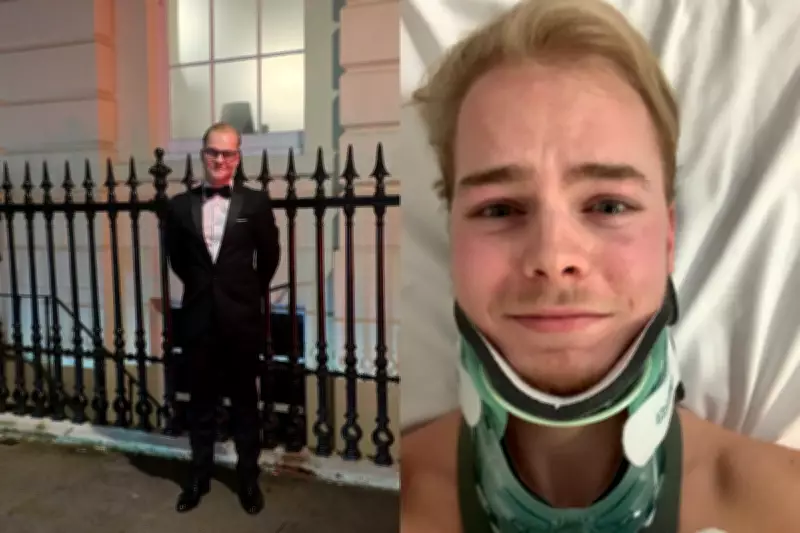
A university student experienced a temporary but profound loss of his Welsh language fluency following a traumatic car crash, leaving him feeling isolated and disconnected from his academic and social circles. Ellis Pears, a 19-year-old law student at Aberystwyth University, suffered a concussion in November 2024 when his vehicle flipped multiple times after he swerved to avoid an oncoming car on a muddy country road.
The Accident and Immediate Aftermath
Driving his 2013 Ford KA on a rural road near Aberystwyth, Pears encountered a car that veered onto his side of the lane. Faced with a split-second decision, he chose to swerve, causing his car to flip three times before coming to a stop. Despite the violent crash, he managed to climb out through a window with only a minor head cut from broken glass. After locating his phone in a nearby field, he contacted the police and later visited Bronglais Hospital, where he was diagnosed with a concussion.
Language Loss and Mental Health Struggles
Within days of the accident, Pears noticed he could no longer speak or comprehend Welsh, a language he had been fluent in since childhood. This sudden loss had severe implications, as one-third of his university course was conducted in Welsh, and many of his friends and housemates primarily communicated in the language. He described feeling like a foreigner in his own community, unable to participate in lectures, write essays, or engage in casual conversations.

The language difficulties were compounded by significant mental health challenges. Pears experienced persistent brain fog, anxiety, flashbacks, and panic attacks, which he believes were symptoms of post-traumatic stress disorder (PTSD). His concentration suffered to the extent that he struggled with simple tasks like following Lego instructions, let alone academic work. Sleep disturbances and low mood further hindered his recovery, and a brief attempt at antidepressants in December 2024 proved ineffective for him.
The Road to Recovery
By June 2025, Pears began to see marked improvements in both his mental well-being and language skills. He attributes his regained Welsh fluency to the gradual enhancement of his concentration as his mental health stabilized. The recovery process led him to reassess his priorities, emphasizing family time and social connections over academic pressures. Today, he can speak Welsh at a university level again, though panic attacks occasionally resurface when he witnesses car crashes.
This case highlights the intricate link between brain injury, mental health, and language retention. In Wales, where Welsh is spoken by 17.8% of the population nationally and 45.3% in Ceredigion, such a loss can have profound social and educational consequences. Pears' experience serves as a poignant reminder of the hidden impacts of traumatic events on cognitive and linguistic abilities.