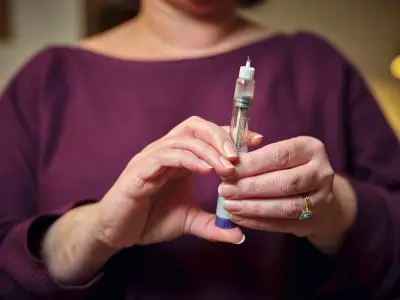
Tens of thousands of people with vitamin B12 deficiency could be offered a simpler alternative to injections, according to NHS leaders in the North East and North Cumbria. Around one in 10 people in the UK have low or deficient levels of the vitamin, which can leave people feeling tired and weak.
In the North East and North Cumbria alone, more than 50,000 people are prescribed regular injections to top up their levels. NHS North East and North Cumbria Integrated Care Board (ICB) is currently the fourth highest prescriber of injectable vitamin B12 in England.
Plans for a simpler alternative
Health experts say many injections are being given to people who could be treated just as effectively with simple diet changes and over-the-counter vitamin B12 tablets. Professor Ewan Maule, director of medicines at NHS North East and North Cumbria ICB, said: "Many people are surprised to learn that diet changes and vitamin B12 tablets can work just as well as injections for people whose bodies can absorb vitamin B12 normally."
"For suitable patients, switching to tablets can be much easier, more convenient and means fewer trips to the GP surgery. It also helps us make sure NHS appointments are available for patients who need them most," he added.
Potential time savings
The ICB said GP practices in the region currently spend around 85,000 hours each year giving vitamin B12 injections. Switching just one in four people who no longer need injections to pharmacy or supermarket bought vitamin tablets and simple dietary changes could free up more than 21,000 hours of practice time each year.
This could support the equivalent of 25,000 GP appointments and allow practice staff to spend more time caring for patients with greater clinical need. The ICB covers 14 local authority areas including Northumberland, Newcastle upon Tyne, North Tyneside, Gateshead, South Tyneside, Sunderland, County Durham, Darlington, Hartlepool, Middlesbrough, Redcar and Cleveland, Stockton-on-Tees, Cumberland, and Westmorland and Furness.
Who will continue injections?
National Institute for Health and Care Excellence (NICE) guidance supports the use of vitamin B12 tablets for many patients, particularly where low vitamin B12 is linked to diet or where the body can still absorb the vitamin properly. Professor Maule said: "This isn't about stopping treatment. It's about making sure people receive the right treatment."
"People with conditions such as pernicious anaemia, or other problems that stop the body absorbing vitamin B12, will continue to receive B12 injections and monitoring, but for many others, diet changes and vitamin tablets are a safe and effective option," he added.
GP practices across the region will review patients currently receiving vitamin B12 injections and contact them if a different treatment may be more appropriate. People are also being encouraged to speak to their local pharmacist for advice about vitamin B12 supplements and ways to increase vitamin B12 through their diet. Vitamin B12 is found naturally in foods such as meat, fish, eggs and dairy products. People who follow a vegetarian or vegan diet can get vitamin B12 from fortified foods including breakfast cereals, plant-based milks such as soya, oat and almond, nutritional yeast, some meat-free products and dairy-free alternatives. For more information on vitamin B12, speak to your GP practice or local pharmacist.