US Under-45s Face Insurance Hurdles as Colon Cancer Rates Rise in Youth
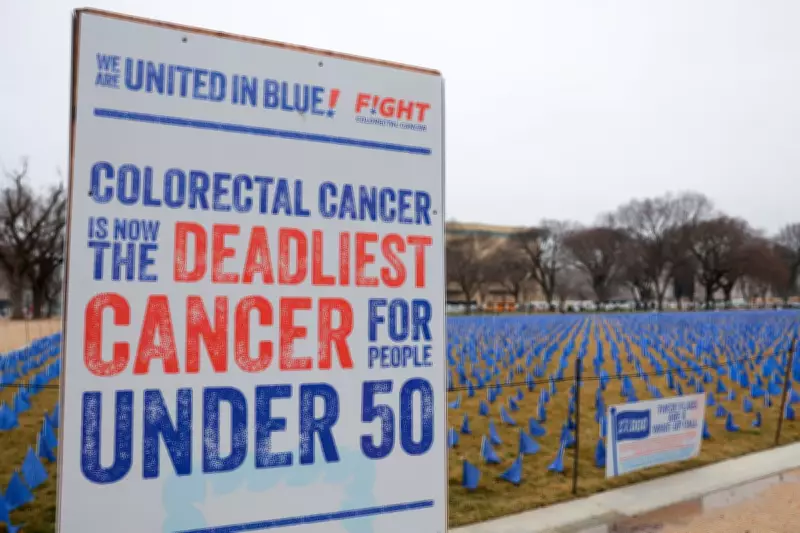
On 6 March 2026, a striking visual display of 27,000 blue flags on the National Mall symbolised the lives that could potentially be saved from colorectal cancer through increased funding and awareness. This poignant installation underscores a growing public health crisis in the United States, where young adults are increasingly affected by colon cancer yet struggle to access necessary medical screenings due to insurance barriers.
Insurance Coverage Gaps for Diagnostic Tests
As colon cancer rates surge among individuals in their 20s and 30s, many under the age of 45 who experience alarming symptoms find it difficult to obtain insurance approval for colonoscopies, which are critical for early detection. The Affordable Care Act (ACA) mandates that insurance companies cover colonoscopies as preventive screenings for people over 45, based on recommendations from the US Preventive Services Task Force. However, for those under 45, colonoscopies are often classified as diagnostic tests when symptoms like rectal bleeding are present, leading to inconsistent and limited coverage.
Caitlin Murphy, a cancer epidemiologist and professor at the University of Chicago, explains that while preventive screenings such as pap smears are fully covered under the ACA, diagnostic colonoscopies for younger individuals do not receive the same protection. The out-of-pocket costs for these procedures can vary widely, creating significant financial burdens for patients.

Alarming Trends in Youth Colon Cancer
Research indicates a disproportionate rise in colon cancer cases among young adults, with rates increasing more sharply in those in their 20s and 30s compared to older age groups. Paul Brennan of the International Agency for Research on Cancer notes that while the overall risk of colon cancer escalates with age, diagnoses among younger people are climbing, even as rates for individuals over 60 decline. This trend highlights an urgent need for revised screening protocols and better insurance support for at-risk youth.
Personal Struggles and Systemic Failures
Dominick, a 35-year-old software engineer from Florida, experienced firsthand the challenges of navigating insurance for a diagnostic colonoscopy. After his doctor recommended the procedure due to symptoms like bowel changes, stomach pain, and weight loss, his insurance initially approved coverage but revoked it just hours before the scheduled appointment, labeling it as diagnostic. Faced with a $2,000 out-of-pocket cost, Dominick used a credit card to pay, and the procedure later revealed a precancerous polyp that was successfully removed. His story illustrates the terrifying consequences of insurance denials and the potential for delayed diagnoses.
Murphy reports that many young patients endure prolonged struggles to secure insurance approvals, often getting stuck in referral loops where symptoms are misattributed to conditions like hemorrhoids or postpartum issues. This systemic failure can lead to years of untreated symptoms and missed opportunities for early intervention.
Debates Over Screening Age and Research Priorities
Epidemiologists Caitlin Murphy and Rebecca Siegel of the American Cancer Society are actively discussing whether the recommended screening age for colonoscopies should be lowered further from the current threshold of 45. However, this decision is complex due to limited resources, such as a shortage of gastroenterologists, and the inherent risks associated with colonoscopy procedures. Siegel recalls significant pushback when the American Cancer Society advocated for lowering the age to 45 in 2018, with concerns about diverting screening resources from older adults and exacerbating health disparities.
Since the age reduction, data suggests that earlier screening has helped more patients detect cancer at earlier stages. Nonetheless, Siegel emphasises that such changes are not made lightly and must balance screening benefits with broader public health considerations.

Alternative Solutions and Future Directions
For young individuals facing insurance hurdles, Murphy and Siegel recommend considering stool tests like Cologuard as a potential alternative to expedite the diagnostic process. Ideally, they advocate for immediate insurance approval of colonoscopies for those experiencing symptoms like rectal bleeding. Additionally, both experts stress the importance of increasing public awareness of colon cancer symptoms and investing in research to uncover the causes behind the rising rates in youth.
Murphy suggests focusing on the "exposome"—the cumulative lifetime exposures to environmental factors—using advanced technologies like mass spectrometry to analyse blood samples for clues. She cautions against solely relying on lowering the screening age without addressing the underlying causes, urging a comprehensive approach to tackle this escalating health issue.